

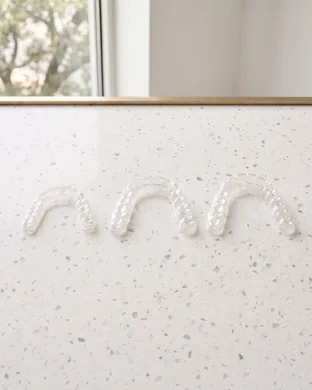
Age 7 for a first orthodontic check-up, then the teen years: what happens at each stage
The American Association of Orthodontists recommends children have their first orthodontic evaluation by age 7.
The American Association of Orthodontists (AAO) recommends a child’s first check-up with an orthodontist when an orthodontic problem is first recognized and no later than age 7. For many children, the AAO says, that first appointment is primarily an evaluation: the orthodontist looks at how the teeth and jaws are developing and how the upper and lower teeth fit together. Many children seen that early, the AAO adds, need no treatment right away.
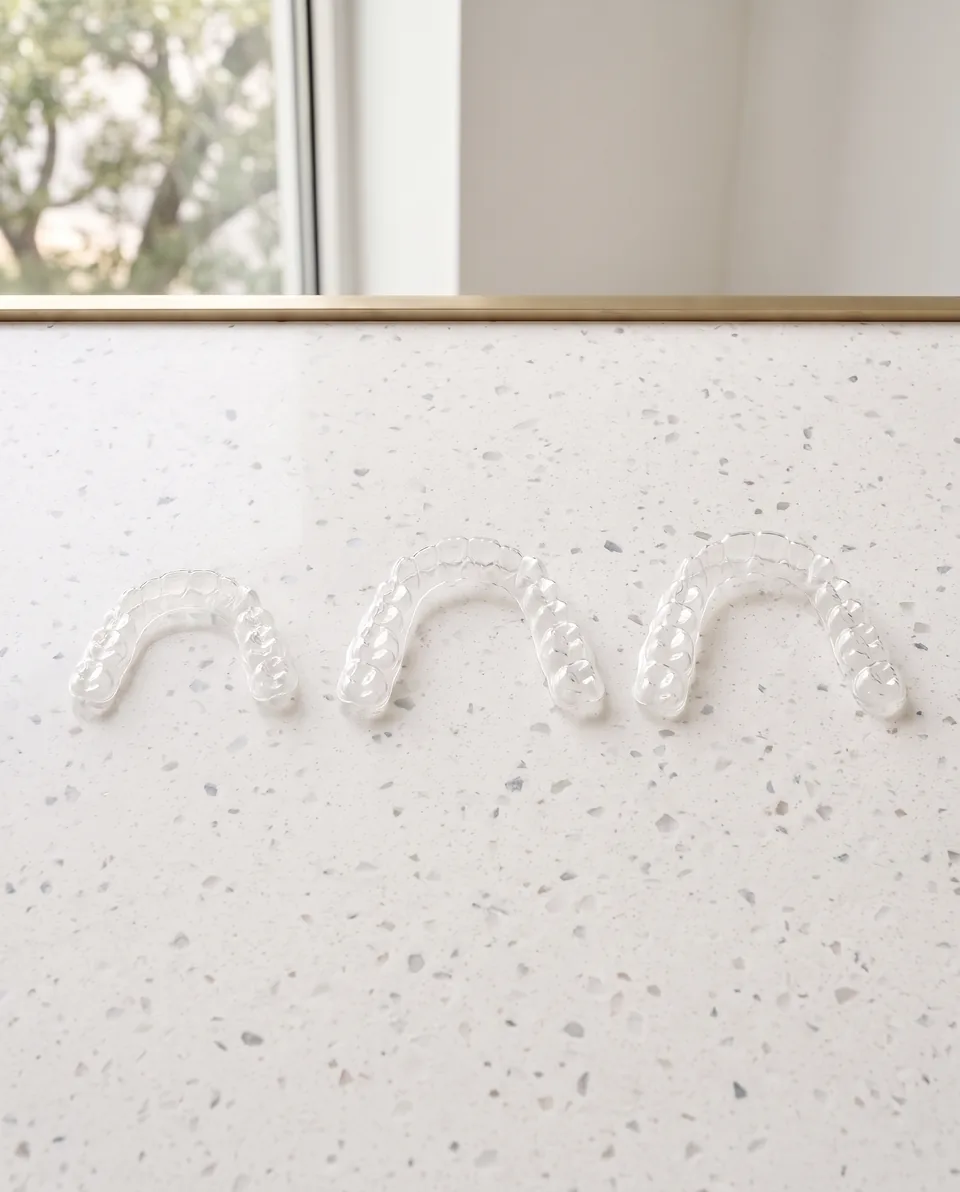
Why the AAO names age 7 for a first orthodontic check-up
The American Association of Orthodontists (AAO) gives age 7 as the latest age for a child’s first orthodontic check-up, not the earliest. In the words of its patient page dated October 21, 2026: “The American Association of Orthodontists recommends that children have their first check-up with an orthodontist when an orthodontic problem is first recognized and no later than age 7.” The same page adds: “Age 7 is the recommended latest age for a first check-up, not an age that parents must wait to reach.”
The AAO’s reason for 7 is the mix of teeth at that age: “By around age 7, many children have a combination of baby and permanent teeth. That allows an orthodontist to evaluate how the teeth, bite, and jaws are developing, including problems that may not be easy for parents to see.” If you or your child’s dentist notices something unusual about the teeth, bite or jaws earlier, the AAO says you can schedule an evaluation sooner.
We start seeing kids at age 7 to watch their growth. So the first check does not need to wait for a problem to show, or for the last baby tooth to fall out.
What an orthodontist looks for in the mixed dentition
The mixed dentition is the stage when a child has both baby (primary) teeth and permanent teeth, and a check-up at 7 falls inside it. The AAO glossary places the mixed dentition at approximately ages 6 to 12, and the American Academy of Pediatric Dentistry (AAPD) places it at approximately age 6 to 11.
The AAO’s page of October 21, 2026 lists signs that should prompt a parent to consider talking with an orthodontist:
- Baby teeth lost unusually early or late
- Difficulty biting or chewing
- An underbite or crossbite
- Teeth that do not come together normally
- Significant crowding or spacing
- Jaws that appear to shift when your child bites
- Frequent cheek biting
- A noticeable imbalance in the teeth or jaws
- Permanent teeth appearing in unexpected positions
- A thumb, finger or pacifier habit that appears to be affecting the teeth or jaws
- Any other concern about the way your child’s teeth or jaws are developing
None of these signs is a diagnosis, and the check-up does not depend on spotting one: the AAO’s recommendation covers every child, because some problems may not be easy for a parent to see. At the check-up, the orthodontist sorts out which signs, if any, matter for your child.
What happens at a child’s first orthodontic visit
For many children, the AAO says, a first orthodontic appointment is primarily an evaluation, and the AAO describes what that covers: “The orthodontist will look at how your child’s teeth and jaws are developing and how the upper and lower teeth fit together. The visit gives you an opportunity to discuss any concerns and learn whether an orthodontic problem is present.”
Records can be part of the same visit. The AAO’s FAQ says the orthodontist or a staff member may take photographs of your child’s teeth and face, and that x-rays are necessary for an accurate diagnosis: “They reveal what could otherwise only be guessed.” A special panoramic x-ray, the same FAQ says, “may be taken at a first exam, or may be postponed until closer to the time that its recommended treatment begins.” Ask at the visit which records your child needs.
Booking that visit does not require a referral: the AAO says you do not need to wait for your child’s dentist to provide one, and the practice says the same. You do not need a referral. Consultations are always free of charge. Bring what you have noticed at home, such as a habit or a bite that seems to shift, and your questions.
Why many children seen at 7 need no treatment yet
An early check-up has three possible outcomes in the AAO’s account, and two of them involve no treatment yet. After an early evaluation, the AAO says, an orthodontist may determine that:
- No orthodontic treatment is expected to be necessary.
- Treatment may be beneficial later, so your child’s growth and tooth development should be monitored.
- A developing problem may benefit from early orthodontic treatment.
The AAO’s FAQ is plainer still: “Only a few orthodontic problems will need correction around age 7.” When a problem is detected, the same answer says, the orthodontist is likely to wait and see, checking growth and development periodically.
Watching growth is the middle outcome. If treatment is not needed yet, the AAO says, the orthodontist may recommend periodic check-ups to monitor growth and tooth eruption, so treatment can begin at the right stage of development if it is needed. How often your child is seen in the meantime is decided at the visit.
Phase 1 treatment and the four tools the practice lists
Phase 1 treatment, as the AAO defines it, begins while baby teeth remain:”Phase 1 orthodontics, also called early or interceptive orthodontic treatment, is treatment that takes place while a child is still growing and some baby teeth are still present.” Its purpose, the AAO says, “is not simply to make teeth look straighter at a younger age” but to address a specific developing problem at a time when treatment may be beneficial.
The AAO names concerns for which an orthodontist may recommend early treatment, among them an underbite, a crossbite, significant crowding, extra or missing teeth, certain tooth eruption problems, and thumb, finger or pacifier habits that are affecting the teeth or jaw growth. The same page says Phase 1 treatment is not necessary for every child, and that many orthodontic problems can and should wait until later.
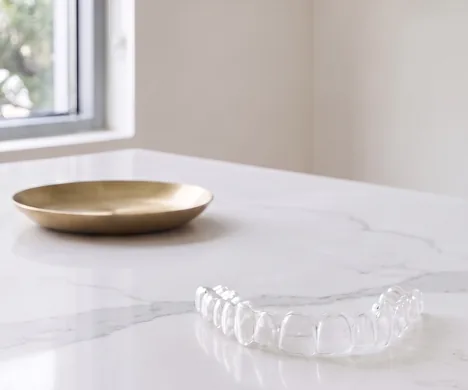
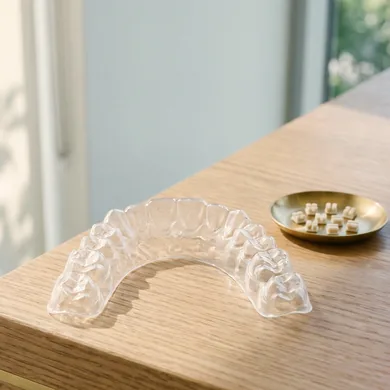
Four tools are on the practice’s list for early treatment, and one of them, Invisalign® First aligners, is made by Align Technology. In the practice’s own words, the list is expanders, Invisalign First, braces, and habit appliances. The AAO and Align describe them this way:
- Expanders: the AAO says some growing patients may benefit from a palatal expander, that not every patient will need one, and that expanders are typically reserved for severe malocclusions or for assisting jaw development.
- Invisalign First aligners: Align says these are customized for children between 6 and 10 years old and built to fit smaller teeth.
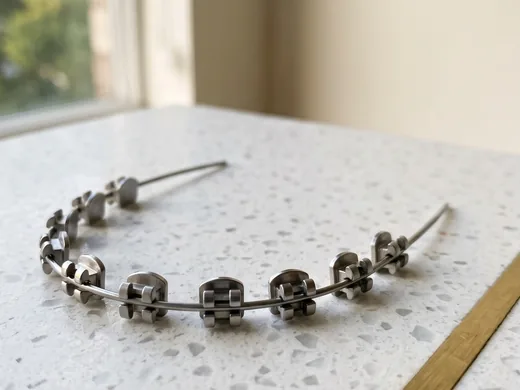
- Braces: the AAO says some children may have limited braces, or another appliance designed to address a particular problem.
- Habit appliances: the AAO’s FAQ says some patients may need help with how to position the tongue when they swallow, and others may need intervention to stop a thumb or finger sucking habit, and that these are sometimes treated with habit appliances.
Whether your child needs any of these, which one, and when is Dr. Kunik’s decision at the examination.
One phase or two: what two Cochrane reviews found
The evidence on early treatment depends on the problem treated: two Cochrane reviews, on two different problems, grade their findings differently. The AAO’s page on two-phase treatment gives the aim of Phase One: “By guiding a child’s jaw as it grows, it reduces the severity of malocclusions” so that Phase Two can build on it.
For prominent upper front teeth, a 2018 Cochrane review compared early treatment in two phases, begun at seven to 11 years old, with one phase of treatment in adolescence at around 12 to 16. The review concluded, on evidence of low to moderate quality, that early treatment is more effective than late treatment at reducing new injuries to the upper front teeth, and that “There appear to be no other advantages of providing early treatment when compared to late treatment.”
In the review’s trials of early functional-appliance treatment, the early group had a smaller overjet after its first phase, but once both groups had finished treatment there was no difference between them in final overjet, a finding the review grades as low-quality evidence. Cochrane rates that review’s evidence low in quality for most comparisons and outcomes, and says further research is needed and may change the findings.
The American Academy of Pediatric Dentistry, reading the randomized trials, writes that “Class II malocclusion can be corrected effectively with either a single or 2-phase regimen.” The AAPD adds that response to growth-modification treatment varies substantially, and that no reliable predictors of a favorable growth response have been found.
For posterior crossbites, a 2021 Cochrane review grades two of its findings in children as high-certainty evidence: for ages 7 to 11, both the quad-helix, a fixed appliance, and expansion plates, which are removable, were beneficial for correcting the crossbite compared with observation.
Dr. Kunik’s approach to early treatment is very conservative. For a parent, the useful question at the examination is which problem, if any, is present, because the evidence differs by problem.
Braces or clear aligners in the teen years
In the teen years, comprehensive treatment often means braces or clear aligners: the AAO describes the second phase of treatment as “using braces or clear aligners to straighten teeth and refine how the teeth and jaws fit together.” Dr. Kunik’s approach to teen orthodontic treatment is compassionate and considerate, informed by his own experiences as a parent.
For a child who had early treatment, the AAO’s page of October 21, 2026 says “Some children later have a second phase of treatment after more or all of their permanent teeth have erupted.” Between the phases, the AAO’s two-phase page says, most children have a resting period, which “gives the jaw and teeth time to continue natural growth and allows remaining permanent teeth to erupt.”
The practice offers both braces and clear aligners, and two pages explain them: how braces work, and how Invisalign clear aligners work. A third route, the practice’s own Hybrid treatment, uses braces and clear aligners within one plan.
Aligners come out, so a teen’s progress with them depends on wearing them. The AAO says “the success of clear aligner treatment heavily relies on your compliance.” Because aligners are removable, the AAO explains, inconsistent wear can hinder progress, extend treatment or compromise the results. Align, which makes Invisalign aligners, says “Consistent wear is the single most important factor in achieving treatment goals on schedule.” Your teen’s wear instructions come from Dr. Kunik.
Sports, cleaning and lost aligners during treatment
Sports can continue during orthodontic treatment, with a mouthguard chosen with the orthodontist. The AAO’s FAQ answers it directly: “Can sports be played during orthodontic treatment? Yes. But talk to your orthodontist about the type of mouth guard to wear.” The ADA adds: “A properly fitted mouthguard may be especially important for people who wear braces or have fixed bridge work. A blow to the face could damage the brackets or other fixed orthodontic appliances.”
Removable appliances follow a different rule. The ADA says: “If you have a retainer or other removable appliance, do not wear it during any contact sports.” Whether a teen’s aligners come out for a game is a question for the orthodontist.
Cleaning around brackets and wires has its own tools, and the AAO’s FAQ names them: “Floss threaders, orthodontic flossers, interproximal brushes, and water flossers can all make it easier to clean around brackets and wires.”
An aligner can be lost or broken anywhere, at school or on the field, and the AAO’s instruction for that is plain: “If you should lose or damage an aligner, contact your orthodontist immediately for advice.”
Retainers after treatment, and orthodontics past the teen years
After active treatment comes retention, at any age. A dental retainer is a custom-made appliance that maintains the position of your teeth after orthodontic treatment. The kinds the practice offers are covered on the page about retainers after braces or aligners.
At Kunik Orthodontics, we provide age-appropriate treatment options from early intervention for children to discreet solutions for adults. Parents thinking about their own teeth can read about adult orthodontics as well.
For a child, a teen or a parent, the next step is the same consultation, at one of the Domain, Downtown and Westlake offices in Austin.
What parents ask about early treatment
Will my seven-year-old get braces at the first visit?
No. A first check-up is not the start of treatment, and the American Association of Orthodontists’ FAQ draws that line:”Remember, there is a difference between an orthodontic check-up and actually starting orthodontic treatment.” The AAO’s patient page adds that not every 7-year-old needs braces. If a developing problem could benefit from early treatment, the AAO says the orthodontist can discuss the options, goals and timing with you; whether anything starts, and when, is decided with Dr. Kunik after the examination.
What if my child is already older than 7?
A child older than 7 can still have a first check-up. The American Association of Orthodontists’ FAQ, in an answer published on aaoinfo.org in 2022, says “If your child is older than 7, it is not too late for a check-up.” The same answer says many patients begin treatment between the ages of 9 and 16, depending on their physiological development and treatment needs. When your child might start is set at the examination.
What does a palatal expander do?
A palatal expander is an appliance for widening the upper jaw. A 2021 Cochrane review describes posterior crossbite treatment as expanding the upper jaw with a fixed or removable appliance, and the American Academy of Pediatric Dentistry’s crossbite guidance says skeletal expansion with fixed or removable palatal expanders can be utilized until midline suture fusion occurs. Whether your child needs one, and how it is adjusted, is Dr. Kunik’s call.
When does a thumb or pacifier habit start to matter?
The American Association of Orthodontists’ FAQ points to age 4: “If your child sucks a thumb, finger, pacifier, lips, or fabric such as clothing or a blanket beyond age 4, there could be unwanted consequences.” Teeth may be pushed forward, the same answer says, an open bite may develop, and bone may become misshapen. A 2015 Cochrane review found low-quality evidence that appliances such as a palatal crib, and psychological interventions, help children stop, though digit sucking was the only habit its studies assessed. Dr. Kunik decides whether a habit appliance suits your child.
How does the orthodontist know whether a teen is wearing the aligners?
An orthodontist judges aligner wear by how the aligners fit and whether the teeth are moving as planned. The American Association of Orthodontists’ FAQ says “Your orthodontist can evaluate how your aligners fit and whether your teeth are moving as planned.” If treatment is not tracking as expected, the same answer says, aligner wear may be one factor the orthodontist considers.
Sources
- American Association of Orthodontists, Can You Get Braces With Baby Teeth? What Parents Need to Know
- American Association of Orthodontists, Glossary of Orthodontic Terms
- American Association of Orthodontists, Your Orthodontic Journey: Questions Uncovered (FAQ listing, page 21)
- American Association of Orthodontists, Your Orthodontic Journey: Questions Uncovered (FAQ listing, page 23)
- American Association of Orthodontists, Your Orthodontic Journey: Questions Uncovered (FAQ listing, page 20)
- American Association of Orthodontists, Your Orthodontic Journey: Questions Uncovered (FAQ listing, page 13)
- American Association of Orthodontists, Your Orthodontic Journey: Questions Uncovered (FAQ listing, page 4)
- American Association of Orthodontists, Your Orthodontic Journey: Questions Uncovered (FAQ listing, page 3)
- American Association of Orthodontists, FAQ record 5156: What if my child is older than 7, is it too late for a check-up?
- American Association of Orthodontists, What Is a Palatal Expander?
- American Association of Orthodontists, What Is Two-Phase Orthodontic Treatment?
- American Association of Orthodontists, Clear Aligner Therapy: How Transparent Aligners Work
- American Academy of Pediatric Dentistry, Management of the Developing Dentition and Occlusion in Pediatric Dentistry
- Cochrane Database of Systematic Reviews, Orthodontic treatment for prominent upper front teeth (Class II malocclusion) in children and adolescents, abstract
- Cochrane Database of Systematic Reviews, at PubMed Central, Orthodontic treatment for prominent upper front teeth (Class II malocclusion) in children and adolescents, full text
- Cochrane Database of Systematic Reviews, Orthodontic treatment for posterior crossbites
- Cochrane Database of Systematic Reviews, Interventions for the cessation of non-nutritive sucking habits in children
- Align Technology, Invisalign Treatment for Kids
- Align Technology, Invisalign clear aligners for teens: everything parents and teens need to know
- American Dental Association, MouthHealthy, Mouthguards
Bring your child or teen in for a first orthodontic check-up
In the request below, the first blank asks who the visit is for: choose My child or My teen, pick an office, and send the text from your own phone.
Domain, Downtown and Westlake: Monday to Thursday, 8:15 a.m. to 5:00 p.m.Updated .