

Retainers: why teeth move back, clear or fixed, and what the guidance says about wearing one
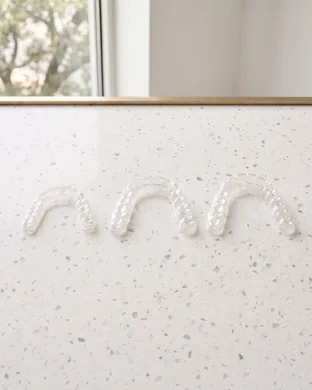
A dental retainer is a custom-made appliance that maintains the position of your teeth after orthodontic treatment.
A retainer is usually needed for life, the American Association of Orthodontists says; the British Orthodontic Society advises wearing one long term, and a 2023 Cochrane review says retainers may be needed indefinitely, with your own schedule set by your orthodontist. Retainers are removable, such as clear trays, or fixed, a wire bonded behind the teeth. The practice offers clear removable and fixed retainers, and which you wear depends on your case.
Clear removable or fixed: the two retainers the practice offers
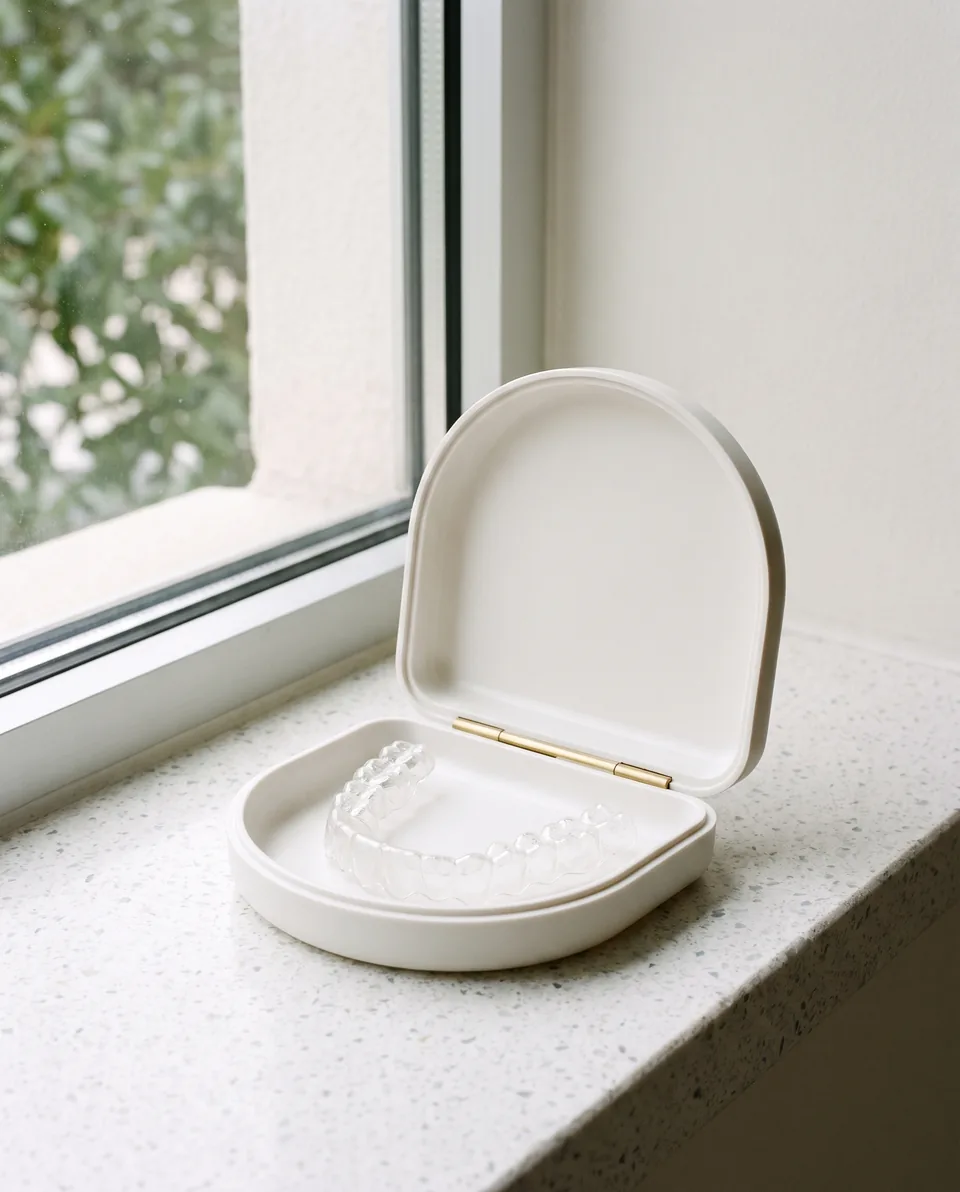
The practice offers two kinds of retainer, Clear Removable Retainers and Fixed Retainers, and says so in one line: We offer permanent retainers or clear removable retainers. Permanent is a nickname, not a lifespan: the American Association of Orthodontists (AAO) points out that fixed retainers can still break or come loose.
Which kind you wear is a clinical choice. The AAO says that, depending on the kind of orthodontic problem that was treated, an orthodontist may suggest a fixed retainer, a removable one, or a combination of the two.
Dr. Kunik makes that choice for your case. Either kind has the same job: the American Dental Association’s MouthHealthy site says retainers keep the results of orthodontic work stable.
Why straightened teeth drift back
Straightened teeth tend to drift back toward where they started, which orthodontists call relapse. Cochrane’s 2023 review of retention says that without a period of retention after successful treatment, teeth tend to return to their original positions; it calls relapse a lifetime risk and says almost everyone who has orthodontic treatment will need some form of retention.
Cochrane’s review says in its background that “The causes of relapse are not fully understood” and that they are felt to relate to the fibers that hold the teeth in the jaw bone springing back, pressure from the lips, cheeks and tongue, further growth, and the way the teeth meet together.
The AAO says teeth may be especially prone to moving during the early months after braces are removed, while the bone and surrounding tissue are still stabilizing. The British Orthodontic Society (BOS) says the jawbone and gums can take at least a year to settle, and the AAO adds that, over the years, getting older, jaw growth, wear on the teeth and the ordinary forces of biting can all affect where teeth sit.
Because orthodontics cannot predict who will relapse or by how much, Littlewood, Kandasamy and Huang (Australian Dental Journal, 2017) advise clinicians to treat every patient as having a high potential to relapse, and they recommend long-term retention to reduce that risk.
Retainers reduce the drift and may not end it altogether. The AAO’s 2017 care page says completely stopping tooth movement may not be possible, and that a retainer can do its job only while it is in your mouth. That is why retention is part of finishing treatment, and why your plan is set with your orthodontist.
Clear removable retainers and the habits they depend on
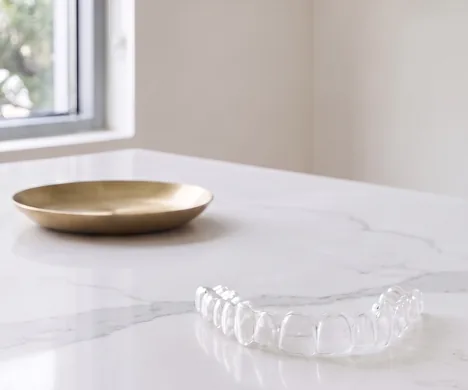
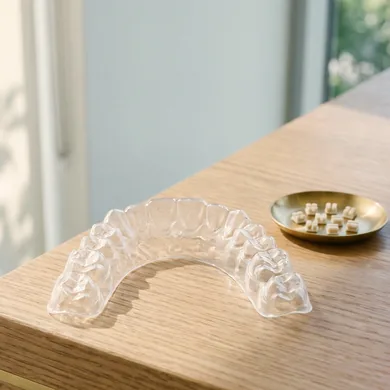
A clear removable retainer is a tray made to fit your teeth. The AAO describes clear retainers as see-through trays of a plastic-like material that copy the exact shape of the teeth, and research papers call the same appliance a vacuum-formed retainer.
Cochrane notes that removable retainers can be worn full-time or part-time, and how much you wear yours is your orthodontist’s instruction. The AAO recommends taking removable retainers out to eat, to avoid damaging them.
A removable retainer also asks for a few habits. The BOS’s 2019 patient leaflet warns against using your tongue to click a retainer in and out, which it says can break it or loosen it and make it work less well. The leaflet also says speech may sound different at first and should be back to normal within a few days.
Because it comes out, a clear retainer can be left out, lost or warped by heat, so follow the wear and care instructions your orthodontist gives you.
Fixed retainers: a bonded wire that still needs checks
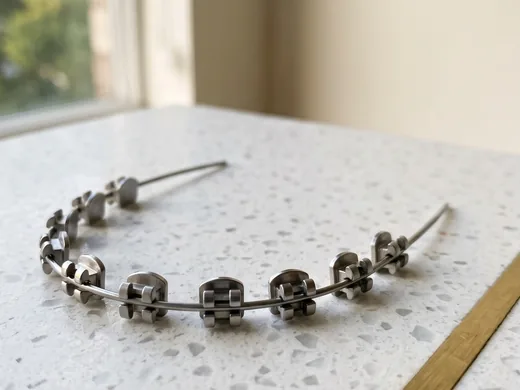
A fixed retainer is a wire bonded behind the teeth, so it stays in place all the time, but it can come loose and needs regular checks. The AAO describes it as a thin wire, shaped to your teeth and bonded directly to the inner surfaces of the upper or lower teeth.
In the AAO’s general descriptions, the wire usually sits behind the front teeth, and one AAO page lists it as usually on the bottom teeth only; which teeth carry yours is decided for your case.
Fixed retainers come loose at rates that vary widely between studies. A 2015 systematic review (Iliadi and others, Journal of Dentistry) reported bond failures of 11 to 71 percent across studies of glass-fiber retainers and of 12 to 50 percent across studies of multistranded retainers, and it rated the quality of that evidence as low.
Fixed retainers can also move teeth unintentionally, Shaughnessy, Proffit and Samara (American Journal of Orthodontics and Dentofacial Orthopedics, 2016) say. They write that orthodontists, general dentists and patients should be aware of possible problems with fixed retainers, especially retainers with all teeth bonded, because a wire that has partly come unstuck may go unnoticed, and they call for regular checks, by orthodontists at first and by family dentists over the long term.
Cleaning around the wire is the wearer’s half of the job: the AAO suggests a water flosser, interdental brushes or floss threaders around the wire and under the gum line. The BOS says fixed retainers have to be inspected regularly, since a tooth may start to drift if any of the glue gives way. A wire that feels loose is a reason to call the office.
How long retention lasts, according to the AAO, the BOS and Cochrane
The published guidance on retention is long term, and the schedule you follow comes from your orthodontist. The AAO’s retainers page says a retainer is usually needed for life, though how often it is worn may decrease over time.
A 2025 AAO article describes the usual pattern: retainers are worn right after active treatment ends, then cut back gradually to nighttime wear as the orthodontist directs, and many people keep wearing them every night for life. The AAO’s FAQ list, read on November 6, 2026, sums the idea up as wear at night, for a lifetime.
The British Orthodontic Society’s 2019 patient leaflet, written for patients in the United Kingdom, puts its general rule this way: “As a general rule you will be advised to wear your retainers every night for the first 12 months and then reduce the wear gradually to at least once a week long term.” That is one society’s general advice for its own patients, not a schedule for yours.
Cochrane’s 2023 review is more guarded: its authors write that “there is no recognised duration that retainers need to be worn”, that wearing a removable retainer as prescribed is required to maintain the correction, and that retainers may be needed indefinitely to reduce the risk of relapse; its background notes evidence that people who stop wearing retainers after one to two years risk long-term relapse.
The AAO’s article of October 21, 2026 says how much and how often people wear retainers varies, and tells patients to follow their orthodontist’s instructions rather than a general schedule. Your own schedule, and any change to it, comes from Dr. Kunik.
What Cochrane’s 2023 review found, and the limits it states
Cochrane’s 2023 review of retention after braces is plain about its own evidence. Its authors write “The evidence is low to very low certainty, so we cannot draw firm conclusions about any one approach to retention over another.” The review covered children and adults fitted with retainers after treatment with braces and excluded studies of aligners, and its authors say its findings mostly speak to the short-term effects of retention.
In one lower-arch trial in the review, with 56 participants and evidence the review grades low to very low certainty, teeth may return toward their earlier position more with a clear plastic retainer worn part-time than with a fixed retainer, though the review’s plain-language summary says “the difference was so small that it may not be important”. In the lower-arch trial behind the full-time comparison, with 84 participants and the same certainty, the summary says full-time wear of the clear retainer may make no difference to tooth movement compared with the fixed one.
A 2026 network meta-analysis (Zhang and others, BMC Oral Health) likewise did not show any retainer type to be definitively better. For you, that means the choice between a clear removable and a fixed retainer rests on the problem that was treated and on your orthodontist’s judgment rather than on a ranking.
Cleaning, storing and replacing a retainer
The AAO’s 2025 cleaning guide says to rinse a removable retainer in lukewarm water each time it comes out, avoid hot water, and brush it daily with its own toothbrush and dish soap rather than toothpaste. The BOS’s 2019 leaflet also advises against toothpaste, which it says can roughen a retainer and discolor it. The AAO’s older 2017 care page, still live, says to brush a removable retainer with toothpaste, so if the advice you were given differs, ask the practice which to follow.
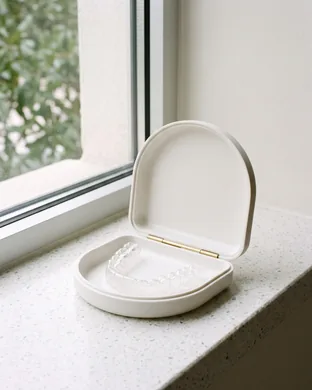
Between wears, the AAO says to keep a removable retainer in its protective case, and its October 2026 guidance warns that heat from hot water, a hot car or similar places can damage some retainer materials or bend them out of shape. Its FAQ list says an orthodontist may schedule periodic retainer checks and asks patients to bring removable retainers to them.
A lost, cracked or damaged retainer is a reason to call the office: the AAO says a lost or damaged retainer should be replaced promptly to avoid unwanted tooth movement. Its October 2026 guidance adds that making a replacement may call for a new scan or impression, so that it fits your teeth as they are now. How the practice makes yours is decided at the visit.
If a retainer cracks, the AAO’s 2025 cleaning guide says to stop wearing it straight away and, if you have a backup retainer, to wear that in the meantime, which the guide says is to prevent relapse. The AAO’s October 2026 guidance adds a condition: an old retainer that no longer fits normally should not be forced onto the teeth. Either way, call the office. If you call our regular phone number after hours, you will hear the phone number of the person on call.
Retainers after braces and after clear aligners
Retention follows both treatments: the AAO says teeth can keep shifting after either braces or clear aligners. For braces, it says the first retainer may arrive the day the braces come off or soon after, depending on what kind it is and how it is made. When yours arrives is a question for the office, and the treatment before it, with metal and ceramic braces, has its own page.
After treatment with Invisalign® clear aligners, the retention evidence this page can cite is narrower. Cochrane’s review excluded aligner studies, and a 2025 meta-analysis comparing clear aligners with fixed appliances (Alhafi and others, European Journal of Orthodontics) found only limited evidence of similar post-treatment stability after the two kinds of treatment, with differences between studies and short follow-up limiting its conclusions. What this page says about retention after aligners therefore rests on the AAO’s general guidance, which covers both treatments, and not on Cochrane’s review.
Whichever treatment came first, your retainer and its schedule are set with Dr. Kunik. If your teeth have moved since an earlier treatment, read about orthodontic treatment for adults before you come in; the first step is a consultation at any of the three offices: Domain, Downtown and Westlake. Consultations are always free of charge. You do not need a referral.
Retainer questions, answered
Does a fixed retainer ever need replacing?
A fixed retainer can need repair or replacement, like any retainer. The AAO says fixed retainers can still break or come loose, and its FAQ list says retainers, like any other device, will likely need replacing at some point. How long yours stays in, and when it is checked, is Dr. Kunik’s call.
What should I do if part of my fixed retainer comes loose?
Call the office. The AAO says to tell your orthodontist right away if a fixed retainer is damaged, because the teeth can begin to shift. Until it is seen, the AAO’s advice to avoid hard or sticky foods that could dislodge the wire still applies.
What if my retainer no longer fits?
Do not force it; call the office. The AAO’s guidance of October 21, 2026 explains that a retainer is made to fit one particular position of your teeth, so a poor fit can mean the teeth have changed, the retainer has changed, or both, and pushing it into place will not tell you which. If the teeth have shifted enough that the retainer no longer seats properly, the AAO says the orthodontist may need to adjust or replace the retainer.
Can wearing my retainer more move shifted teeth back?
Not on your own: the AAO’s guidance of October 21, 2026 says a retainer’s main purpose is to maintain the positions achieved through treatment, and that a retainer is made to fit one particular position of your teeth. It says very minor movement can make a retainer that otherwise fits well feel snug, and an orthodontist may then recommend more consistent wear, but that this does not mean using an old or tight retainer to move teeth on your own. If more tooth movement is necessary, the AAO says some patients may be candidates for a limited course of clear aligners or braces before returning to retention. Dr. Kunik decides which applies at a visit.
Sources
- American Association of Orthodontists, Orthodontic Retainers: Types, Care, & Life After Braces
- American Association of Orthodontists, Are Retainers Necessary After Orthodontic Treatment?
- American Association of Orthodontists, What Are Dental Retainers?
- American Association of Orthodontists, How to Clean Retainers: AAO’s Guide to Retainer Care
- American Association of Orthodontists, Retainer Care 101: Ensuring Long-Term Orthodontic Success
- American Association of Orthodontists, What to Expect After Your Braces Come Off
- American Association of Orthodontists, My Retainer Feels Tight or Doesn’t Fit. Should I Force It?
- American Association of Orthodontists, Why Do Dogs Eat Orthodontic Retainers?
- American Association of Orthodontists, Orthodontic FAQs: Your Questions Answered (read November 6, 2026)
- Martin C, Littlewood SJ, Millett DT and others, Cochrane Database of Systematic Reviews, 2023, Retention procedures for stabilising tooth position after treatment with orthodontic braces (abstract)
- Martin C, Littlewood SJ, Millett DT and others, Cochrane Database of Systematic Reviews, 2023, Retention procedures for stabilising tooth position after treatment with orthodontic braces (full text)
- British Orthodontic Society, Retainers, patient information leaflet (2019)
- British Orthodontic Society, Retainers
- British Orthodontic Society, FAQs
- American Dental Association, MouthHealthy, Orthodontics
- Littlewood SJ, Kandasamy S, Huang G, Australian Dental Journal, 2017, Retention and relapse in clinical practice
- Iliadi A, Kloukos D, Gkantidis N, Katsaros C, Pandis N, Journal of Dentistry, 2015, Failure of fixed orthodontic retainers: A systematic review
- Shaughnessy TG, Proffit WR, Samara SA, Abstract, American Journal of Orthodontics and Dentofacial Orthopedics, 2016, volume 149, issue 2
- Zhang X, Li Y, Zhang Z, Liu J, Sun Q, BMC Oral Health, 2026, Effects of different orthodontic retainers on dental arch stability and periodontal health: a systematic review with pairwise meta-analysis and network meta-analysis
- Alhafi ZM, Hajeer MY, Alam MK, Jaber ST, European Journal of Orthodontics, 2025, Quality and stability of orthodontic treatment outcomes with clear aligners versus fixed appliances: a systematic review and meta-analysis
Ask Dr. Kunik about your retainer at a consultation
A consultation request from this page reaches the practice, or call the office you plan to visit.
Domain, Downtown and Westlake: Monday to Thursday, 8:15 a.m. to 5:00 p.m.Updated .