



Braces or clear aligners as an adult: what age changes, what it does not, and how to choose
Kunik Orthodontics serves a majority adult clientele, prioritizing realistic expectations, clear communication, and customized treatment plans.
Yes. The American Association of Orthodontists (AAO) says age is rarely a deciding factor and names braces and clear aligners as the most common appliances in adult orthodontics; the American Dental Association says healthy teeth can be orthodontically treated at any age. What differs, the AAO says: adult bone has finished growing, so teeth move more slowly, and active decay, gum disease or unstable restorations should be addressed first.
Why adults start orthodontic treatment, and what age has to do with it
At Kunik Orthodontics, we provide age-appropriate treatment options from early intervention for children to discreet solutions for adults. The specialty’s own association puts the adult side of that plainly: the American Association of Orthodontists (AAO) writes, “Regardless of your age, you are never too old for orthodontic treatment. Age is rarely a deciding factor for orthodontic treatment.”
The American Dental Association (ADA) adds the condition that matters: “healthy teeth can be orthodontically treated at any age.”
The ADA says many adults seek orthodontic treatment to correct long-standing problems or problems that stem from maturational changes, and the AAO says teeth naturally shift as people get older, which can crowd the lower front teeth or open gaps in the upper teeth, and that bite problems can worsen over time.
For an adult, then, the deciding question is whether the gums, the roots and the dental work already in the mouth are ready, and the AAO says gum health is judged in person and the roots on X-rays.
Gum and bone health before an adult’s teeth are moved
For an adult, gum and bone health comes first. The American Association of Orthodontists (AAO) says adults often present with restorations, missing teeth or periodontal concerns that must be stabilized before tooth movement begins, and its guidance is direct: “Any active decay, gum disease, or unstable restorations should be addressed first.” The AAO adds that the orthodontist may coordinate with your general dentist, periodontist or prosthodontist so the foundation is healthy before teeth start moving.
Skipping that step carries risk. In the AAO’s words, “Straightening teeth when the patient has poor periodontal (gum) health can lead to recession (exposure of the tooth roots), root shortening, or tooth loss.” The same AAO release warns that moving teeth with unhealthy roots can cause loosening or loss of teeth.
Gums and roots are checked in person. The AAO says gum health can be evaluated effectively only in person, for example by periodontal probing, which checks the depth of the root pocket with a dental probe, and that “X-rays are the only way to see underneath the gums,” including the health of the tooth roots.
Feeling well is not the same as having healthy gums: the American Academy of Periodontology says gum disease is often silent, with symptoms that may not appear until the advanced stages, and counts receding gums and loose or separating teeth among its signs.
Whether your own gums, bone and roots are ready is decided in person at an exam, never from a page; if a general dentist or periodontist is treating you, bring what they have found.
Mature bone and finished growth: how moving adult teeth differs
The way a tooth moves does not change with age. In the words of the American Association of Orthodontists (AAO), “Whether you’re 8 or 80, the physiological process that moves teeth through bone remains the same.” The AAO explains that the pressure of an appliance causes necrosis, the death of the supporting structure around the tooth, so the tooth can move within its bone socket, and bone then reforms around it.
What changes is growth. The AAO calls the biggest difference between adult and child or teen orthodontics the fact that adults are no longer growing: children’s growing jaws and more malleable bone let orthodontists guide facial growth and correct skeletal discrepancies. For adults, an AAO article on adult treatment says, “Adult bone has finished growing, so movement is slower, and some skeletal problems may require combined surgical or restorative solutions rather than braces alone.”
The AAO also says that for some adults the dentist and orthodontist may need to call in other dental specialists, such as oral surgeons, periodontists and endodontists; a skeletal problem that needs surgery is an oral surgeon’s to treat.
A 2020 literature review in the Journal of Orofacial Orthopedics, whose older groups were aged 16 to 43, reports that in most of its studies younger patients’ teeth moved more quickly in the first phase of treatment and older patients had a delayed reaction to orthodontic forces, and it calls the clinical evidence that older patients are less responsive limited.
Slower movement is biology an adult plan accounts for, not a verdict on whether you can be treated, and how long your own treatment would take is answered by Dr. Kunik at the consultation.
Crowns, bridges, implants and missing teeth in an adult plan
An adult’s dental history shapes the plan: the American Association of Orthodontists (AAO) lists the presence of fillings, missing teeth, misshapen or worn teeth, or dental diseases among the factors an orthodontist considers.
Missing teeth matter because their neighbors move. The AAO says missing teeth can lead to gaps as surrounding teeth shift into the open space over time, that in adults gum disease or bone loss can reduce support around the teeth and open new gaps or widen existing ones, and that older restorations, such as crowns, bridges and implants, may complicate alignment if teeth have migrated.
The AAO also explains what replacing a lost tooth does: implants, bridges or partials fill the space so neighboring teeth do not tip or rotate into the gap. Which replacement, and when, is for your general dentist or a prosthodontist to plan with the orthodontist.
Orthodontics can also be one step in a larger dental plan: the AAO says moving teeth into ideal positions can simplify future restorative needs such as crowns, implants or veneers.
For aligners the order is specific: the AAO says any dental work needs to be completed before the aligner scan, because aligners are custom made to the exact shape of the teeth. Bring a list of your crowns, bridges, implants and recent dental work to the consultation.
Root resorption, gum recession and the limits research names
Moving teeth carries risks, and the research is candid about them. A 2021 overview of systematic reviews in the European Journal of Orthodontics says “Root resorption can be considered the most unfortunate complication of orthodontic treatment,” and found that its incidence and severity increase with fixed appliances, especially with heavy force, intrusion, torqueing movements, increased treatment duration, extractions or long movement of the root tip; the evidence on most other treatment and patient factors was insufficient. The American Association of Orthodontists (AAO) says X-rays show the health of the roots, so it is fair to ask what yours show.
Gum recession has its own risk factors. A 2023 systematic review in the European Journal of Orthodontics found that a thin gingival biotype, recession already present, the baseline width of keratinized gingiva and the thickness of the gum margin on the outer side of the tooth were linked to a higher risk of recession after orthodontic treatment; on age, the studies that looked at it disagree.
The authors of a 2020 evidence review in the Journal of Periodontology start from the premise that “Orthodontic treatment can greatly impact the periodontium, especially in dentitions with a thin periodontal phenotype,” the periodontium being the supporting tissue around the teeth.
The named risk factors sit in the tissue and in the treatment, so your own risk turns on your own gums, roots and plan: ask Dr. Kunik at the consultation what yours mean.
Metal braces, ceramic braces, clear aligners or Hybrid: an adult’s options
An adult’s options are braces, clear aligners or a combination of the two: the American Association of Orthodontists (AAO) names braces and clear aligners as the most common appliances in adult orthodontics and says a recommendation may include aligners, braces or a combination of approaches.
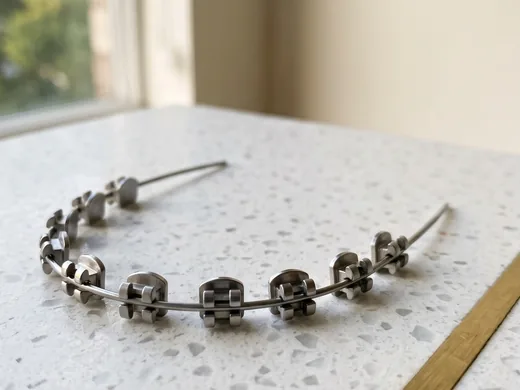
Braces, as the American Dental Association (ADA) describes them, are brackets cemented to the teeth and connected by a wire that is periodically tightened, and the brackets may be metal or tooth colored. Of ceramic brackets the AAO says, “Patients typically choose this option when they want less noticeable braces than traditional metal braces,” and it adds that ceramic braces may not be available as a treatment option to some patients. The practice offers both, and its page on metal and ceramic braces sets them side by side.
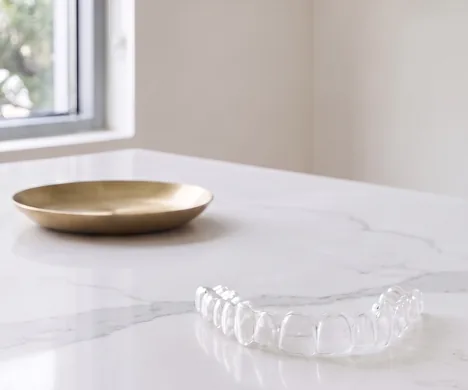
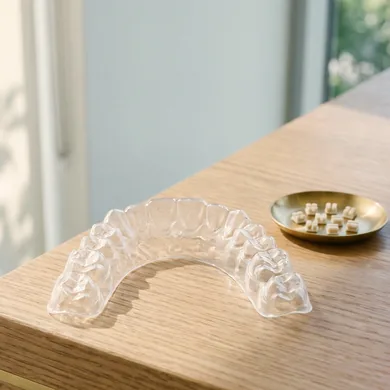
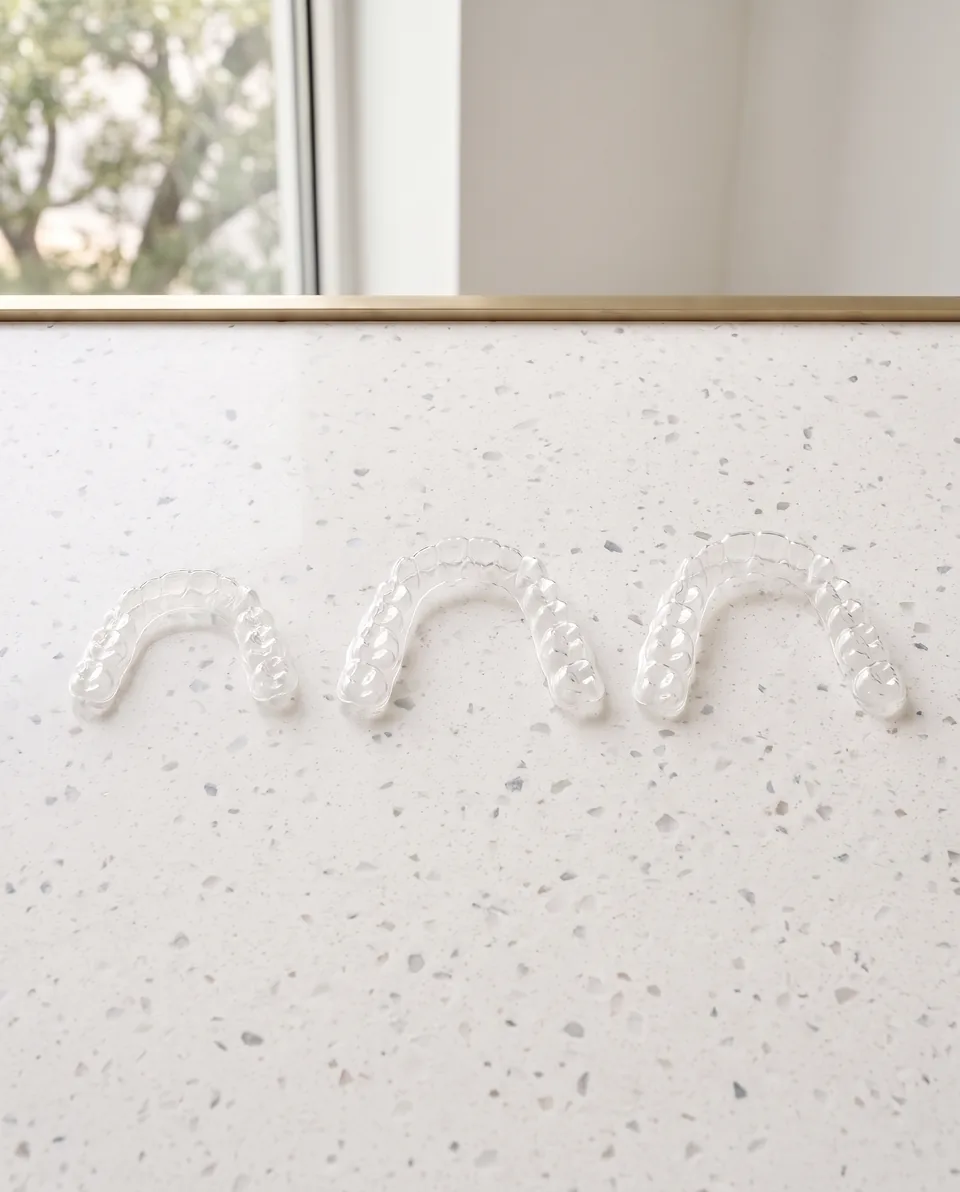
Removable aligners, under the direct supervision of a dentist or orthodontist, are another option, the ADA says. For aligners the practice offers Invisalign® treatment, and in its own words: Your Invisalign aligners are fully removable for meals, giving you complete flexibility for eating. The AAO is plain that clear aligners are not right for everyone and that braces handle some cases more predictably. For attachments, wear time and care, read about Invisalign clear aligners.
Some plans combine the two, and the practice’s own combined route is Hybrid: We may adjust your braces, provide new aligner sets, or transition between methods as your treatment progresses. How the braces and aligner phases fit together is set out under Hybrid treatment.
The choice is made for your teeth rather than your age group: the AAO says adult treatment is tailored to goals, gum health and any restorative needs.
What an adult’s first orthodontic visit covers
The first visit is where the general answers on this page become answers about your own teeth. Consultations are always free of charge. You do not need a referral.
Dr. Kunik is here to listen to your smile goals, listen to your timeline, and listen to what is most important to you. For an adult that can include the crowns or implants you already have, any gum treatment you have had and the reason you are asking now. If a treatment plan was written for you elsewhere, bring it; we are happy to be a second opinion.
What an orthodontic exam involves in general is described by the American Association of Orthodontists (AAO): a first appointment begins with an examination of the teeth, jaws and bite; X-ray imaging gives a detailed view of the teeth’s position, roots and jawbones; and the proposed plan sets out the recommended course of action, the appliances to be used and any potential risks or limitations.
Before you come, Dr. Kunik’s training is on the home page.
After the teeth move: retainers, and the three Austin offices
Treatment does not end when the teeth reach their new places: the American Association of Orthodontists (AAO) says “Teeth can continue to change position after braces or clear aligner treatment,” that retainers help maintain the corrected positions, and that changes related to aging, jaw growth, tooth wear and everyday biting forces can affect tooth position over the years. How long and how often you wear one is your orthodontist’s instruction to give, the AAO says, because the amount and frequency of retainer wear can vary; which of the practice’s fixed and clear removable retainers suits you is Dr. Kunik’s call at the end of treatment.
The practice’s three offices are at The Domain, Downtown and Westlake; the drive-up film and door sign for all three offices are on Find us.
What adults ask before starting
Is there an upper age limit for braces or clear aligners?
No. The AAO says that regardless of age a person is never too old for orthodontic treatment, and that age is rarely a deciding factor; the ADA says healthy teeth can be orthodontically treated at any age. Age matters through the gums: the American Academy of Periodontology says studies indicate that older people have the highest rates of periodontal disease. Whether your gums and bone are ready is decided in an in-person exam.
Can someone who has been treated for gum disease still have orthodontic treatment?
Yes, once the gums are stable: the AAO says periodontal concerns must be stabilized before tooth movement begins. A 2022 systematic review in the Journal of Clinical Periodontology, based on a small number of low-quality studies, found that in stable treated periodontitis patients orthodontic tooth movement had no significant impact on periodontal outcomes. Whether your gums are stable is a judgment for your periodontist or dentist and for the orthodontist’s in-person exam.
Can braces or aligners move a dental implant?
No. The AAO’s glossary says “Dental implants cannot be moved by conventional orthodontic forces.” What an orthodontist can do, the glossary says, is create space or hold space open for patients who may need implants, so an implant already in place is something an adult plan works around, with your dentist or prosthodontist.
Why would an orthodontist suggest braces to an adult who wanted aligners?
Because braces handle some cases more predictably, the AAO says, and where aligners are not the optimal or a viable choice for a patient who prefers them, the orthodontist may present plans involving braces. A 2022 overview of systematic reviews in Clinical Oral Investigations found clear aligner treatment effective for mild to moderate malocclusions but associated with inferior outcomes in severe cases. If braces come up for your teeth, ask at the consultation which problem is the reason.
Do medications, smoking or teeth grinding affect adult orthodontic treatment?
Yes, they can. The AAO says “Some medications and habits, like smoking, clenching or grinding teeth, or tongue thrusting, can affect the outcome of treatment.” The American Academy of Periodontology adds that tobacco users are at increased risk for periodontal disease and that clenching or grinding could speed up the destruction of the tissues that support the teeth. Tell the orthodontist about your medications and habits, and ask your physician about any medicine you take.
Sources
- American Association of Orthodontists, How Old is Too Old for Braces?
- American Association of Orthodontists, Orthodontic Treatment for Adults: The Rise of Adult Braces
- American Association of Orthodontists, Adult Orthodontics FAQs: Your Concerns Addressed
- American Association of Orthodontists, Does Your Smile Change As You Age?
- American Association of Orthodontists, Your Guide to Orthodontic Health
- American Association of Orthodontists, How Do Braces Work?
- American Association of Orthodontists, Clear Aligners
- American Association of Orthodontists, What to Expect at Your First Orthodontic Appointment
- American Association of Orthodontists, Glossary of Orthodontic Terms
- American Association of Orthodontists, Teeth Spacing: Causes, Concerns, and Treatment Options
- American Association of Orthodontists, What to Expect After Your Braces Come Off
- American Association of Orthodontists, My Retainer Feels Tight or Doesn’t Fit. Should I Force It?
- American Dental Association, MouthHealthy, Braces
- American Dental Association, MouthHealthy, Orthodontics
- American Academy of Periodontology, Gum Disease Information
- American Academy of Periodontology, Gum Disease Risk Factors
- Schubert and others, Journal of Orofacial Orthopedics, 2020, Age effect on orthodontic tooth movement rate and the composition of gingival crevicular fluid: a literature review
- Yassir, McIntyre and Bearn, European Journal of Orthodontics, 2021, Orthodontic treatment and root resorption: an overview of systematic reviews
- Martin and others, Journal of Clinical Periodontology, 2022, Effect of orthodontic therapy in periodontitis and non-periodontitis patients: a systematic review with meta-analysis
- Wang, Yu, Mandelaris and Wang, Journal of Periodontology, 2020, Is periodontal phenotype modification therapy beneficial for patients receiving orthodontic treatment?
- Cadenas de Llano-Pérula and others, European Journal of Orthodontics, 2023, Risk factors for gingival recessions after orthodontic treatment: a systematic review
- Yassir and others, Clinical Oral Investigations, 2022, Clinical effectiveness of clear aligner treatment compared to fixed appliance treatment: an overview of systematic reviews
Request an adult orthodontic consultation
Send a consultation request from this page, and bring your questions about gums, roots and past dental work to the visit.
Domain, Downtown and Westlake: Monday to Thursday, 8:15 a.m. to 5:00 p.m.Updated .