

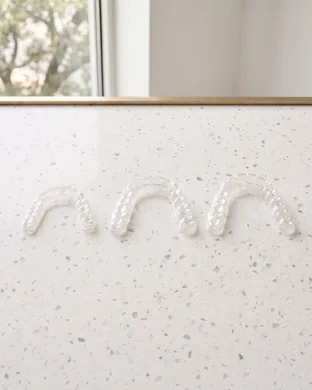
What is a crossbite, and when should it be treated?
For one kind of crossbite in children, Cochrane’s evidence is graded high-certainty, and that grade is narrower than it sounds. This page keeps each finding with the bite and the age it belongs to.
A crossbite is top teeth that bite inside the bottom back teeth or sit behind the bottom front teeth. For back crossbites in children aged 7 to 11, a 2021 Cochrane review found high-certainty evidence that the quad-helix and expansion plates were beneficial compared with observation; for a simple front crossbite, the American Academy of Pediatric Dentistry says it can be aligned as soon as it is noticed if there is enough space.
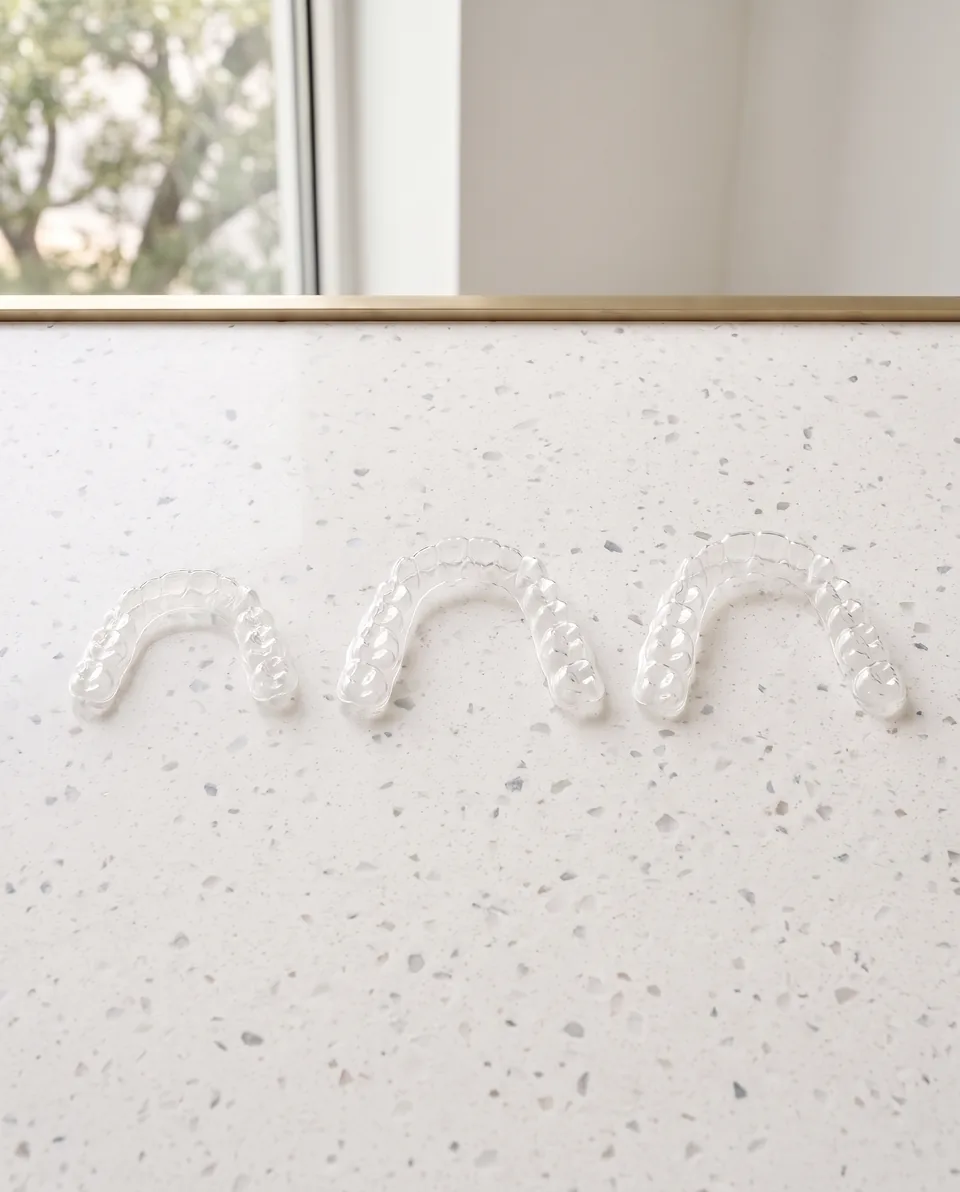
Cochrane’s crossbite finding, and the children it covers
A 2021 Cochrane review of treatment for posterior crossbites, the back kind, found high-certainty evidence for two appliances in children. For children aged 7 to 11, the review says “quad-helix was beneficial for posterior crossbite correction compared to observation,” and “expansion plates were also beneficial for posterior crossbite correction compared to observation.”
Those two findings are narrow: they concern back crossbites, not front ones; children aged 7 to 11; and the quad-helix or expansion plates measured against observation. The same review rated the Hyrax expander lower, at moderate certainty, and its evidence runs to April 2021.
Cochrane’s reviews of other bite problems in children grade their evidence lower: low to moderate for prominent upper front teeth, and weak for open bite. That difference is why a back crossbite in a young child is a bite problem worth raising early.
Back and front crossbites, and how common the back kind is
Crossbites happen at the back or the front of the mouth. Cochrane defines the back kind: “A posterior crossbite occurs when the top back teeth bite inside the bottom back teeth.” The American Association of Orthodontists (AAO) defines the front kind: “In cases where the front teeth are in a crossbite, one or more top teeth sit behind the bottom teeth.”
Cochrane’s review puts the prevalence of back crossbites at around 4 percent of children and adolescents in Europe and 17 percent in America.
The AAO’s crossbite article and the American Academy of Pediatric Dentistry (AAPD) keep a front crossbite apart from an underbite. The AAO says “The term underbite is often used when all of the top front teeth or jaw are positioned behind the lower front teeth,” and the AAPD separates a simple front crossbite of dental origin from a Class III skeletal problem; the page on underbites handles that jaw-level version. The glossary’s crossbite entry puts the definition in a sentence.
Why a crossbite is raised early, while the jaws are growing
The AAO’s reason for early attention is growth: “Addressing a crossbite early, especially during childhood when the face and jaws are still developing, can prevent underlying jaw issues.” Left alone, the AAO says, a crossbite could lead to the jaw shifting to one side, lopsided or asymmetric jaw growth, and excessive or abnormal enamel wear, and “In severe cases, untreated crossbites may necessitate jaw surgery for correction.”
Several of the causes the AAO names begin in childhood: “Crossbites can arise from genetics, delayed loss of baby teeth, abnormal eruption of adult teeth, or prolonged habits such as thumb sucking or atypical swallowing patterns.”
For a front crossbite of the teeth, the AAPD is specific about timing: “If enough space is available, a simple anterior crossbite can be aligned as soon as the condition is noted.” The AAO also lists a crossbite among the concerns for which an orthodontist may recommend early treatment, and the first check-up is the subject of the page on orthodontics for children and teens.
The quad-helix, expansion plates and the Hyrax: each grade with its comparison
The appliances in Cochrane’s 2021 crossbite review all expand the upper jaw, and the review grades each comparison on its own.
| Comparison | Who | What the review found |
|---|---|---|
| Quad-helix against observation | Children aged 7 to 11 (3 studies) | Beneficial for correcting a back crossbite; high-certainty evidence |
| Expansion plates against observation | Children aged 7 to 11 (3 studies) | Beneficial for correcting a back crossbite; high-certainty evidence |
| Hyrax expander against observation | Participants in 3 studies | Probably effective; moderate-certainty evidence |
| Hyrax against Haas expanders | Adolescents aged 12 to 16 | Similar for correcting the crossbite and for widening between the molars |
The review called the remaining evidence insufficient to draw firm conclusions. Which expander, if any, suits a given child is decided at the examination, and the glossary’s entry on the palatal expander defines the appliance itself.
After expansion in a growing patient, the AAO says common interventions include “orthodontic appliances like braces or clear aligners to reposition the teeth afterward.” On aligners the reviews add a caution: a 2019 systematic review (Ke and colleagues, BMC Oral Health) found “Clear aligners might not be as effective as braces in producing adequate occlusal contacts, controlling teeth torque, increasing transverse width and retention,” and the 2026 scoping review by Borzabadi-Farahani lists expansion among the movements for which evidence suggests aligners are less predictable. What the trays do is laid out on the page on clear aligners.
Crossbites in adults: the AAO says the options differ
Cochrane’s high-certainty crossbite findings come from children, and the AAO’s palatal expander article is plain that adults are different: “Some adults may be candidates for expansion approaches, but treatment options differ from those for growing patients. An orthodontist can explain what is possible based on your jaw structure and goals.”
The AAO says that because adults are no longer growing, surgery is the only way to change the size, shape or position of an adult’s jaw bones; in its division of roles an oral surgeon corrects skeletal jaw discrepancies through surgery, and when an orthodontist judges that surgery would help, the patient is referred to the surgeon before orthodontic treatment begins.
For an adult, the choice among braces, Invisalign® treatment, Hybrid treatment and a surgical referral is made for one jaw at the consultation, and the page on adult orthodontics compares adult treatment with a child’s.
Front or back, now or later: deciding on a crossbite at the consultation
The consultation turns the crossbite evidence into a plan for one mouth: whether the crossbite is at the front or the back; whether it is a matter of the teeth or of the jaw; whether a growing child should be treated now or watched; and which appliance, if any, comes first.
In the practice’s own words, its early-treatment tools are expanders, Invisalign First, braces, and habit appliances. Dr. Kunik’s approach to early treatment is very conservative, and which tool, if any, suits a child is decided at the examination.
Overbites, underbites and open bites appear alongside this one in the practice’s set of questions.
Crossbite questions: waiting it out, and cheek biting
Can a crossbite correct itself?
Not likely, in the AAO’s view: it says bite problems in children “will likely not fix themselves and, if not treated by a professional, will often worsen with time.” Cochrane’s 2021 review compared treatment with observation for back crossbites and found the quad-helix and expansion plates beneficial for correction in children aged 7 to 11. Whether a particular child’s crossbite needs treatment now is decided at an examination.
Is cheek biting a sign of a crossbite?
Sometimes. The AAO says that biting your cheek while talking, eating or being active “may be an indication of jaw misalignment or a posterior crossbite (where the upper and lower jaw widths are not coordinated).” A sign is not a diagnosis, and what lies behind it is sorted out at an examination.
Sources
- Ugolini and others, Cochrane Database of Systematic Reviews, 2021, Orthodontic treatment for posterior crossbites, abstract
- American Association of Orthodontists, What Is A Crossbite?
- American Academy of Pediatric Dentistry, Management of the Developing Dentition and Occlusion in Pediatric Dentistry
- American Association of Orthodontists, Common Orthodontic Problems: Know What to Look For
- American Association of Orthodontists, What Is a Palatal Expander?
- American Association of Orthodontists, Can You Get Braces With Baby Teeth?
- American Association of Orthodontists, 7 Types Of Bite Problems and Their Orthodontic Solutions
- Ke and colleagues, BMC Oral Health, 2019 (PubMed record), A comparison of treatment effectiveness between clear aligner and fixed appliance therapies
- Borzabadi-Farahani, Frontiers in Dental Medicine, 2026 (PubMed Central), Clear aligner therapy: a scoping review of treatment prediction, clinical effectiveness, and limitations
- Batista and others, Cochrane Database of Systematic Reviews, 2018, Orthodontic treatment for prominent upper front teeth (Class II malocclusion) in children and adolescents, abstract
- Lentini-Oliveira and others, Cochrane Database of Systematic Reviews, 2014 (PubMed record), Orthodontic and orthopaedic treatment for anterior open bite in children
- American Association of Orthodontists, Dentist vs. Orthodontist vs. Oral Surgeon: What’s the Difference?
- American Association of Orthodontists, Orthodontic Surgery: Enhancing Your Smile’s Foundation
Bring a crossbite, a child’s or your own, to a consultation
Consultations are always free of charge. You do not need a referral. Request a consultation for yourself or your child from this page, or phone the Domain, Downtown or Westlake office.
Domain, Downtown and Westlake: Monday to Thursday, 8:15 a.m. to 5:00 p.m.Updated .