

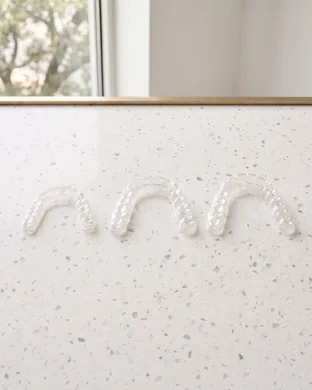
Can you play sports with braces or aligners, and what mouthguard do you need?
Sports and orthodontic treatment go together; the practical questions are what goes over braces, what comes out of the mouth for a game, and what to do after a hit.
Yes. The American Association of Orthodontists says sports can be played during treatment, with the orthodontist advising on the type of mouthguard. The American Dental Association says a properly fitted mouthguard may be especially important with braces, since a blow to the face could damage the brackets, and that a retainer or other removable appliance should not be worn during any contact sports; whether aligners come out is the orthodontist’s call.
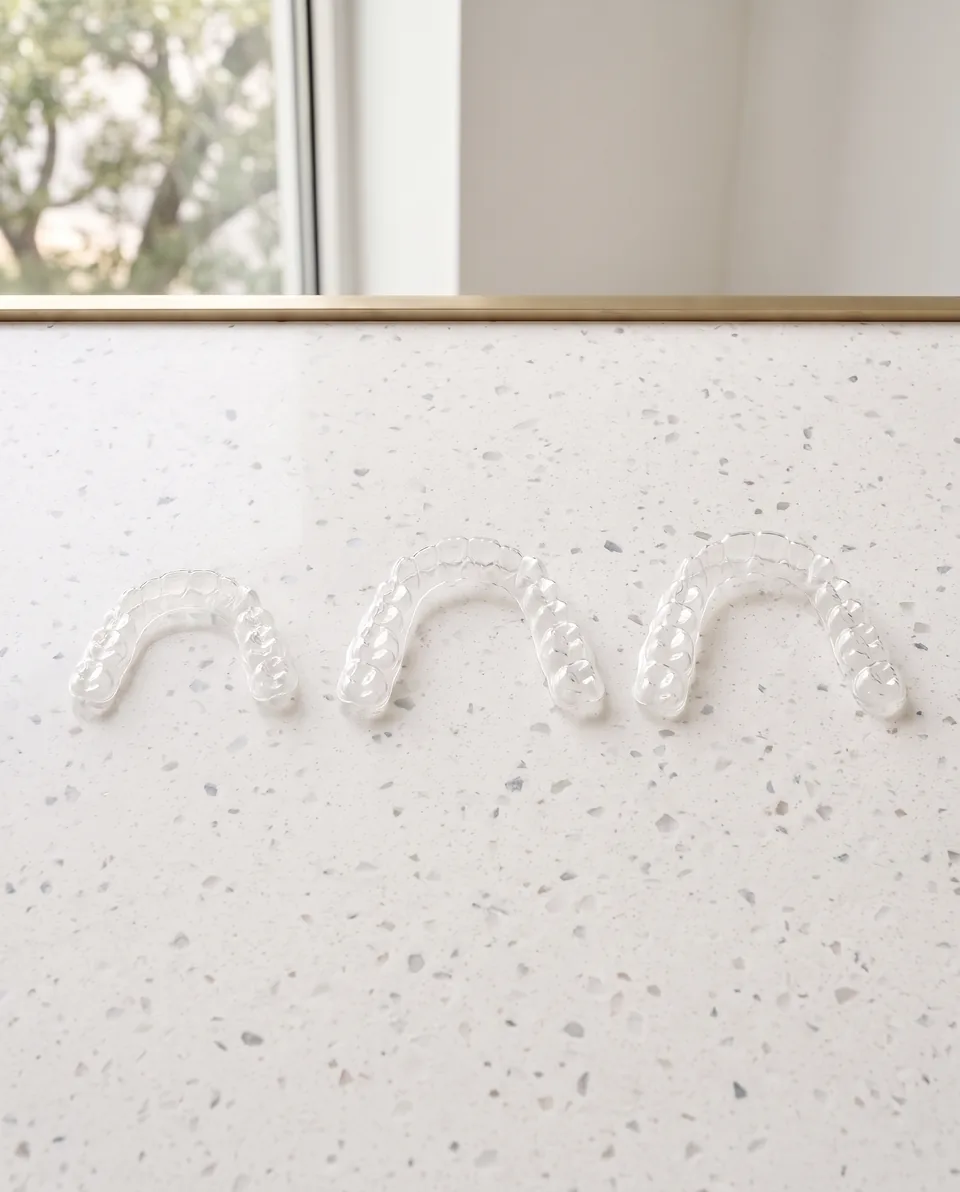
The ADA’s line on a retainer or other removable appliance in contact sports
The American Dental Association’s line on removable appliances is one sentence long: “If you have a retainer or other removable appliance, do not wear it during any contact sports.” It sits on the ADA’s MouthHealthy mouthguard page.
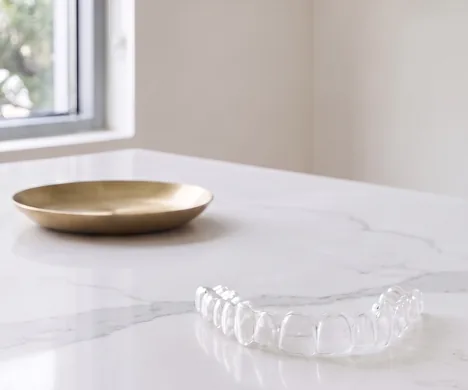
The sentence names retainers, and aligners fit its other words. Clear aligners are removable trays, in the words of the American Association of Orthodontists (AAO), so they are a removable appliance in the ADA’s sense; how that applies to your own aligners on a game day is the orthodontist’s instruction.
After treatment, the same line covers a clear removable retainer, one of the clear removable and fixed retainers the practice offers. A fixed retainer is bonded to the teeth, so the question there is the mouthguard over it.
A properly fitted mouthguard over braces, as the AAO and the ADA put it
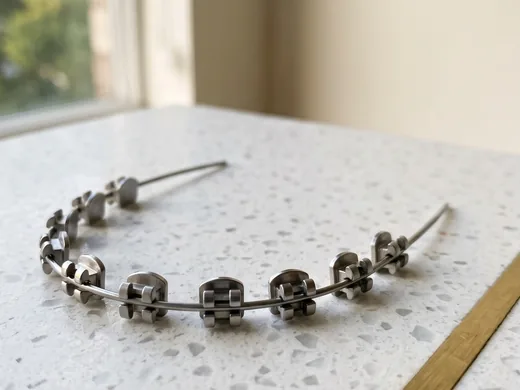
Braces stay on the teeth for the whole of treatment, the AAO says, so protection for a game goes over them. The ADA says, “A properly fitted mouthguard may be especially important for people who wear braces or have fixed bridge work,” and gives its reason in the next sentence: a blow to the face could damage the brackets or other fixed orthodontic appliances. The glossary spells out what a bracket is.
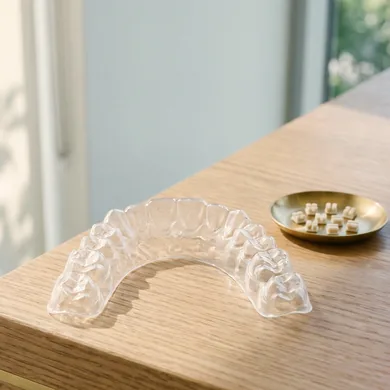
The AAO makes the same case from the orthodontic side: a properly fitted mouthguard helps protect both the teeth and the orthodontic appliances during contact sports or activities with a risk of impact. On which guard, its FAQ says to “talk to your orthodontist about the type of mouth guard to wear.” The ADA adds that although some mouthguards cover only the upper teeth, your dentist or orthodontist may suggest one on the lower teeth if those teeth have braces. At this practice the orthodontist to ask is Dr. Kunik.
Clear aligners on a game day: the case, the drinks and the wear
Aligners pull two ways on a game day. The ADA’s line keeps removable appliances out of contact sports, while the AAO’s FAQ says aligners “can only move teeth when they are in your mouth,” and its 2026 article on treatment says aligners only work if they are worn as prescribed. The orthodontist weighs the two.
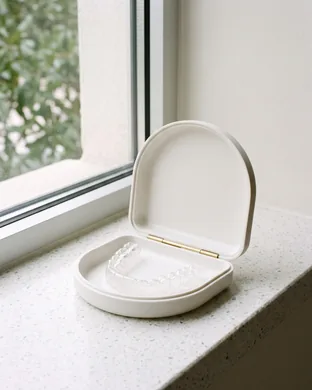
When aligners come out, the AAO’s habits for any time they are out of the mouth apply on the sideline too: put them in their case, not in a napkin, a pocket or a purse, and keep them away from pets. If one is lost or damaged, the AAO says to contact your orthodontist immediately for advice.
Drinks count as well. The AAO’s FAQ says to take aligners out before eating or drinking anything besides tap water and to brush before putting them back in, so a sports drink means the aligners come out first. How long they may stay out for practice or a game is part of the wear schedule, which the orthodontist prescribes; the page on how clear aligners move teeth shows why wear matters.
After a hit to the mouth during a game
A hard hit can turn a sports question into an emergency. The AAO’s emergency page sends certain signs straight to emergency care, through 911, an emergency room or an urgent dental clinic, among them heavy or continuous bleeding from the mouth or face, a suspected broken or dislocated jaw, and a permanent tooth that is knocked out, pushed deep into the gums or moved dramatically out of position.
Short of those signs, a bracket or wire knocked loose is an urgent orthodontic problem in the AAO’s terms, one to tell the orthodontist about immediately because it can interfere with treatment. The home steps that hold it until the repair are listed in the answer on orthodontic emergencies.
Sports, the season and a consultation with Dr. Kunik
A sport is worth naming at the consultation, before an appliance is chosen, because the choices it touches are the orthodontist’s: the AAO leaves the type of mouthguard to the orthodontist, and the ADA’s line treats a removable appliance differently from braces that stay on.
Dr. Kunik’s approach to teen orthodontic treatment is compassionate and considerate, informed by his own experiences as a parent. The page on treatment for children and teens follows the first check-up at age 7 and the teen years in more depth.
Mouthguards, aligners and game day: more questions
Can clear aligners double as a mouthguard?
Not by the ADA’s guidance. Its mouthguard page says a retainer or other removable appliance should not be worn during any contact sports, and clear aligners are removable trays in the AAO’s description. The AAO’s FAQ sends the type of mouth guard to the orthodontist, so the guard for a contact sport is a separate decision made with the orthodontist.
Does a retainer come out for games once treatment ends?
A removable one does, by the ADA’s guidance, which says a retainer or other removable appliance should not be worn during any contact sports. A fixed retainer is different: the British Orthodontic Society says fixed retainers are usually glued to the back of the teeth and are in place all the time. For a fixed retainer, the question is which mouthguard to wear, and the AAO sends that question to the orthodontist.
Is a mouthguard needed for sports that are not contact sports?
The AAO’s emergency page reaches past contact sports: it says a properly fitted mouthguard helps protect the teeth and orthodontic appliances during contact sports “or activities with a risk of impact.” The ADA says the same: any athlete may experience a dental injury in non-contact activities too. Which of your activities carry that risk is for the orthodontist to say.
Sources
- American Dental Association, MouthHealthy, Mouthguards
- American Association of Orthodontists, What is an Orthodontic Emergency and How Do You Handle Them?
- American Association of Orthodontists, Orthodontic FAQs: Your Questions Answered (read November 6, 2026)
- American Association of Orthodontists, Ceramic Braces: A Less Noticeable Way to Straighten Your Smile
- American Association of Orthodontists, How Do Braces Work?
- American Association of Orthodontists, Glossary of Orthodontic Terms
- American Association of Orthodontists, What to Expect During Orthodontic Treatment
- American Association of Orthodontists, Clear Aligner Therapy
- British Orthodontic Society, FAQs
Plan sports and orthodontic treatment together at a consultation
Consultations are always free of charge. Ask for one through the request on this page.
Domain, Downtown and Westlake: Monday to Thursday, 8:15 a.m. to 5:00 p.m.Updated .