

Clear braces are still braces: ceramic brackets, what you see and what they trade away
If you want braces that show less than metal, this page sets ceramic brackets beside metal braces and clear aligners, with what orthodontic societies and studies say they trade.
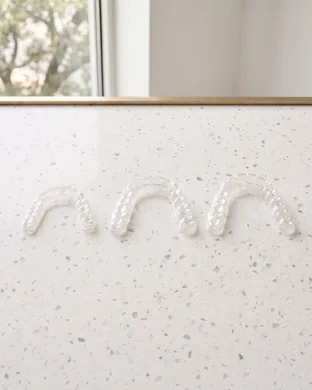
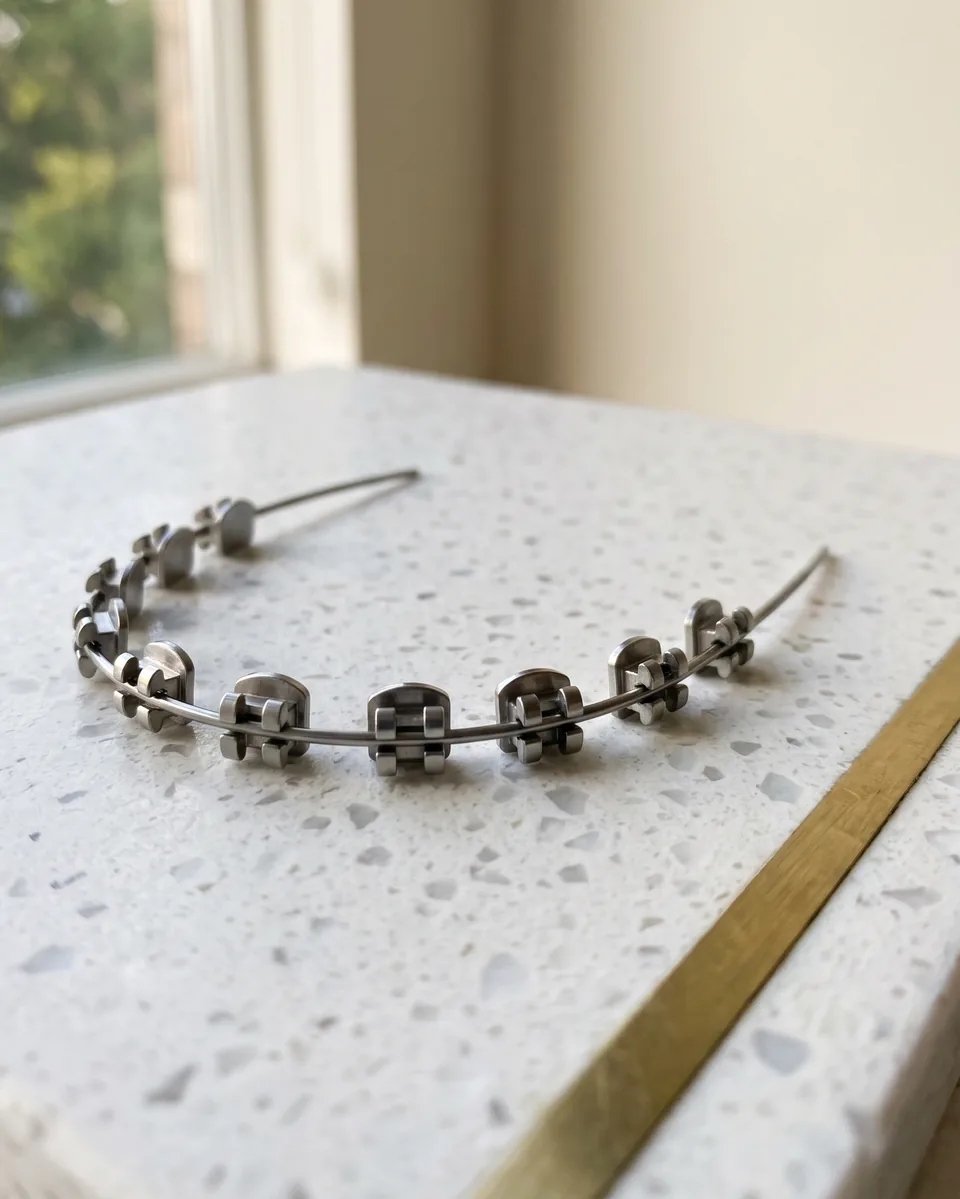
Clear braces are ceramic braces: fixed braces like metal ones, with clear or tooth-colored brackets in place of stainless steel, and the American Association of Orthodontists (AAO) says they are not the same as clear aligners, which are removable trays. The AAO says ceramic brackets are designed to blend in with the teeth but may need extra care, because the material may be more brittle than metal.
Clear braces are ceramic braces: fixed brackets, not clear aligners
Clear braces are braces. In an article dated September 8, 2026, the American Association of Orthodontists (AAO) says ceramic braces work much like traditional braces and differ mainly in appearance, and that they are sometimes called clear braces, “but they are not the same as clear aligners,” which are removable trays. Ceramic braces are fixed, the AAO says: “Once an orthodontist places them, they stay on throughout treatment.”
Braces are well suited to both major and minor orthodontic cases. They consist of clear or metal brackets attached to each tooth.
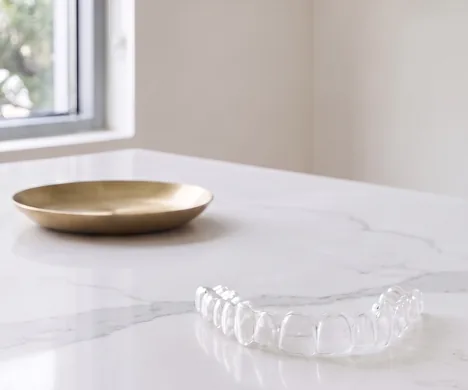
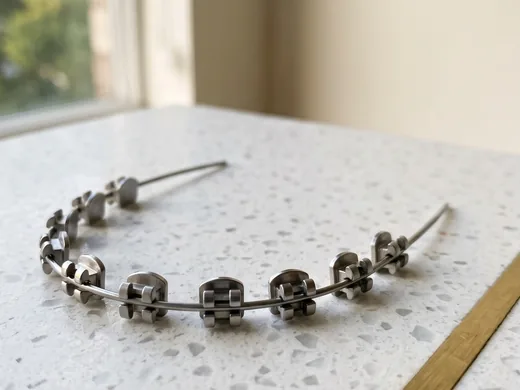
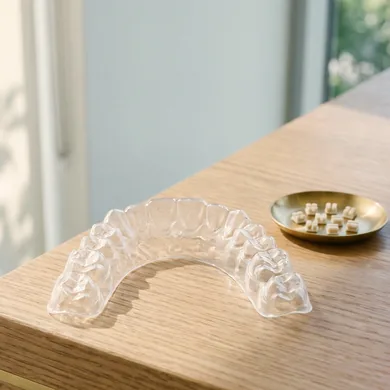
Metal braces, ceramic braces and clear aligners side by side
| Point | Metal braces | Ceramic (clear) braces | Clear aligners |
|---|---|---|---|
| Made of | Stainless steel brackets and wires | Ceramic or porcelain brackets, clear or tooth-colored | Clear, thin, plastic-like trays custom-formed to the mouth |
| Fixed or removable | Fixed; cannot be removed during treatment | Fixed until treatment is complete | Removable trays |
| What shows | More noticeable when you smile or speak | Brackets designed to blend in; brackets and wires still attached | Clear, thin trays |
| Strength, care, cooperation | Strong, reliable and commonly used | May need extra care; the material may be more brittle than metal | Must be worn as instructed; patient cooperation is very important |
What ceramic brackets are made of, and how they go on
The British Orthodontic Society (BOS), writing for patients in the United Kingdom, says that rather than stainless steel, “the attachments may be made from a hard ceramic material” to blend in with the tooth’s color. The BOS calls ceramic brackets tooth-colored or translucent, and the AAO says they are made from either ceramic or porcelain.
A 2022 laboratory study in the Dental Materials Journal tested five ceramic brackets “made of alumina (both monocrystalline and polycrystalline forms) or zirconia” and found that the monocrystalline and polycrystalline alumina brackets differed significantly in mechanical properties. A 2015 review in the journal Materials found that bracket translucency varied with composition and brand, and that the differences between brands were visible to the eye.
On bonding, the AAO’s glossary says of the bracket, “The small metal, ceramic, or plastic attachment is bonded to each tooth with a tooth-colored adhesive.” The bracket entry in the practice’s glossary explains the word. Which ceramic bracket would suit your teeth is a question for Dr. Kunik.
What still shows with ceramic brackets: the wire, the ties and the brackets’ color
The AAO says ceramic braces are less noticeable than metal ones, “but the brackets and wires are still attached to the teeth,” and that “Some patients may also have tooth-colored wires or clear elastic ties, depending on their treatment plan and the orthodontist’s recommendation.”
Esthetic elastic ties, or ligatures, can stain: in a 2016 clinical study of 20 adults in the Dental Press Journal of Orthodontics, “All four brands of esthetic ligatures showed significant staining.”
The British Orthodontic Society says the brace can become discolored over time “by contact with foods and may become less pleasing in appearance.” In a 2026 prospective clinical study of 50 patients in Biomaterial Investigations in Dentistry, all eight types of ceramic bracket tested, tied to the wire but not bonded to the teeth, showed statistically significant color change after 3 months in the mouth; crystal form did not determine how much, and the authors conclude that each brand’s manufacturing appears to be the main factor in the brackets’ long-term appearance. A 2026 laboratory study of 40 brackets in the Nigerian Journal of Clinical Practice disagrees on crystal form: soaked in coffee, its monocrystalline brackets kept their color better.
Against them, a 2012 study in the Angle Orthodontist saw no significant discoloration when it inspected magnified images of 16 ceramic brackets removed at the end of treatment, a look by eye rather than a color measurement. Which ties would go on your brackets is a question for Dr. Kunik.
Ceramic brackets: strength, friction and wear on the teeth that meet them
The AAO says ceramic brackets “can also be effective, but they may require extra care because the material may be more brittle than metal.” In an undated answer on its questions page, the British Orthodontic Society (BOS) says “The brackets are more prone to breakage than metal brackets,” and that they “tend to be abrasive and may cause wear to teeth in the opposite jaw if they should make contact when biting.” In the same undated answer, the British Orthodontic Society says wires slide through the slots of ceramic brackets less easily, so treatment may take longer, while its page on fixed braces says ceramic appliances “can be as effective as conventional fixed appliances at achieving tooth movement.”
A 1990 laboratory study in the American Journal of Orthodontics and Dentofacial Orthopedics found lower friction with stainless steel than with ceramic brackets under every condition tested. A 1997 clinical evaluation of two ceramic bracket designs in the European Journal of Orthodontics, with no metal group for comparison, reported that “Bracket fracture was a significant clinical problem, both during active treatment and at the time of appliance removal.” In a 1990 artificial-mouth test in the same American journal, with upper premolars brought against brackets on lower ones, “Ceramic brackets caused significantly greater enamel abrasion than stainless steel brackets.”
Clinical studies of bracket failure disagree: a 2024 prospective trial of 80 patients in the International Dental Journal and a 2018 retrospective study of 78 patients in the Angle Orthodontist found more failures with ceramic brackets, while a 2020 randomized study of 20 patients in BioMed Research International found more with metal ones. After its list of drawbacks, the BOS says, “if appearance is at a premium, ceramic brackets may still be the first choice for many patients.”
Which teeth and which patients ceramic brackets suit
The AAO says “Ceramic braces are not right for every patient or every orthodontic concern,” and its braces page adds, “In some cases, ceramic braces may not be available as a treatment option to some patients.”
The British Orthodontic Society says ceramic appliances are sometimes not recommended for the lower teeth, “if the bite is deep, because the hard material can damage the opposing teeth that contact the attachments.” Its advice sheet for clinicians, reviewed in 2023, lists enamel trauma from wear by brackets in the lower arch among less common but clinically significant risks and adds, “This is a particular problem with ceramic brackets.” A 1992 review in the Angle Orthodontist points to “careful selection of teeth to be bonded with ceramic brackets.”
On patients, the AAO says ceramic braces may especially appeal to adults and older teens, and “can also help patients whose orthodontic needs are better suited to braces than aligners”; adults have a page of their own on orthodontics for adults.
The choice of bracket and of teeth is the orthodontist’s, so bring the AAO’s first question to Dr. Kunik at the consultation: “Am I a good candidate for ceramic braces?”
Day to day with ceramic brackets, and fixed against removable
The AAO’s article, right after its line that the material may be more brittle than metal, says patients with ceramic braces “should follow their orthodontist’s instructions about foods to avoid, cleaning around brackets, and protecting the braces from damage.” The full brushing, flossing and food routine for braces is on the braces page.
Against clear aligners, the AAO frames the choice as fixed against removable: because ceramic braces are fixed, “patients do not need to remember to put them in or take them out,” while clear aligners “can also be effective for many patients, but patient cooperation is very important.” How aligners work, and what they can treat, is on the page about Invisalign® treatment with clear aligners.
Taking ceramic brackets off, and what comes after
At removal, which research papers call debonding, the AAO says the orthodontist takes the brackets off with specialized orthodontic instruments. The British Orthodontic Society (BOS) says ceramic appliances “are slightly more difficult to remove than conventional fixed appliances, however, they are unlikely to damage healthy teeth in most cases,” and its undated questions page speaks of “a slightly higher risk of damage to the tooth surface.”
A 2017 clinical study in the American Journal of Orthodontics and Dentofacial Orthopedics, which looked under an electron microscope for enamel on brackets removed from 81 patients near the end of treatment, concluded that enamel damage “regularly occurred during the debonding process with the degree of damage being highly variable” and that “Damage occurred more frequently when ceramic brackets were used” than with metal brackets. A 2024 systematic review in the Journal of Functional Biomaterials, which mixed studies in patients with studies on human teeth outside the mouth, concluded that its findings “suggest that ceramic brackets may lead to an increase in enamel fractures, particularly during bracket removal.” The BOS adds that any concerns should be discussed with your orthodontist.
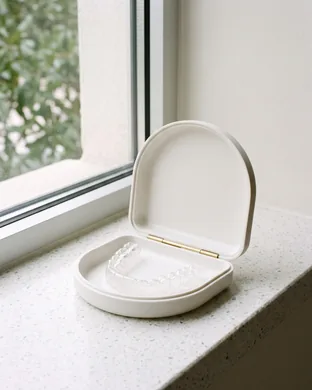
A dental retainer is a custom-made appliance that maintains the position of your teeth after orthodontic treatment. The practice’s Hybrid treatment moves between braces and clear aligners in two phases. The American Association of Orthodontists lists Dr. Kunik at all three offices. Find us shows The Domain, Downtown and Westlake offices.
Clear braces questions people ask before they choose
Do clear braces stain?
By the studies’ measures, the ties and the brackets can both change color. Clinical studies found significant staining in all four brands of esthetic tie tested on 20 adults (Dental Press Journal of Orthodontics, 2016) and statistically significant color change after 3 months in the mouth in all eight ceramic bracket types tested on 50 patients, with the brackets tied to the wire but not bonded to the teeth (Biomaterial Investigations in Dentistry, 2026). A 2012 study in the Angle Orthodontist saw no significant discoloration by eye on 16 ceramic brackets removed after treatment.
Are clear braces only used on the top teeth?
Not necessarily, by the British Orthodontic Society’s account: it says ceramic appliances are sometimes not recommended for the lower teeth, if the bite is deep, because the hard material can damage the opposing teeth. More generally, the American Association of Orthodontists says ceramic braces may not be an option for some patients. Which teeth, if any, would carry ceramic brackets is a question for Dr. Kunik at the consultation.
Can an older teenager have clear braces?
Older teens are one of the groups the American Association of Orthodontists names: it says ceramic braces “may be especially appealing to adults, older teens, or anyone who feels self-conscious about wearing metal braces.” Whether they suit a particular teenager is a question for the consultation; the page on treatment for teens covers those years.
Do ceramic braces work as well as metal braces?
Both can be effective, the American Association of Orthodontists says, and neither option is automatically better for everyone. The right choice, it says, depends on your teeth, bite, treatment goals, lifestyle and your orthodontist’s recommendation. For your bite, that recommendation is Dr. Kunik’s.
Sources
- American Association of Orthodontists, Ceramic Braces: A Less Noticeable Way to Straighten Your Smile
- American Association of Orthodontists, How Do Braces Work?
- American Association of Orthodontists, Clear Aligners
- American Association of Orthodontists, Glossary of Orthodontic Terms
- American Association of Orthodontists, What to Expect After Braces Removal: A Patient’s Guide
- American Association of Orthodontists, Find an Orthodontist
- British Orthodontic Society, Conventional Fixed Braces
- British Orthodontic Society, FAQs
- British Orthodontic Society, advice sheet reviewed 2023, Risks of Orthodontic Treatment: Guidance on Informing Patients
- Iwasaki et al., Dental Materials Journal, 2022 (PubMed record), Mechanical characterization of aesthetic orthodontic brackets by the dynamic indentation method
- Lee, Materials (Basel), 2015 (PubMed record), Translucency of Dental Ceramic, Post and Bracket
- Kawabata et al., Dental Press Journal of Orthodontics, 2016 (PubMed record), Color changes of esthetic orthodontic ligatures evaluated by orthodontists and patients: a clinical study
- Polat and Yilmaz, Biomaterial Investigations in Dentistry, 2026 (PubMed record), Optical performance of monocrystalline and polycrystalline ceramic brackets: a prospective in vivo study of color stability and light transmittance
- Korayem, Nigerian Journal of Clinical Practice, 2026 (PubMed record), Color Stability of Monocrystalline and Polycrystalline Ceramic Orthodontic Brackets Immersed in Coffee Solution: An In Vitro Comparative Study
- Gkantidis et al., The Angle Orthodontist, 2012 (PubMed record), Comparative assessment of clinical performance of esthetic bracket materials
- Pratten et al., American Journal of Orthodontics and Dentofacial Orthopedics, 1990 (PubMed record), Frictional resistance of ceramic and stainless steel orthodontic brackets
- Artun, European Journal of Orthodontics, 1997 (PubMed record), A post-treatment evaluation of multibonded ceramic brackets in orthodontics
- Viazis et al., American Journal of Orthodontics and Dentofacial Orthopedics, 1990 (PubMed record), Enamel abrasion from ceramic orthodontic brackets under an artificial oral environment
- Scribante et al., International Dental Journal, 2024 (PubMed record), Metallic vs Ceramic Bracket Failures After 12 Months of Treatment: A Prospective Clinical Trial
- Stasinopoulos et al., The Angle Orthodontist, 2018 (PubMed record), Failure patterns of different bracket systems and their influence on treatment duration: A retrospective cohort study
- Ogiński et al., BioMed Research International, 2020 (PubMed record), A Clinical Comparison of Failure Rates of Metallic and Ceramic Brackets: A Twelve-Month Study
- Ghafari, The Angle Orthodontist, 1992 (PubMed record), Problems associated with ceramic brackets suggest limiting use to selected teeth
- American Journal of Orthodontics and Dentofacial Orthopedics, 2017 (PubMed record), Abstract, volume 152, issue 3
- Inchingolo et al., Journal of Functional Biomaterials, 2024 (PubMed record), Structural and Color Alterations of Teeth following Orthodontic Debonding: A Systematic Review
Clear braces for your teeth: bring your questions to a consultation
Consultations are always free of charge. You do not need a referral. Send a consultation request with your questions about clear braces.
Monday to Thursday, 8:15 a.m. to 5:00 p.m. Closed 1:00 to 2:15 p.m. for lunch. Downtown is by appointment only, on Thursdays.Updated .