

What is an overbite, and can braces or aligners fix it?
Overbite and overjet are two different problems of the upper front teeth in the American Association of Orthodontists’ glossary, and which one you have, or whether you have both, shapes the job braces, Invisalign® treatment or Hybrid treatment would be asked to do.
An overbite, in the American Association of Orthodontists’ glossary, is upper front teeth that excessively overlap the bottom front teeth when the back teeth are closed, also called a deep bite; upper front teeth that protrude in front of the lower ones are overjet. The AAO calls braces the most common treatment for a deep bite and says clear aligners can also be used, though reviews disagree on how predictably aligners correct one.
Overbite and overjet, side by side in the AAO glossary
The American Association of Orthodontists (AAO) glossary defines overbite as “The upper front teeth excessively overlap the bottom front teeth when back teeth are closed,” and overjet as “The upper front teeth protrude in front of the bottom front teeth when back teeth are closed.”
| In the AAO glossary | Overbite | Overjet |
|---|---|---|
| What the upper front teeth do | Overlap the bottom front teeth too far | Protrude in front of the bottom front teeth |
| Other names the glossary gives | Closed bite, deep bite | Buck teeth |
A little overlap is normal: the AAO says “A small amount of overlap is natural in a proper bite,” and that a deep bite is overlap beyond the typical amount. The glossary entry on overbite gives the definition on its own.
Habits, baby teeth, bone and jaw growth: the causes the AAO names
The AAO gives overbite and protruding front teeth different causes, running from habits to the jaws. For a deep bite, the AAO says: “Beyond oral fixations and childhood habits, deep bites can be caused by early loss of baby teeth, overdevelopment of supporting bone, and discrepancies in jaw growth.”
For protruding front teeth, the AAO lists a shorter set: “Genetic factors, oral habits, and teeth alignment are common causes of protrusion.”
The list matters for treatment because two of its causes, overdevelopment of supporting bone and discrepancies in jaw growth, involve bone and the jaws rather than the teeth alone. Which causes apply to one bite is sorted out at the consultation.
Growing children: what Cochrane and the AAPD found on overbite and overjet
On protruding upper front teeth in children, the overjet side, a 2018 Cochrane review says evidence of low to moderate quality suggests early treatment is more effective at reducing injuries to the upper front teeth than one course of treatment in adolescence, and that there appear to be no other advantages of starting early; that review is set out on the page about early treatment for children and teens.
On deep bite the evidence is thinner. Cochrane’s 2018 review of the Class II division 2 bite, a deep bite in which the upper front teeth tilt back, states: “There is no evidence from clinical trials to recommend or discourage any type of orthodontic treatment to correct Class II division 2 malocclusion in children.”
Guiding growth carries its own uncertainty. The American Academy of Pediatric Dentistry (AAPD) says response to growth modification with headgear or functional appliances varies substantially, and that “no reliable predictors for favorable growth response have been found.”
For a parent, that makes timing a judgment about one child: whether an overbite or overjet is treated early, watched, or treated later is decided at the examination.
Braces for a deep bite, as the AAO describes them
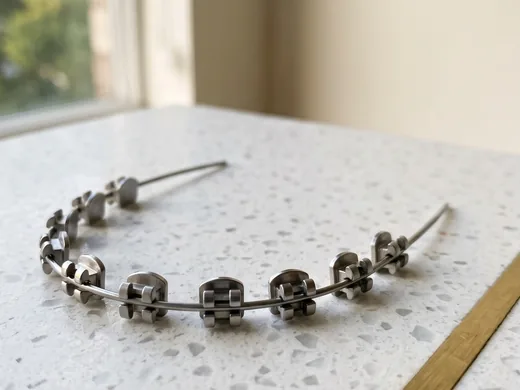
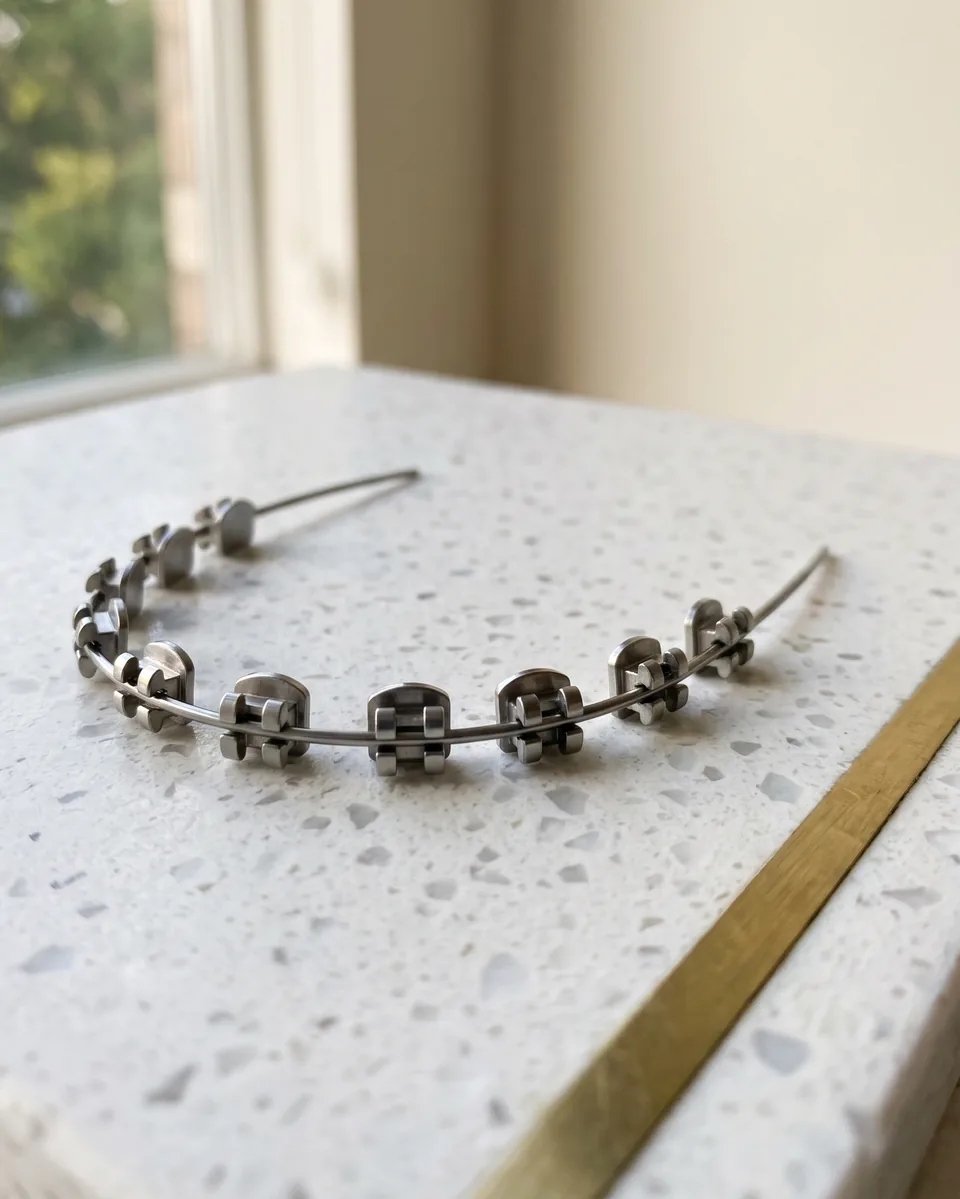
For a deep bite, the AAO’s article on the subject says: “Braces are the most common treatment method for a deep bite.” The same article says braces “apply continuous pressure to the teeth to move them to the correct position,” and that “The orthodontist adjusts brackets and archwires throughout treatment to change the bite depth over time.”
The practice offers braces in metal or ceramic, and the page on how braces work explains the brackets, wires and elastics behind that adjustment. How long a particular deep bite takes in braces is answered at the consultation rather than with a figure here.
Clear aligners and a deep bite: where the reviews disagree
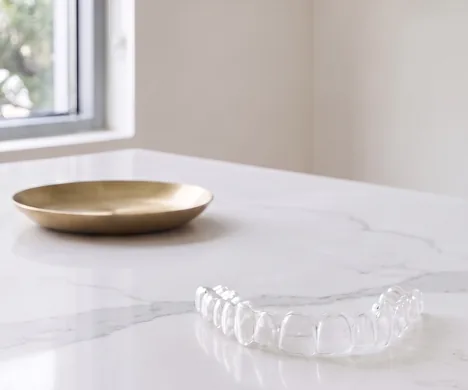
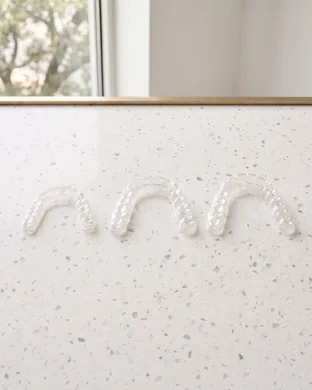
Clear aligners are the other route the AAO names for a deep bite: “Clear aligners can also be used for deep bites.” Invisalign treatment is the practice’s clear aligner route, and the page on how Invisalign clear aligners work describes the trays themselves.
The research splits on one movement: intrusion of the front teeth, which a 2026 scoping review ties to deep bite correction.
| Study | What it found | Its own limits |
|---|---|---|
| Rossini and colleagues, The Angle Orthodontist, 2015 (systematic review) | Aligner treatment “is effective in controlling anterior intrusion but not anterior extrusion” | Its authors urge caution over the number, quality and heterogeneity of the studies |
| Borzabadi-Farahani, Frontiers in Dental Medicine, 2026 (scoping review) | Evidence suggests aligners are “less predictable for certain types of tooth movement, including deep bite correction (incisor intrusion)” | Listed beside rotations, expansion and front to back correction |
| Haouili and colleagues, American Journal of Orthodontics and Dentofacial Orthopedics, 2020 (prospective study) | The accuracy of intrusion of the lower incisors was particularly low | A single prospective study |
Read together, the AAO says aligners can be used for a deep bite, and the studies disagree on how predictably they correct one. The AAO’s broader line is that aligners “can also be paired with traditional orthodontic elastics, while some cases are treated more predictably with braces,” which is why the choice is made one bite at a time.
Braces and aligners in one plan: where Hybrid treatment fits
Some deep bite plans combine braces and clear aligners. A 2023 overview in the Journal of Clinical Orthodontics (Kravitz and colleagues) describes the most common form of hybrid aligner treatment as clear aligners on the upper teeth with fixed appliances across the whole lower arch, an approach “typically employed in an adult patient with a deep overbite and excessive lower curve of Spee.”
The practice’s own Hybrid treatment runs in two phases, The Braces Phase and The Invisalign Phase, and in its words: We may adjust your braces, provide new aligner sets, or transition between methods as your treatment progresses. The journal describes the field; whether a deep bite calls for Hybrid treatment, and in which order, is decided at the consultation, and the Hybrid treatment page walks through the two phases.
Overbite, overjet or both: what the consultation settles
A consultation turns the AAO’s and the reviews’ general picture into an answer for one bite: whether it is an overbite, an overjet or both; whether habits, baby teeth, bone or jaw growth sit behind it; whether a growing child is treated now or watched; and which of braces, Invisalign treatment or Hybrid treatment suits the movements involved.
Some bites involve the jaws themselves, and that work is divided by specialty: in the AAO’s words, “An orthodontist moves teeth and guides jaw growth using braces or aligners. An oral surgeon corrects skeletal jaw discrepancies through surgery.” The referral to that surgeon, the AAO says, comes from the orthodontist and precedes the orthodontic treatment itself.
Dr. Kunik is here to listen to your smile goals, listen to your timeline, and listen to what is most important to you. Underbites, crossbites and open bites have answers of their own among the practice’s questions and answers.
Overbite questions, answered
Is an overbite the same as buck teeth?
No. In the American Association of Orthodontists’ glossary, buck teeth is another name for overjet, upper front teeth that protrude in front of the lower ones, while an overbite is upper front teeth that overlap the lower ones too far, also called a deep bite. The two may come together: the AAO says people with protruding front teeth may also have a deep bite.
Can mewing fix an overbite?
Not according to the AAO, whose article on mewing says “there’s no current research that suggests the technique provides any benefit to your jawline or oral health.” An overbite is treated by moving teeth with braces or aligners, and where the jaws themselves need correcting, by an oral surgeon on an orthodontist’s referral.
Is an overbite a Class II bite?
Sometimes. Cochrane’s review of prominent upper front teeth calls that problem Class II malocclusion in its title, and its 2018 review of deep bite describes a Class II division 2 bite as upper front teeth tilted back with “an increased overbite (deep overbite), which can cause oral problems and may affect appearance.” Which class a bite falls in is part of the diagnosis made at the examination.
Sources
- American Association of Orthodontists, Glossary of Orthodontic Terms
- American Association of Orthodontists, 7 Types Of Bite Problems and Their Orthodontic Solutions
- American Association of Orthodontists, What is a Deep Bite? Causes, Symptoms, & Treatment
- Batista and others, Cochrane Database of Systematic Reviews, 2018, Orthodontic treatment for prominent upper front teeth (Class II malocclusion) in children and adolescents, abstract
- Millett and others, Cochrane Database of Systematic Reviews, 2018 (PubMed record), Orthodontic treatment for deep bite and retroclined upper front teeth in children
- American Academy of Pediatric Dentistry, Management of the Developing Dentition and Occlusion in Pediatric Dentistry
- American Association of Orthodontists, Clear Aligners
- Rossini and colleagues, The Angle Orthodontist, 2015 (PubMed record), Efficacy of clear aligners in controlling orthodontic tooth movement: a systematic review
- Borzabadi-Farahani, Frontiers in Dental Medicine, 2026 (PubMed Central), Clear aligner therapy: a scoping review of treatment prediction, clinical effectiveness, and limitations
- Haouili and colleagues, American Journal of Orthodontics and Dentofacial Orthopedics, 2020 (PubMed record), Has Invisalign improved? A prospective follow-up study on the efficacy of tooth movement with Invisalign
- Kravitz, Miller, Bowman and Wilmes, Journal of Clinical Orthodontics, 2023, Overview: Hybrid Aligner Treatment
- American Association of Orthodontists, Dentist vs. Orthodontist vs. Oral Surgeon: What’s the Difference?
- American Association of Orthodontists, Orthodontic Surgery: Enhancing Your Smile’s Foundation
- American Association of Orthodontists, What is Mewing, and Does it Work?
Ask which kind of overbite you have at a consultation
Consultations are always free of charge. You do not need a referral. Send a consultation request from this page, or call the Domain, Downtown or Westlake office.
Domain, Downtown and Westlake: Monday to Thursday, 8:15 a.m. to 5:00 p.m.Updated .