

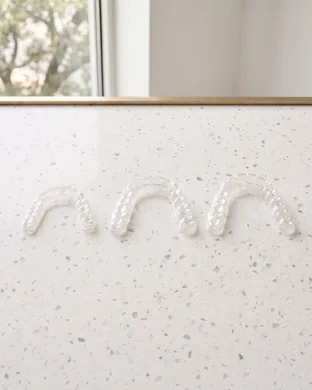
A retainer lost, cracked or too tight: what to do today, and how a replacement is made
This page covers the day a retainer goes missing, cracks or stops fitting: what the orthodontic societies say to do, and how a replacement is made. Kunik Orthodontics can normally make a replacement retainer from the digital scan it already has on file.
If a retainer is lost, cracked or no longer fits, the American Association of Orthodontists (AAO) says to see the orthodontist as soon as possible, and the British Orthodontic Society says not to wait for the next review appointment when one breaks or is lost. The AAO says to stop wearing a cracked retainer, not to force one that no longer fits, and that a replacement may need a new scan or impression.
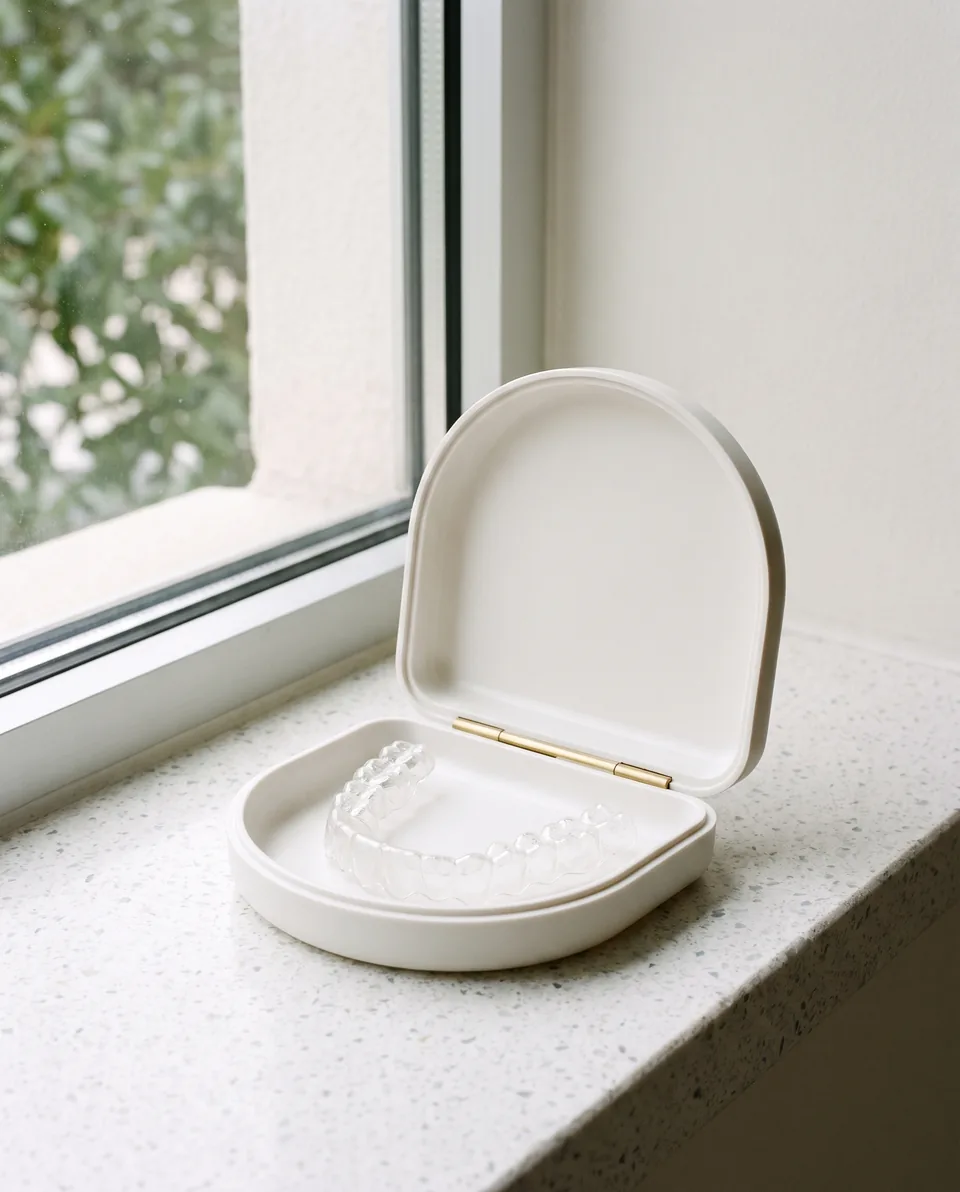
The first step for a lost or broken retainer, in the societies’ words
The American Association of Orthodontists (AAO) and the British Orthodontic Society (BOS) agree on the first step for a lost or broken retainer: let the orthodontist’s office know soon. The BOS’s 2019 patient leaflet, written for patients in the United Kingdom, says “Ring up for an appointment as soon as possible” and not to wait for the next review appointment, because the teeth may move while the retainer cannot be worn.
The AAO’s post of December 16, 2025 names three mishaps in one sentence: “Whether your dog ate your retainer, you accidentally threw it away, or it no longer fits properly, it’s essential to see your orthodontist as soon as possible.”
The AAO’s post of October 13, 2026 adds that a tight retainer “may not seem urgent, but you do not have to decide on your own”: call the orthodontic office and explain what happened, and the office can say whether it needs immediate attention or can wait until your next appointment. To reach Kunik Orthodontics about a retainer, call the office or send the practice a text.
Why the societies say not to wait when a retainer is lost or broken
A missing or damaged retainer is no longer doing its job, as the AAO puts it: its post of September 16, 2026 says “A cracked, lost, or ill-fitting retainer can’t do its job.” Without a phase of retention after successful orthodontic treatment, Cochrane’s 2023 review of retention after braces says, teeth tend to return to their initial position, which the review calls relapse; why that happens is the subject of the main retainers page.
The AAO’s post of October 14, 2025 warns: “Keep in mind that skipping your retainers for even a few days could cause your teeth to shift significantly.” The British Orthodontic Society’s patient FAQs say “there is a particular risk of relapse in the early months after the brace is removed.”
Papagiannis and others (European Journal of Orthodontics, 2021) recruited 38 patients, took impressions when their braces came off and again a week later, with no retainer worn in between, and detected relapse on 3D scans of the two sets; the abstract gives no amount of movement, and the study measured the week right after braces, not a retainer lost later on. What a missing retainer means for your own teeth is for the orthodontist to judge.
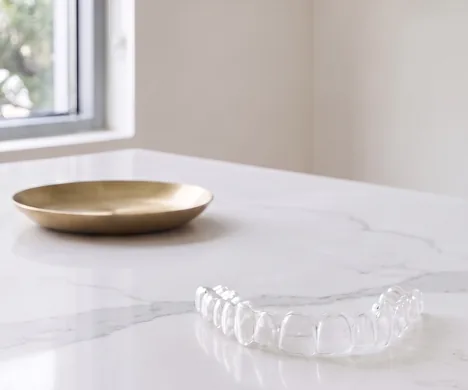
Replacing a lost or cracked clear retainer, and how the new one is made
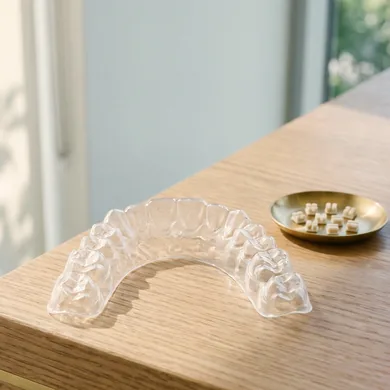
In the AAO’s guidance, a cracked or warped clear retainer is a reason to call the orthodontist, not to fix it at home. For visible damage, its cleaning guide of June 5, 2025 says to contact the orthodontist, adding “They can evaluate whether the retainer can be repaired or if a replacement is necessary,” and its guidance of October 21, 2026 says “Do not try to reshape a retainer at home with hot water or other do-it-yourself methods.”
The AAO’s post of October 14, 2025 says “After your active treatment is completed, your orthodontist will take a mold or digital scan of your mouth to create a retainer,” and for a replacement its guidance of October 21, 2026 says “If a replacement retainer is appropriate, you may need a new scan or impression so the replacement matches your current teeth.”
The practice names its two kinds Clear Removable Retainers and Fixed Retainers, and its statement on the digital scan on file opens this page. Whether your replacement is made from that scan or needs a new one, for example because your teeth have moved since it was taken, is for the office to decide. The practice’s own pages name iTero digital scans, and the glossary explains what such a scan records; what your own record at the practice holds is a question for the office.
A retainer that feels tight or will not seat: the AAO’s October 2026 guidance
In the AAO’s guidance of October 21, 2026, a snug retainer is not the same as one that no longer fits: “If your retainer feels a little snug but still fits fully over your teeth without significant pain, the change may be related to minor tooth movement.” For that case it says to follow the wear instructions your orthodontist gave you, and to contact the orthodontist if the fit still causes discomfort, gets worse, or you are unsure about wearing it.
A retainer that no longer fits is not to be forced, the same guidance says, and its reasons to contact an orthodontist include these:
- It will not seat fully over your teeth.
- You have to push hard or bite down forcefully to get it into place.
- You feel significant or sharp pain when putting it in or wearing it.
- One part fits while another part visibly sits away from the teeth.
- The fit has changed and does not soon settle with the wear your orthodontist set.
When the fit has changed, the AAO describes an evaluation first: the orthodontist “can examine your teeth and bite, assess how the retainer fits, and look for wear or damage to the appliance,” and making a replacement retainer is one of the next steps it lists, beside adjusting the retainer or discussing further treatment. “The purpose of the visit is first to assess the problem and discuss your options,” it says, so in the AAO’s description the check comes before a replacement; whether more wear can move shifted teeth back is taken up on the retainers page.
A bonded retainer wire that has come loose
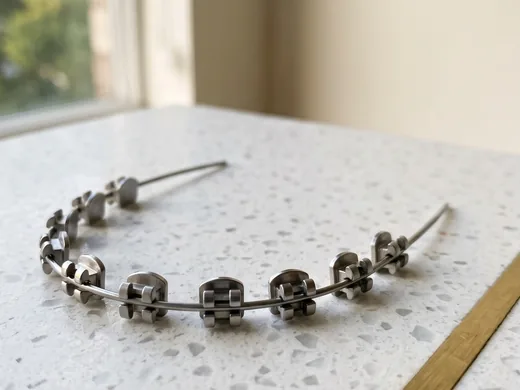
A fixed retainer that comes loose or breaks is a reason to contact the orthodontist at once, in the British Orthodontic Society’s words: its patient FAQs say a tooth may drift if any of the glue fails, and “For this reason it is essential for the patient to contact the orthodontist at once if there is a breakage.” The AAO likewise says to notify the orthodontist immediately if a fixed retainer is damaged.
How a loose bonded wire is put right is the orthodontist’s decision, and how often bonded wires came loose in studies is on the retainers page.
When another office made your retainer
If another office made your retainer, start with a call or a text to the office: the practice’s statement about the digital scan on file covers patients whose scan it already has. Whether the practice can make a retainer for someone whose records are elsewhere, what that would involve and what to have ready are questions for that call, as is a bonded retainer that another office placed and that has come loose. The societies’ reason for not waiting, that teeth may move while no retainer is worn, holds wherever the retainer was made.
Keeping the next retainer safe, and the three offices
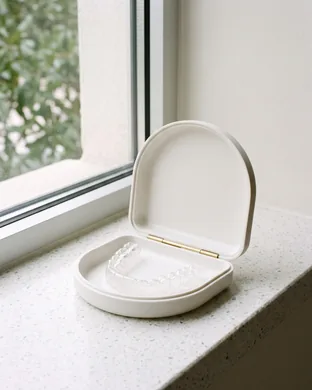
Keeping a retainer safe starts with its case, in the AAO’s advice: its retainers page says “If it’s not in your face, it should be in your case,” and its post of October 14, 2025 warns that pockets, napkins and paper towels are an easy way to throw a retainer away by accident, send it through the washer and dryer, or lose it.
The same retainers page says “When inserting or removing your retainer, gently use both hands to prevent unnecessary stress or bending,” and the AAO’s guidance of October 21, 2026 says to keep a removable retainer away from excessive heat; how to clean a clear retainer day to day has an answer of its own.
For a lost, broken or tight retainer, the next step is a call or a text. Kunik Orthodontics has three offices, Domain, Downtown and Westlake, and the page to find each office shows its door and its drive-up film.
Cracked, worn-out, spare and long-lost retainers: follow-up questions
Can I keep wearing a cracked retainer until I get a new one?
Not according to the AAO. Its cleaning guide of June 5, 2025 says to stop wearing a retainer right away on noticing cracks or loose wires, because continuing to wear a warped or broken retainer can shift the teeth improperly or irritate the mouth, and its emergency page of February 16, 2026 says not to keep wearing a retainer that is sharp, painful or badly distorted. What to do in the meantime is for the office to say.
Do clear retainers wear out?
Yes, they can: the AAO’s guidance of October 21, 2026 says removable retainers can wear, crack, bend or distort, and that daily insertion, removal, cleaning, storage and normal wear can eventually affect an appliance; that guidance gives no figure for how long a retainer lasts. In a prospective cohort study of 93 patients aged 12 to 25, each given an upper clear retainer for wear at night beside a fixed retainer (Bilińska and others, Orthodontics & Craniofacial Research, 2025), the failure recorded most often was occlusal wear, wear from the bite, and the authors report a high failure rate by the end of follow-up. Whether your own retainer needs replacing is for the office to judge.
Should I have a spare retainer?
A spare is your orthodontist’s recommendation to make. Writing about a cracked retainer, the AAO’s cleaning guide of June 5, 2025 speaks of a backup in conditional terms: “If you have a backup retainer, wear it in the meantime to prevent relapse.” Its guidance of October 21, 2026 sets a limit beside that: do not force an old retainer onto teeth it no longer fits normally, since the teeth or the appliance may have changed. Whether a second retainer makes sense for you is a question for the office.
I lost my retainer years ago and my teeth have moved: is a new retainer enough?
Not always. The AAO’s guidance of October 21, 2026 says that, depending on the situation, the options may include an adjustment, a new retainer, or orthodontic treatment such as clear aligners or braces, and that an evaluation does not mean automatically beginning braces or clear aligner treatment. Which of those fits your teeth is the orthodontist’s judgment after examining them. If the answer is treatment, what a first orthodontic consultation covers is set out in its own answer, and the adults page lays out adult orthodontic treatment.
Sources
- American Association of Orthodontists, Why Do Dogs Eat Orthodontic Retainers?
- American Association of Orthodontists, What is an Orthodontic Emergency and How Do You Handle Them?
- American Association of Orthodontists, What Your Orthodontist Wishes You Knew: 10 Things Patients Often Don’t Realize
- American Association of Orthodontists, What to Expect After Your Braces Come Off
- American Association of Orthodontists, My Retainer Feels Tight or Doesn’t Fit. Should I Force It?
- American Association of Orthodontists, Will My Teeth Keep Moving Post Treatment?
- American Association of Orthodontists, How to Clean Retainers: AAO’s Guide to Retainer Care
- American Association of Orthodontists, Orthodontic Retainers: Types, Care, & Life After Braces
- American Association of Orthodontists, What Are Dental Retainers?
- British Orthodontic Society, Retainers, patient information leaflet (2019)
- British Orthodontic Society, FAQs
- Martin C, Littlewood SJ, Millett DT and others, Cochrane Database of Systematic Reviews, 2023, Retention procedures for stabilising tooth position after treatment with orthodontic braces (abstract)
- Papagiannis A, Koletsi D, Halazonetis DJ, Sifakakis I, European Journal of Orthodontics, 2021, Relapse 1 week after bracket removal: a 3D superimpositional analysis
- Bilińska M, Sankiewicz M, Gera A, Cattaneo PM, Cornelis MA, Orthodontics & Craniofacial Research, 2025, Clinical Effectiveness of Upper Vacuum-Formed Retainers Used in A Dual Retention Protocol After Orthodontic Treatment: Retainer Failures and Upper Arch Stability. A 24-Month Prospective Cohort Study
Tell the office about a lost, broken or tight retainer
Call the office or text the practice about a lost, broken or ill-fitting retainer, and say what happened to it.
Monday to Thursday, 8:15 a.m. to 5:00 p.m. Closed 1:00 to 2:15 p.m. for lunch. Downtown is by appointment only, on Thursdays.Updated .