

What causes gaps between teeth, and how are they closed?
A gap left by a missing tooth and a gap between teeth that are all present call for different plans, so this answer begins with the cause.
Gaps between teeth can result from missing teeth, undersized teeth or oversized jaws, the American Association of Orthodontists says, and childhood habits, a large frenum or, in adults, gum disease can play a part. An orthodontist closes a gap by moving the teeth with braces or clear aligners, and retainers help keep it from reopening. A gap left by a missing tooth may instead be held open for a replacement tooth.
Why the cause of a gap comes first
The cause of a gap decides its plan, and the first thing to settle is whether the gap was left by a missing tooth or sits between teeth that are all present. The American Association of Orthodontists (AAO) puts the causes this way in its article on common bite problems: “Spacing issues can result from missing teeth, undersized teeth, oversized jaws, or a combination of these conditions.” Its Teeth Spacing article adds that “missing teeth can lead to gaps as surrounding teeth shift into the open space over time.”
A gap from a missing tooth raises a question the others do not: whether to close the space or keep it for a replacement tooth, which the dentist decides with the orthodontist.
Among teeth that are all present, the AAO names childhood habits and, in adults, the gums: “Certain childhood habits, such as thumb sucking, prolonged pacifier use, or tongue thrusting, can influence how teeth align,” and in adults “gum disease or bone loss can reduce support around the teeth, which may cause new gaps to develop or existing spaces to widen.” A new or widening gap in an adult goes to the dentist or a periodontist for the gums first.
A small space between the front teeth, and the frenum
In the AAO’s description, spacing means gaps between teeth, which “may appear as a small space between the front teeth or as multiple spaces throughout the smile.” For that front gap, the AAO’s glossary points to the frenum, the tissue attachment between the lip and the upper jaw: “A large frenum can cause spacing between the front teeth.”
Two systematic reviews add the evidence for children. A 2021 review (Nuvvula and colleagues, International Journal of General Medicine) says the most common causes of a gap between the upper front teeth in children under 12 seem to include the shape of the frenum and extra teeth at the front of the upper jaw. A 2022 review in the International Journal of Pediatric Otorhinolaryngology says an upper lip frenectomy “should be delayed until permanent lateral incisors have erupted” and that current literature recommends against a frenectomy before the gap has been addressed with orthodontics.
A frenectomy is surgery and belongs to a surgeon, and the 2022 review places it after the gap is addressed with orthodontics, not before.
Closing a gap with braces or clear aligners
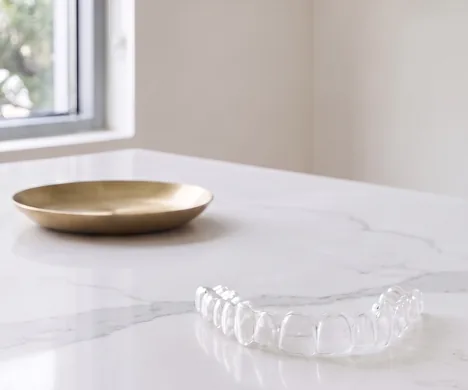
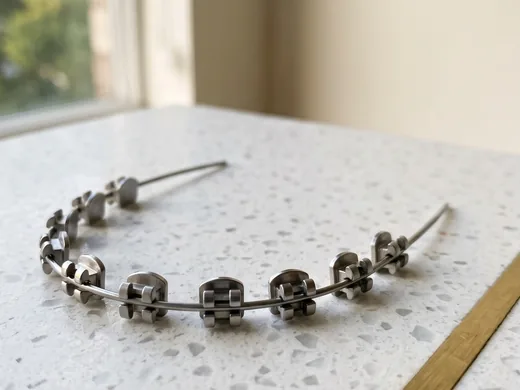
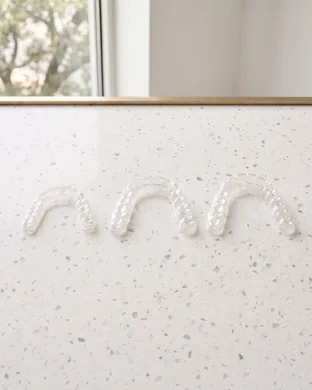
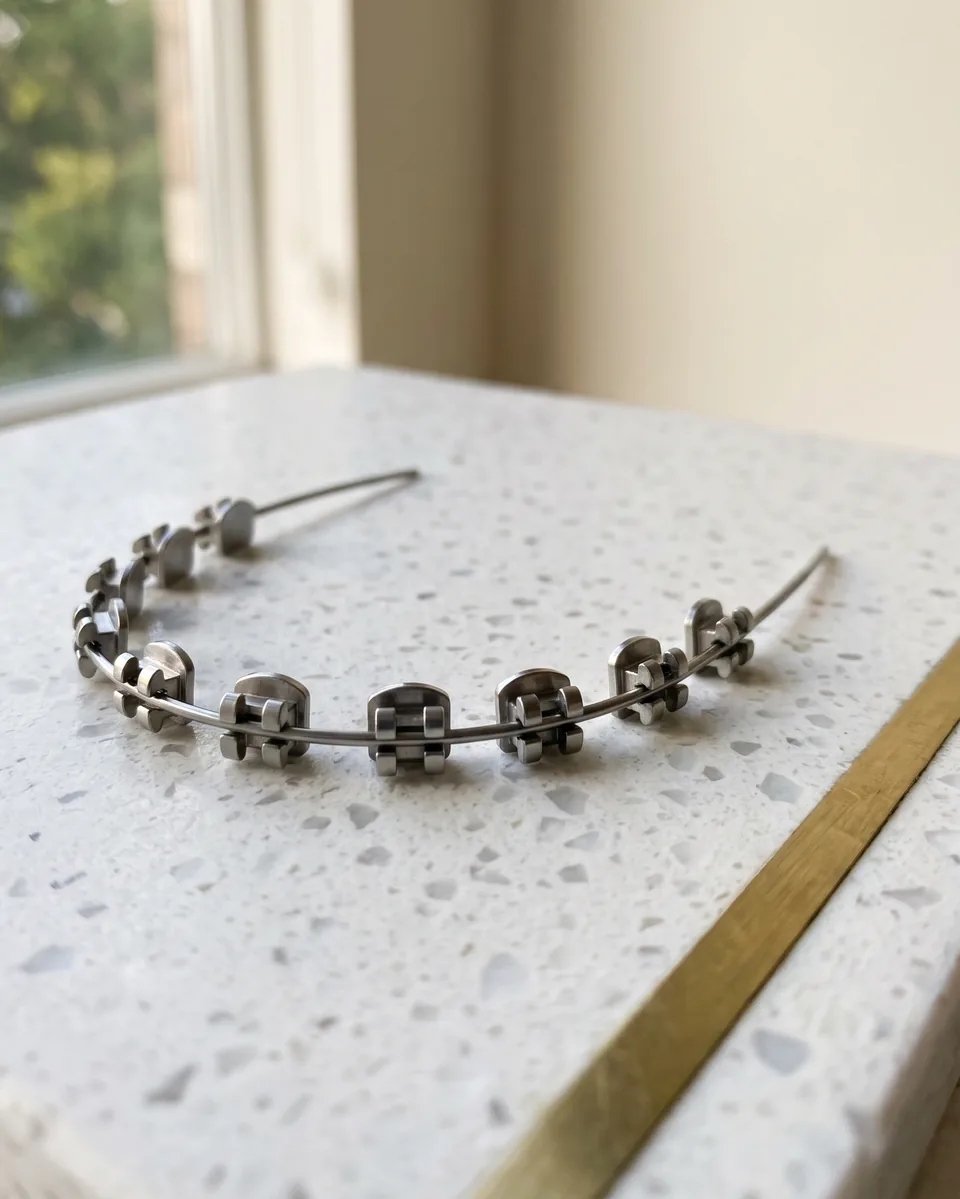
Closing a gap means moving the teeth on either side of it together, which orthodontists do with braces or aligners. The practice offers metal or ceramic braces and Invisalign® clear aligners, and its Hybrid combines the two.
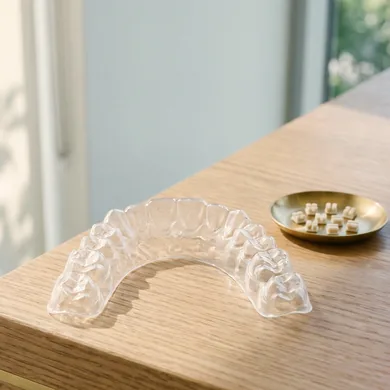
The AAO sets the range for aligners in two articles. Its article on teeth spacing says “clear aligners can be a good option for mild to moderate spacing, gradually moving teeth into proper alignment to close gaps,” while a 2024 AAO article on clear aligners cautions that they “may not work as predictably for severe malocclusions, significant tooth rotations, and large gaps,” adding that “traditional braces may offer more precision in these cases.”
The size of the gap and what else the bite needs both bear on the choice, so which appliance closes a particular gap is decided at the consultation.
Keeping a closed gap from reopening
A closed gap can open again, and the AAO says retainers help keep it from reopening: “Because some spacing issues are more prone to relapse, wearing your retainer as directed is essential for keeping your smile aligned long term.”
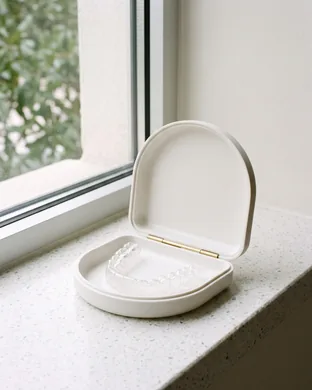
A dental retainer is a custom-made appliance that maintains the position of your teeth after orthodontic treatment. We offer permanent retainers or clear removable retainers.
Order matters for a frenum gap too: the 2022 systematic review of the upper lip frenum says that addressing the gap with orthodontics before any frenectomy helps keep the gap from reopening.
When a gap is kept for a restoration
Some gaps are left open on purpose, because the plan for the space belongs partly to the dentist. The AAO says “orthodontic care may be combined with other dental treatments,” naming bonding or veneers for small or uneven teeth, tooth replacement for missing teeth and treatment for gum disease, and that orthodontics “may be one part of a broader plan to improve both function and appearance.”
For missing upper lateral incisors, the American Academy of Pediatric Dentistry says the dentist may move the upper canine toward the midline and use it as a lateral incisor, or create space for a future prosthesis or implant. The AAO’s glossary adds that “an orthodontist can create space or hold space open in the mouths of patients who may need implants to achieve good dental function,” and that “dental implants cannot be moved by conventional orthodontic forces.”
The replacement tooth, the bonding and the veneers are the dentist’s work, and the AAO lists implant placement with the work oral surgeons commonly do. Whether a gap is kept for a restoration is the dentist’s decision, made with the orthodontist, whose part is the space.
Questions to bring to a consultation about a gap
Bring these questions to a consultation: what is causing the gap, whether braces or Invisalign treatment can close it, whether it should be kept for the dentist’s restoration, and how it will be held once it is closed. Where the gums or the frenum are part of the cause, that part of the plan goes to the dentist or a surgeon.
The practice’s questions on bite problems take up crowded teeth, impacted teeth and the rest.
Gaps between teeth, followed up
Can a gap between a child’s front teeth close on its own?
Some can. The AAO says “in children, some spacing is normal as baby teeth fall out and permanent teeth come in, but it should still be monitored.” The 2022 systematic review of the upper lip frenum says the eruption of the permanent lateral incisors can close a physiological gap between the upper front teeth on its own, which is why it advises waiting for those teeth before any frenectomy. A consultation is where one child’s gap is judged as one to watch or one to treat.
Does every gap between teeth need to be closed?
No, by the AAO’s account: “Not all gaps require treatment. Some spacing is purely cosmetic and does not affect oral health.” Whether a gap is closed, watched or kept for a restoration turns on its cause, which is why the cause is the first thing to establish.
Sources
- American Association of Orthodontists, 7 Common Types of Bite Problems and Their Orthodontic Solutions
- American Association of Orthodontists, Teeth Spacing: Causes, Concerns, and Treatment Options
- American Association of Orthodontists, Glossary of Orthodontic Terms
- American Association of Orthodontists, Clear Aligner Therapy: How Transparent Aligners Work
- American Association of Orthodontists, Dentist vs. Orthodontist vs. Oral Surgeon: What’s the Difference?
- American Academy of Pediatric Dentistry, Management of the Developing Dentition and Occlusion in Pediatric Dentistry
- Nuvvula et al., International Journal of General Medicine, 2021 (PubMed record), Etiological Factors of the Midline Diastema in Children: A Systematic Review
- Tadros et al., International Journal of Pediatric Otorhinolaryngology, 2022 (PubMed record), Association between [upper] labial frenum and maxillary midline diastema: a systematic review
Ask about a gap between your teeth at a consultation
Consultations are always free of charge. You do not need a referral. Start a request below for the Domain, Downtown or Westlake office.
Domain, Downtown and Westlake: Monday to Thursday, 8:15 a.m. to 5:00 p.m.Updated .