


What is the difference between a dentist and an orthodontist?
Every orthodontist is a dentist first; the difference is the training after dental school, set out here in the professional bodies’ own words beside Dr. Kunik’s training.
An orthodontist is a dentist who, after dental school, completed an accredited orthodontic residency, which the American Association of Orthodontists describes as two to three more years of full-time study focused on how teeth and jaws align. In the AAO’s account, a general dentist handles preventive care, routine exams, fillings and gum health, while an orthodontist specializes in moving teeth and correcting how the upper and lower teeth fit together.
The accredited orthodontic residency after dental school
An accredited orthodontic residency, completed after dental school, is the training that separates an orthodontist from a dentist. The American Association of Orthodontists (AAO) puts it this way: “After earning their dental degree, orthodontists spend two to three more years in an accredited orthodontic residency program, studying full-time and focusing only on how teeth and jaws align.”
The AAO’s glossary states the minimum: orthodontists “graduate from an accredited dental school and then successfully complete a minimum of two years of full-time study at an accredited orthodontic residency program.” The AAO’s FAQ adds: “While there is some instruction regarding orthodontics in dental school, it is minimal.”
Accreditation has a named source. The AAO says orthodontists “must complete a program accredited by the Commission on Dental Accreditation,” and that commission, known as CODA, describes itself as nationally recognized by the United States Department of Education “as the sole agency to accredit dental and dental-related education programs conducted at the post-secondary level.”
The title follows the training. In the AAO’s words, “Only dentists who have completed an accredited orthodontic residency program can call themselves orthodontists.” The American Dental Association’s consumer site names the field itself: orthodontics and dentofacial orthopedics is “the formal name of the dental specialty concerned with the diagnosis, prevention, interception, guidance and correction of bad bites.”
A general dentist’s work, from fillings to gum health
A general dentist is the everyday provider for oral health. The AAO says “Dentists complete four years of dental school after college, earning a degree as either a Doctor of Dental Surgery (DDS) or Doctor of Dental Medicine (DMD),” and that “Both degrees mean the same level of training; dental schools simply choose which name to use.”
In the AAO’s words, “General dentists handle preventive care, routine exams, fillings, gum health, and many common dental problems.”
Every orthodontist earns one of those dental degrees before the orthodontic residency begins, so the letters DDS or DMD after a name say the person is a dentist. They do not, on their own, say whether the person is also an orthodontist.
Braces, aligners and bite problems: when to see an orthodontist
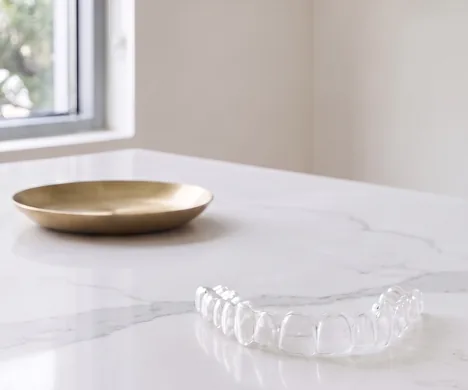
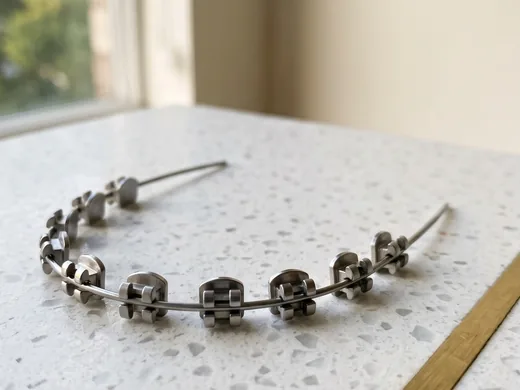
The AAO sorts the choice by the problem in front of you. Crooked teeth, bite problems or an interest in braces or aligners point to an orthodontist, because “Orthodontists specialize in moving teeth and correcting the way the upper and lower teeth fit together.” A cavity, a cleaning or a general oral health concern starts with your dentist.
A dentist may also offer braces or aligners. The AAO’s page on the two professions says “a dentist may be able to provide braces or aligners to move teeth, but that does not mean the dentist is an orthodontist.” The appliance does not show the training behind it; the AAO’s advice is to “ask whether the doctor is an orthodontist and whether they are a member of the American Association of Orthodontists.”
Dr. Randy Kunik, DDS, is an orthodontist. The American Association of Orthodontists lists Dr. Kunik at all three offices. For the appliances themselves, see the pages on metal and ceramic braces and on clear aligners.
Oral surgeons and endodontists: two more kinds of dentist with added training
Oral and maxillofacial surgeons and endodontists are dentists too, each with further training after dental school. An oral surgeon, in the AAO’s words, “is also a dentist who pursues additional training after dental school, usually four to six years in a hospital-based surgical residency.” The AAO tells the two apart by method: “An orthodontist moves teeth and guides jaw growth using braces or aligners. An oral surgeon corrects skeletal jaw discrepancies through surgery.”
An endodontist works inside the tooth. The American Dental Association says “Endodontic treatment, or root canal treatment, treats the soft pulp tissue inside the tooth,” and that “Endodontists become specialists by completing two or more years of advanced training in endodontics following dental school.”
The AAO applies the same test to each of these fields: “a dentist may be able to perform a root canal, but that does not mean they are an endodontist. A dentist may be able to extract a tooth, but that does not mean they are an oral surgeon.”
Dr. Kunik’s dental degree and orthodontic training
The practice prints the training of Dr. Randy Kunik, DDS, in these words:
- Doctor of Dental Surgery (DDS), University of Texas Dental Branch at Houston, 1987
- Orthodontic specialty training, University of Texas at Houston
- Licensed by the Texas State Board of Dental Examiners since 1987
- Member, American Association of Orthodontists (AAO)
The first line is the dental degree every dentist earns. The second is the orthodontic training that follows dental school, and the AAO accepts as members only dentists who complete an accredited orthodontic residency program after dental school. The rest of Dr. Kunik’s biography is on the home page.
Going to an orthodontist without a dentist’s referral
An orthodontic consultation does not have to start with a dentist’s referral. The AAO tells patients they need not wait for one to see an AAO orthodontist, and the practice says: You do not need a referral. Consultations are always free of charge.
If a dentist has already mentioned braces, aligners or your bite, bring what you were told to the consultation, along with your own questions. Find us has the way in to The Domain, Downtown and Westlake offices, and more questions about the first visit have pages of their own.
Dentists, orthodontists, degrees and braces
Is an orthodontist a doctor?
Yes, by degree. Every orthodontist is first a dentist, and the AAO says dentists earn either a Doctor of Dental Surgery (DDS) or a Doctor of Dental Medicine (DMD), two names for the same level of training. The orthodontist then completes an accredited orthodontic residency. Dr. Kunik’s own degree, as the practice prints it, is Doctor of Dental Surgery (DDS), University of Texas Dental Branch at Houston, 1987.
Can a general dentist put on braces?
A general dentist may. The AAO’s page on the two professions says your dentist “may even offer orthodontic services,” and adds that “Even if your dentist can put appliances such as aligners or braces on teeth, that does not make them an orthodontist.” The title orthodontist belongs, in the AAO’s account, to dentists who completed an accredited orthodontic residency program.
Sources
- American Association of Orthodontists, Dentist vs. Orthodontist vs. Oral Surgeon: What’s the Difference?
- American Association of Orthodontists, Orthodontist vs. Dentist: What’s the Difference?
- American Association of Orthodontists, Glossary of Orthodontic Terms
- American Association of Orthodontists, Your Orthodontic Journey: Questions Uncovered (FAQ listing)
- American Association of Orthodontists, How to Choose an Orthodontist
- American Association of Orthodontists, About AAO
- American Dental Association (MouthHealthy), Orthodontics
- American Dental Association (MouthHealthy), Endodontics
- Commission on Dental Accreditation, About CODA
Ask an orthodontist about your teeth at a consultation
Start with the request at the foot of this page, or call the office nearest you.
Domain, Downtown and Westlake: Monday to Thursday, 8:15 a.m. to 5:00 p.m.Updated .