

What is an underbite, and how is it treated?
An underbite comes down to one question: is it the teeth, the jaws, or both? The American Association of Orthodontists says that classification “directly shapes which treatment options are most likely to work,” and the options it describes run from braces and clear aligners to jaw surgery, which is an oral surgeon’s work.
In an underbite, the lower front teeth or jaw sit ahead of the upper front teeth or jaw, the American Association of Orthodontists’ glossary says, and the cause may be mainly the teeth, mainly the jaws or both. The AAO calls braces a reliable choice when an underbite is mainly a matter of tooth position, and says jaw surgery may be recommended when the jaws themselves are substantially out of position.
Teeth, jaws or both: the first question about an underbite
The AAO’s 2026 article on underbites puts the cause ahead of any treatment: “the orthodontist determines whether the underbite is primarily dental, skeletal, or a mix of both.” In the AAO’s terms, a dental underbite is mainly a matter of where the teeth sit, and a skeletal one is a matter of where the jaws sit.
Jaw growth is behind most underbites. In the AAO’s words, “In most cases, underbites are due to differences in the growth rates of the upper and lower jaws.” That is why growth, a child’s still to come or an adult’s already finished, weighs on which treatments fit.
Two underbites can look alike and still differ, one mostly in the teeth and one mostly in the jaws, which is why the classification comes from an examination.
Underbite in the AAO glossary, and where a front crossbite differs
The AAO glossary defines an underbite as “The lower front teeth or jaw sit ahead of the upper front teeth or jaw,” and adds that it is also known as a Class III malocclusion. The term has its own short entry as underbite in the glossary.
A front crossbite is the nearby problem. The AAO’s crossbite article describes a front, or anterior, crossbite as one in which “one or more top teeth sit behind the bottom teeth,” and says “The term underbite is often used when all of the top front teeth or jaw are positioned behind the lower front teeth.” The American Academy of Pediatric Dentistry (AAPD) likewise separates a simple front crossbite of dental origin from a Class III skeletal problem. One AAO page lists the two as a single item; this page keeps them apart, as the crossbite article and the AAPD do, and front crossbites go to the crossbite page.
Early treatment for a child’s underbite, and how long it lasts
Growth is the reason early treatment comes up for an underbite. The AAO’s underbite article says: “For children who are still growing, early treatment can be effective.” When an underbite is related to jaw development, the same article gives an example: “a palatal expander may be used along with reverse-pull headgear to encourage forward growth of the upper jaw and improve jaw alignment.”
How long the effect lasts is less certain. A 2024 Cochrane review of children with prominent lower front teeth (Class III) found moderate-certainty evidence that non-surgical treatments, the facemask among them, “improved the bite and jaw relationship immediately post-treatment.” The review’s one long-term study found that “the benefit from facemask was reduced three years after treatment, and appeared to be lost by six years,” although clinicians judged children given the facemask less likely to need jaw surgery as adults, and the authors write: “We have low confidence in these findings and more studies are required to reach reliable conclusions.”
The AAPD’s guideline adds a caution about surgery: interceptive treatment can minimize the malocclusion and potentially eliminate future jaw surgery, but “this is not always possible. Typically, Class III patients tend to grow longer and more unpredictably.”
For a parent, the short-term evidence and the long-term doubt belong together: early treatment can help while a child grows, and it does not settle whether a surgeon will be needed later. The first orthodontic check-up is taken up on the page on children and teens.
Braces and clear aligners for an underbite of the teeth
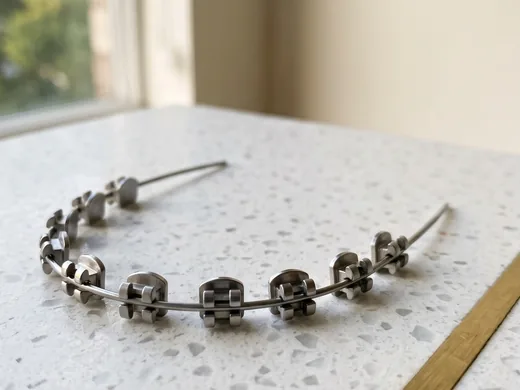
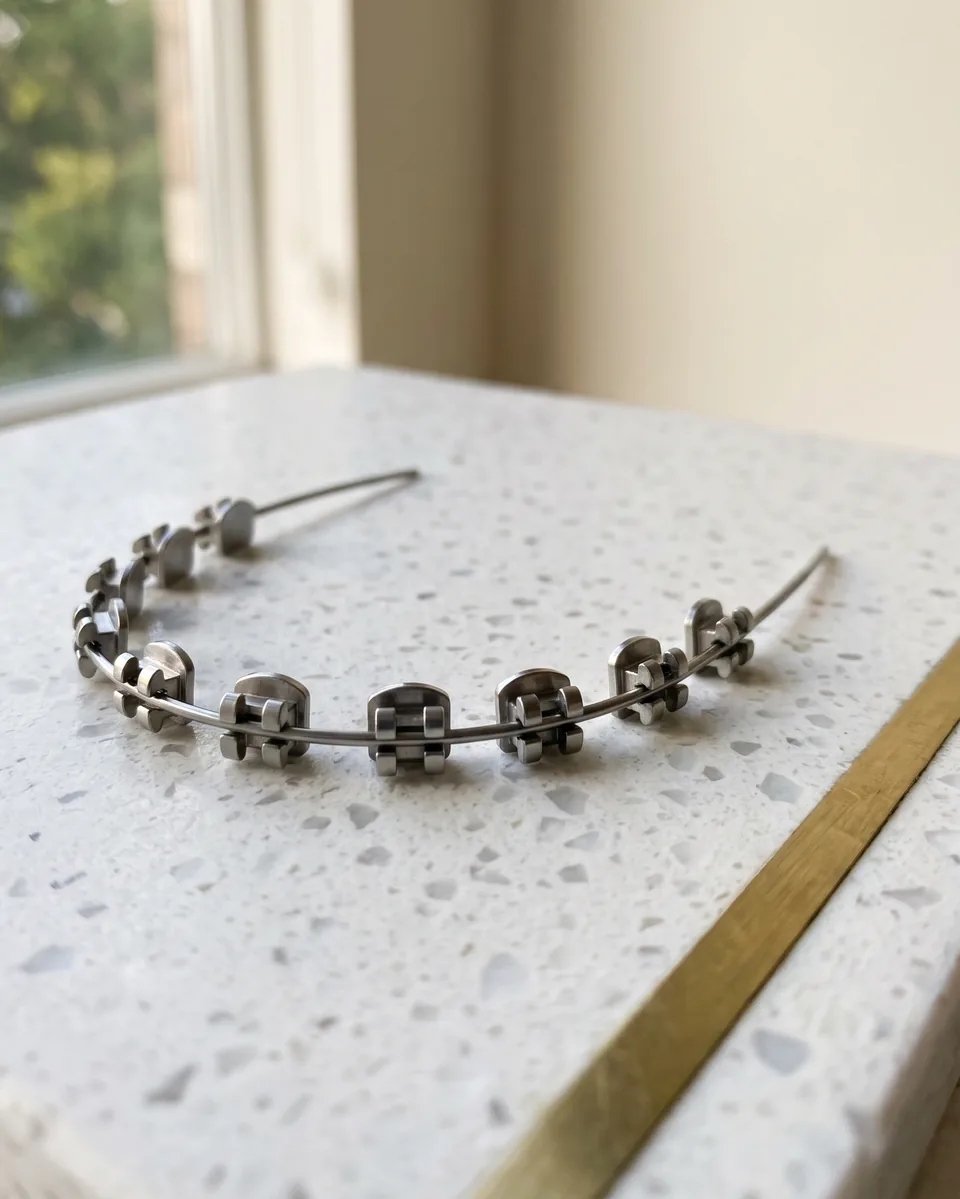
When tooth position is the cause, the AAO is direct: “Braces are a reliable choice when the underbite is primarily related to tooth positioning.” The article adds that “In many cases, braces are paired with elastics or other appliances to help guide jaw position.” The practice offers metal and ceramic braces, and its braces page shows the brackets and wires at work.
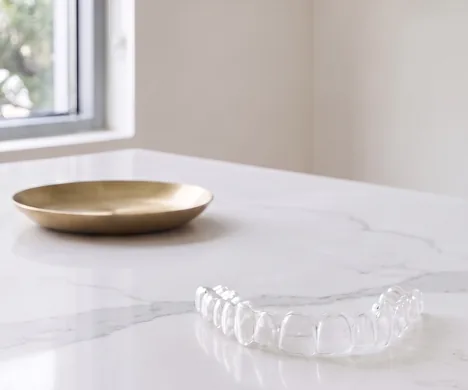
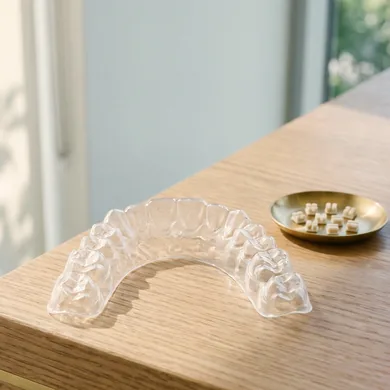
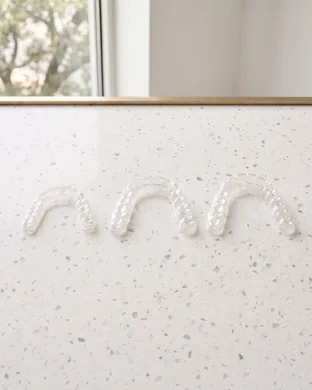
For aligners the AAO draws a narrower line: “Clear aligners can work well for mild underbites where the issue is largely dental rather than skeletal.” Invisalign® treatment is the practice’s clear aligner route, and the clear aligners page traces how the trays move teeth.
A 2026 scoping review (Borzabadi-Farahani, Frontiers in Dental Medicine) adds a related caution: evidence suggests aligners are less predictable for several tooth movements, front to back (sagittal) correction among them, and front to back is the direction an underbite runs.
So the choice among braces, Invisalign treatment and Hybrid treatment, which moves between the two, follows from how much of the underbite sits in the teeth and how much in the jaws.
When the jaws are the cause: the oral surgeon’s part
Moving teeth may not be enough for some underbites. The AAO says that when an underbite “involves a significant skeletal discrepancy, meaning the jaws themselves are substantially out of position, orthodontic treatment alone may not be enough.” Jaw surgery may then be recommended, and the AAO says it is “typically performed after the jaw has finished growing and is almost always combined with orthodontic treatment before and after the procedure.”
That surgery is a different specialist’s work. In the AAO’s division of roles, “An orthodontist moves teeth and guides jaw growth using braces or aligners. An oral surgeon corrects skeletal jaw discrepancies through surgery.” When an orthodontist judges that jaw surgery would help, the AAO says, the patient is referred to an oral surgeon before orthodontic treatment begins.
For adults, the AAO says surgery is the only way to change the size, shape or position of the jaw bones, because adults are no longer growing; an adult underbite that is mainly tooth position is the case the AAO describes for braces or aligners. The page on orthodontic treatment for adults deals with the rest of what changes after growth.
Dental, skeletal or mixed: the call made at an underbite consultation
A consultation turns the AAO’s classification into a decision about one bite: whether the underbite is mainly dental, skeletal or a mix; how much growth a child has left; and whether braces, Invisalign treatment or Hybrid treatment fits, or a referral to an oral surgeon comes first.
If an underbite plan was written for you elsewhere, we are happy to be a second opinion. Other bite problems, from overbites to open bites, are answered on the questions page.
Underbite follow-ups: family history and adult surgery
Is an underbite genetic?
Sometimes. The American Association of Orthodontists says “Underbites can be inherited or develop during eruption of the front teeth in childhood.” A family history is worth mentioning at a consultation, where the orthodontist sorts out whether the teeth, the jaws or both are involved.
Does every adult underbite need jaw surgery?
No. The AAO calls braces a reliable choice when an underbite is primarily related to tooth positioning, and says clear aligners can work well for mild underbites that are largely dental. Jaw surgery may be recommended when the jaws themselves are substantially out of position, and that work belongs to an oral surgeon, on an orthodontist’s referral.
Sources
- American Association of Orthodontists, Glossary of Orthodontic Terms
- American Association of Orthodontists, Underbite: Causes, Symptoms, and Treatment Options
- American Association of Orthodontists, 7 Types Of Bite Problems and Their Orthodontic Solutions
- American Association of Orthodontists, What Is A Crossbite?
- American Association of Orthodontists, Teeth Alignment 101: Are Your Teeth Supposed to Touch?
- American Academy of Pediatric Dentistry, Management of the Developing Dentition and Occlusion in Pediatric Dentistry
- Owens and others, Cochrane Database of Systematic Reviews, 2024 (PubMed record), Orthodontic treatment for prominent lower front teeth (Class III malocclusion) in children
- Borzabadi-Farahani, Frontiers in Dental Medicine, 2026 (PubMed Central), Clear aligner therapy: a scoping review of treatment prediction, clinical effectiveness, and limitations
- American Association of Orthodontists, Dentist vs. Orthodontist vs. Oral Surgeon: What’s the Difference?
- American Association of Orthodontists, Orthodontic Surgery: Enhancing Your Smile’s Foundation
Find out at a consultation whether your underbite is teeth or jaw
Consultations are always free of charge. You do not need a referral. To ask for a time, write a consultation request below, or call the Domain, Downtown or Westlake office.
Domain, Downtown and Westlake: Monday to Thursday, 8:15 a.m. to 5:00 p.m.Updated .