


Orthodontic treatments: braces, clear braces, Invisalign® treatment, Hybrid and retainers
At Kunik Orthodontics, we provide age-appropriate treatment options from early intervention for children to discreet solutions for adults.
The treatments hub lists the treatment pages in three groups, each page under its group with its own short answer: Braces and aligners, for treatment by appliance, such as braces with clear or metal brackets, Invisalign clear aligners or Hybrid treatment; Children, teens and adults, for treatment as a child, a teenager or an adult; and Retainers after treatment, for retainers and for replacing a lost or broken one.
Three groups of treatment pages, and which one to open
Kunik Orthodontics sorts its treatment pages into three groups, and the one to open depends on the question you bring. If you already have an appliance in mind, start with Braces and aligners. If you are deciding for a child, a teenager or yourself as an adult, start with Children, teens and adults. If your treatment has ended, or a retainer is lost or broken, start with Retainers after treatment.
Each page is listed once, under its group, by its name, with the short answer from that page printed beneath it, so you can read the answer here before you open the page.
What a treatment page can tell you before an examination
A treatment page says what its sources say and names them in its sentences. Where the practice speaks in its own words, those words are printed exactly and without quotation marks. No page can examine your teeth, so whether they need treatment, and the choice among appliances, are left to the consultation.
The questions hub answers single questions about treatment, one to a page. Words such as archwire and retention, which the treatment pages use, have one-sentence definitions in the glossary.
A treatment plan written elsewhere, and where each office is
For a treatment plan from another practice, we are happy to be a second opinion. The page in the groups below that matches the plan, by its appliance or by the patient’s age, sets out what its sources say, which can help you shape your own questions before the second look.
Kunik Orthodontics has an office at The Domain, one Downtown and one in Westlake, and Find us shows where each of them is.
Braces and aligners
Each page here takes one appliance, or a pairing of appliances, and sets out what it is, what wearing it involves and what its sources say.
- Braces
How do braces work, and what should you expect from metal or ceramic braces?
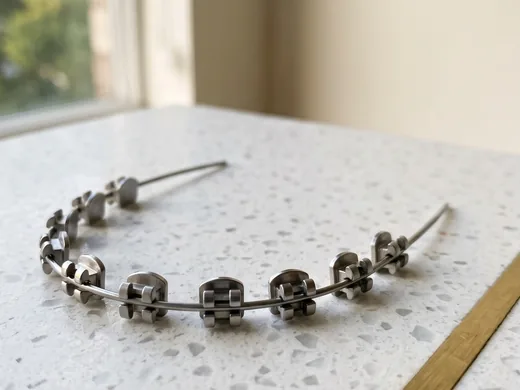
Braces move teeth with pressure: brackets bonded to the teeth hold an archwire, and the American Association of Orthodontists (AAO) says the body removes bone on the compressed side of a root and forms new bone on the other. Metal and ceramic braces work much the same way; the AAO calls appearance the main difference, says ceramic may be more brittle, and notes that temporary tenderness can follow placement or an adjustment.
- Clear braces
What are clear (ceramic) braces, and how do they compare with metal braces and clear aligners?
Clear braces are ceramic braces: fixed braces like metal ones, with clear or tooth-colored brackets in place of stainless steel, and the American Association of Orthodontists (AAO) says they are not the same as clear aligners, which are removable trays. The AAO says ceramic brackets are designed to blend in with the teeth but may need extra care, because the material may be more brittle than metal.
- Invisalign treatment
How do Invisalign clear aligners work, and what can they treat and not treat?
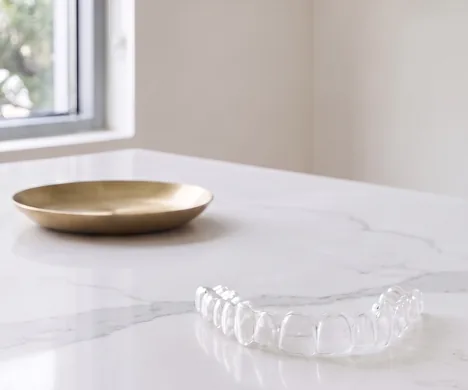
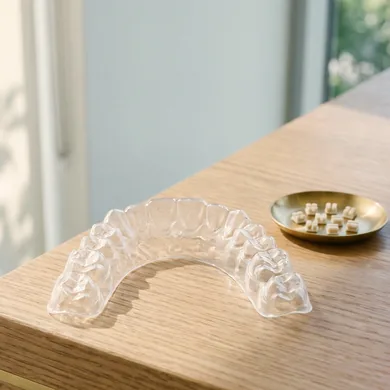
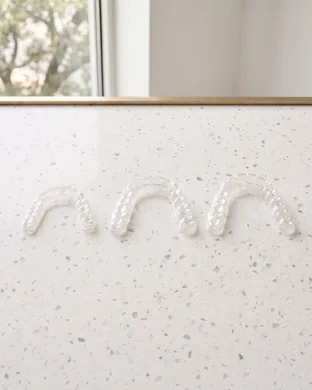
Clear aligners are a series of custom-formed trays, each made a fraction of a millimeter off the teeth’s current position so that, worn as prescribed, the teeth move to fit it, according to the American Association of Orthodontists. The AAO lists crowding, gaps, overbite, underbite, open bite and crossbite among the conditions aligners commonly treat, and says they may not work as predictably for severe malocclusions, significant rotations and large gaps.
- Hybrid
What is Hybrid treatment, braces and then clear aligners, and who is it for?
Hybrid treatment combines braces with clear aligners; in the braces-first form, brackets and wires go on before the aligners. Braces go first for movements that reviews call less predictable with aligners, among them rotations, extrusion, root control and closing extraction spaces; the American Association of Orthodontists says braces may offer more precision for significant rotations. The order rests on overviews and case reports, not trials; an orthodontist decides who needs a braces phase.
Children, teens and adults
These pages take treatment by stage of life, with what sets it apart at each age and what to weigh before it starts.
- Children
When should a child first see an orthodontist, and what is early (Phase 1) treatment?
The American Association of Orthodontists (AAO) recommends a child’s first orthodontic check-up when a problem is first recognized and no later than age 7, a latest age rather than one to wait for. Early (Phase 1) treatment, as the AAO describes it, takes place while a child is still growing and some baby teeth remain, to address a specific developing problem, and the AAO says it is not necessary for every child.
- Teens
Should a teenager get braces or clear aligners, and what does treatment in the teen years involve?
No single choice fits every teenager: the American Association of Orthodontists (AAO) lists metal or ceramic braces and clear aligners among the options for teens, and says clear aligner success relies heavily on compliance, so the choice turns on what the teeth need and on whether the trays will be worn. Treatment in the teen years runs through school, sport and band, and the AAO says most teens can expect regular check-ins.
- Adults
Can an adult have braces or Invisalign aligners, and what is different about treatment as an adult?
Yes. The American Association of Orthodontists (AAO) says age is rarely a deciding factor and names braces and clear aligners as the most common appliances in adult orthodontics; the American Dental Association says healthy teeth can be orthodontically treated at any age. What differs, the AAO says: adult bone has finished growing, so teeth move more slowly, and active decay, gum disease or unstable restorations should be addressed first.
Retainers after treatment
This group covers the retainers worn after braces or aligners: the kinds, their care, and what to do when one is lost or damaged.
- Retainers
How long do you wear a retainer after braces or aligners, and which kind?
A retainer is usually needed for life, the American Association of Orthodontists says; the British Orthodontic Society advises wearing one long term, and a 2023 Cochrane review says retainers may be needed indefinitely, with your own schedule set by your orthodontist. Retainers are removable, such as clear trays, or fixed, a wire bonded behind the teeth. The practice offers clear removable and fixed retainers, and which you wear depends on your case.
- Replacement retainers
What should you do if your retainer is lost, broken or no longer fits, and how do you get a replacement?
If a retainer is lost, cracked or no longer fits, the American Association of Orthodontists (AAO) says to see the orthodontist as soon as possible, and the British Orthodontic Society says not to wait for the next review appointment when one breaks or is lost. The AAO says to stop wearing a cracked retainer, not to force one that no longer fits, and that a replacement may need a new scan or impression.
Choosing among the treatments begins with a consultation
Consultations are always free of charge. You do not need a referral. If you have not settled on a treatment yet, the consultation request below lets you answer Not sure to What is most important to you.
Monday to Thursday, 8:15 a.m. to 5:00 p.m. Closed 1:00 to 2:15 p.m. for lunch. Downtown is by appointment only, on Thursdays.Updated .