


Why are my gums swollen with braces, and what helps?
Swollen gums during braces start as a question of cleaning and become, if they persist, a reason to call the orthodontist or the dentist.
Brackets and wires create extra spaces where plaque collects, the American Association of Orthodontists says, and plaque buildup can cause gum disease, the National Institute of Dental and Craniofacial Research says. The AAO says persistent swelling, redness or bleeding is not a normal part of treatment and that in many cases better oral hygiene helps. Pus, fever, or severe or rapidly increasing swelling needs prompt attention.

Plaque at the gumline, and why brackets make it harder to clear
Plaque is where the explanation for swollen gums starts. The National Institute of Dental and Craniofacial Research (NIDCR) describes dental plaque as “a sticky, colorless film of bacteria” and says its buildup can cause tooth decay and gum disease.
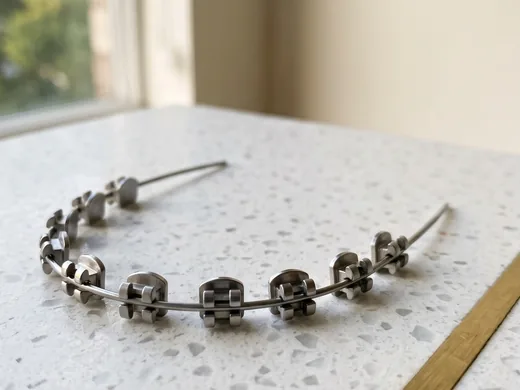
Braces give that film more places to stay, around each bracket and along the archwire between them. The American Association of Orthodontists (AAO) says on its gums page of October 13, 2026 that brackets and wires create extra spaces where plaque and food can collect, that plaque left along the gumline can irritate the gums and contribute to gingivitis, and that inflamed gums may look red, puffy or tender, or bleed when you brush or floss.
The same page separates tenderness from swelling: a short spell of tenderness can follow new braces or an adjustment, but “persistent redness, swelling, or bleeding should not be considered a normal part of treatment.” In many cases, it says, improving oral hygiene can help, and symptoms that continue, worsen or worry you go to the orthodontist or the dentist.
The AAO’s brushing and rinsing steps for gums that swell
The AAO’s gum care steps start with what not to do: “Do not avoid an area simply because it bleeds.” Its other steps come from several of its patient pages:
- Brush gently around the brackets and along the gumline, without scrubbing hard at irritated tissue.
- Brush after every meal or snack and before bed, the general rule on the AAO’s 2023 living page, unless your orthodontist has said otherwise.
- Floss with a floss threader, an orthodontic flosser or another tool your dental care team recommends, which the AAO says braces may call for.
- Rinse with warm salt water for soreness or irritation in the mouth, a step the AAO’s emergency page lists and its 2023 living page calls soothing.
- For the enamel, use fluoride as your dentist or orthodontist recommends; the AAO’s 2023 page says a daily fluoride rinse can strengthen tooth enamel and help prevent white marks.
The braces page carries the rest of daily life with brackets, and answers to other everyday questions about braces, aligners and retainers are gathered in one place.
Pus, fever or fast swelling: when gums need prompt attention
Some signs call for more than better brushing, and the AAO’s gums page names them: “Prompt attention is especially important if you develop pus, severe or rapidly increasing swelling, significant pain, fever, or other signs of illness.” The same page adds that difficulty breathing or swallowing may require urgent medical care.
At the far end, the AAO’s emergency page lists sudden, severe pain with facial swelling, fever or signs of infection among its five signs for emergency care immediately, through 911, an emergency room or an urgent dental clinic; the answer on orthodontic emergencies sets out all five.
Below those signs, the AAO’s test is time and direction: if symptoms continue, worsen or concern you, contact your orthodontist or dentist.
After braces come off: retainers and the gumline
What follows braces can hold plaque too. The AAO says the wire of a fixed retainer can easily trap plaque and debris, which over time may contribute to tooth decay, gum inflammation and odors, and that floss threaders, interdental brushes or a water flosser used around the wire and under the gum line can help reduce that risk.
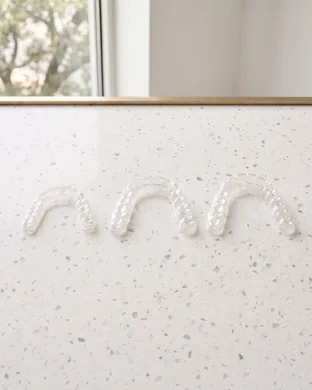
For retainers in general, the 2023 Cochrane review of retention says in its background that retainers can collect plaque and calculus and make the teeth harder to keep clean, and that the build-up may cause decay or damage to the gum. In a four-year randomized trial of fixed and vacuum-formed retainers (Al-Moghrabi and colleagues, American Journal of Orthodontics and Dentofacial Orthopedics, 2018), there was no statistical difference in gum outcomes between the groups, and significant gum inflammation and plaque were common findings.
So the habits built during braces carry straight over, and the page on retainers after braces covers the kinds you might wear.
Swollen gums and a consultation with Dr. Kunik
Gum health is judged in person, not from a description. The AAO’s position is that gum health is evaluated effectively in person, through checks such as periodontal probing, and it warns that moving teeth when periodontal health is poor can lead to recession, shorter roots or lost teeth.
At Kunik Orthodontics, the orthodontist you see is Dr. Kunik. With Dr. Kunik as your only doctor, you’ll receive consistent care and attention throughout your treatment.
If your braces were placed at another practice and you want a fresh look at the treatment plan written there, we are happy to be a second opinion.
More about swollen gums, plaque and braces
Do I still need my regular dental cleanings during braces?
Yes. The AAO’s gums page says, “Orthodontic visits do not replace routine dental care.” The same page sends gum symptoms that continue, worsen or concern you to the orthodontist or the dentist, so both have a part while the braces are on. It also says to keep seeing your dentist for preventive care and professional cleanings throughout treatment.
Are gums less likely to swell with clear aligners than with braces?
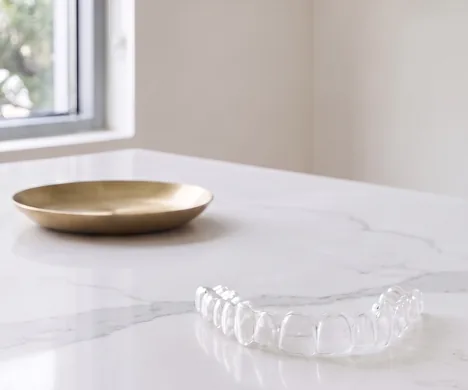
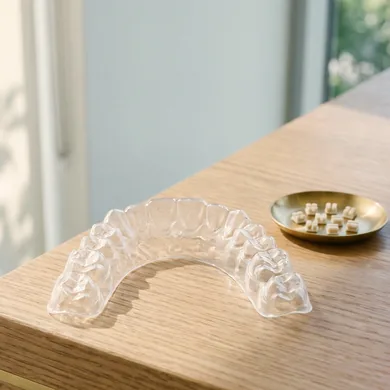
The research is mixed, and it depends on habits. An overview of systematic reviews published in Clinical Oral Investigations in 2022 linked clear aligners with better periodontal health than fixed appliances, while a 2026 review in the European Journal of Orthodontics judged that advantage highly compliance dependent, with low to very low certainty of evidence. The AAO adds that aligners can trap liquids and food particles against the teeth, increasing the risk of cavities and gum disease; the clear aligner page goes into the appliance itself.
Does a water flosser or an interdental brush help swollen gums?
Either can make cleaning easier, and the evidence on gums is thin. The AAO’s FAQ says floss threaders, orthodontic flossers, interproximal brushes and water flossers can all make it easier to clean around brackets and wires. A 2026 systematic review in Frontiers in Oral Health found only low-certainty, tentative indications that interdental brushes may help improve gum health and plaque control in orthodontic patients, particularly with orthodontic toothbrushes. Ask your orthodontist or dentist which tool suits your mouth.
Sources
- National Institute of Dental and Craniofacial Research, Oral Hygiene
- American Association of Orthodontists, Swollen or Bleeding Gums With Braces: Causes and What to Do
- American Association of Orthodontists, Do Braces Cause White Spots on Teeth?
- American Association of Orthodontists, Living with Braces: Food, Oral Hygiene, & Care Tips
- American Association of Orthodontists, What is an Orthodontic Emergency and How Do You Handle Them?
- American Association of Orthodontists, Archwires
- American Association of Orthodontists, How to Clean Retainers: AAO’s Guide to Retainer Care
- American Association of Orthodontists, Orthodontists Respond to Frequently Asked Questions from Adults Considering Treatment
- American Association of Orthodontists, Clear Aligner Therapy
- American Association of Orthodontists, Orthodontic FAQs: Your Questions Answered (read November 6, 2026)
- Martin C, Littlewood SJ, Millett DT and others, Cochrane Database of Systematic Reviews, 2023, Retention procedures for stabilising tooth position after treatment with orthodontic braces (full text)
- Al-Moghrabi D, Johal A, O’Rourke N and others, American Journal of Orthodontics and Dentofacial Orthopedics, 2018 (PubMed record), Effects of fixed vs removable orthodontic retainers on stability and periodontal health: 4-year follow-up of a randomized controlled trial
- Yassir et al., Clinical Oral Investigations, 2022 (PubMed record), Clinical effectiveness of clear aligner treatment compared to fixed appliance treatment: an overview of systematic reviews
- Alhuwaizi MA, Saloom HF, Cobourne M, European Journal of Orthodontics, 2026 (PubMed record), Impact of clear aligners and conventional fixed orthodontic appliances on oral hygiene and periodontal health: A systematic review with GRADE assessment of the certainty of evidence
- Ji X, Zou Q, Tian L, Frontiers in Oral Health, 2026 (PubMed record), Interdental brushes for improving oral hygiene in patients with fixed orthodontic appliances: a systematic review
Talk over swollen gums and braces at a consultation
Consultations are always free of charge. Ask for one with the request at the foot of this page, for the Domain, Downtown or Westlake office.
Domain, Downtown and Westlake: Monday to Thursday, 8:15 a.m. to 5:00 p.m.Updated .