

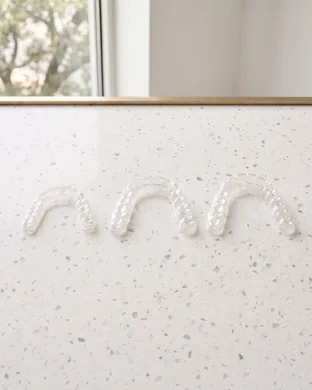
What is an impacted tooth, and what does an orthodontist do about it?
What an orthodontist does about an impacted tooth turns on which tooth it is and whether the arch has room for it, and part of the work can fall to an oral surgeon.
An impacted tooth, as the American Association of Orthodontists defines it, does not come in the way it should and stays stuck in the gum or jawbone or only partly erupts. The AAO says an orthodontist may create room when a lack of space is part of the cause and, when there is room and the tooth can reach a healthy position, guide it in after an oral surgeon exposes it.
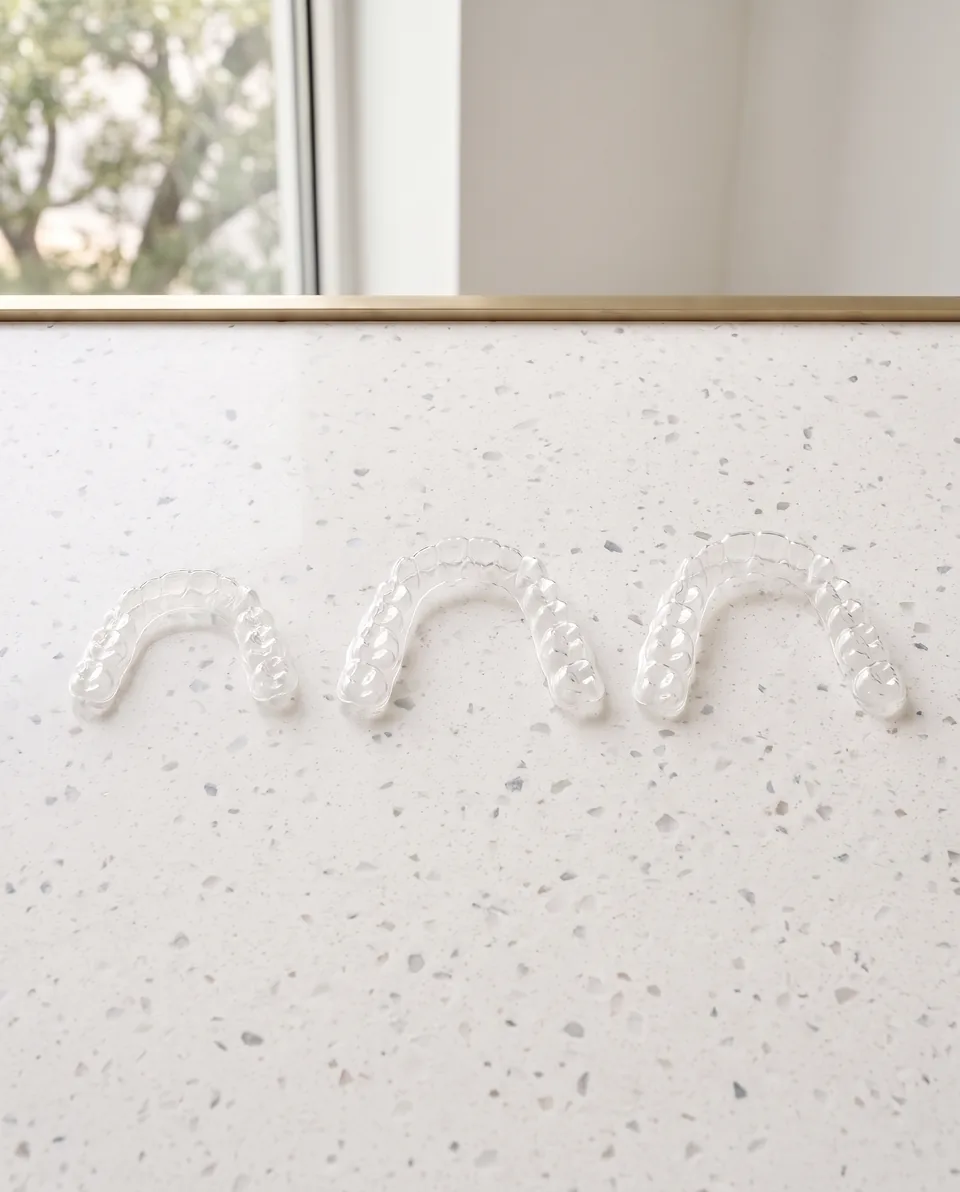
Why impacted canines matter in orthodontics
The American Association of Orthodontists (AAO) gives the canine a particular place among impacted teeth: “Impacted canines are especially important in orthodontics because they help guide a healthy bite and support your smile’s appearance.” The AAO also says “upper canine teeth are among the teeth that can become impacted, although other teeth may be affected as well.”
Cochrane’s 2021 review of palatally displaced canines describes an upper canine that grows into the roof of the mouth and often does not come in, and gives the reported prevalence of that kind of canine as between 1 and 3 percent of the population.
For the treatment as a whole, the AAO notes that in some cases a patient “may have an impacted, extra, or crowded tooth that prevents orthodontic treatment from working effectively,” and that the orthodontist may then refer that patient to an oral surgeon, so the problem is addressed ahead of braces or aligners.
What makes a tooth impacted, and how an X-ray finds it
The AAO’s definition of an impacted tooth is plain: “An impacted tooth is a tooth that does not erupt (come in) the way it should. Instead of breaking through the gum line, it becomes stuck in the gum tissue or the jawbone or only partially erupts.”
A tooth held in the jawbone cannot be seen in the mouth, so finding one is a job for imaging. The AAO says “panoramic X-rays offer a broad view of the teeth, jaws, sinuses, and nasal area, helping to identify issues like impacted teeth, bone abnormalities, and wisdom teeth development.” The image shows where the tooth lies, and its position is what the next decision turns on.
Room first, then guidance: the surgeon’s part and the orthodontist’s part
The AAO’s first answer is about room: “When lack of space contributes to impaction, orthodontic treatment may create room so a tooth can erupt more normally. Appliances such as palatal expanders may be used to create more space and guide the tooth into the proper place.”
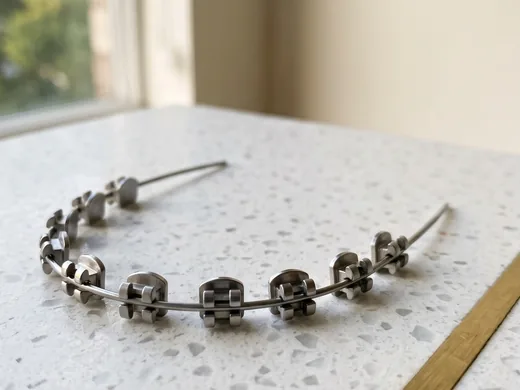
Its second is a coordinated treatment. The AAO says that “if there is enough room in the dental arch and the tooth can be brought into a healthy position, an orthodontist may recommend a procedure to help guide it into place rather than removing it,” and describes the steps: “an oral surgeon exposes part of the impacted tooth and may attach a small orthodontic bracket or chain to it. The orthodontist then applies gentle, controlled pressure over time to encourage the tooth to move into its intended position.”
The two parts stay separate. Exposing the tooth is an oral surgeon’s procedure, and the orthodontist’s part is the room beforehand and the pressure afterward. Whether a tooth meets the conditions the AAO sets, room in the arch and a healthy position within reach, is assessed at the consultation.
Impacted wisdom teeth, the most common kind
Wisdom teeth are the most commonly impacted teeth, the AAO says, and taking them out is among the work the AAO says oral surgeons commonly handle. Whether a particular impacted wisdom tooth should come out is a different question from the canine’s: the AAO speaks to wisdom teeth that are causing problems and a 2020 Cochrane review to those with no symptoms and no disease, and the evidence on both is set out with braces treatment.
Impacted canines in children: the age-7 visit and the baby canine question
The American Association of Orthodontists recommends children have their first orthodontic evaluation by age 7. We start seeing kids at age 7 to watch their growth.
Growth matters here because the AAO says “in younger patients, palatal expansion may reduce the need for tooth removal or prevent impacted teeth.” What that first visit looks at is set out on the page for children and teens.
For an upper canine coming in toward the roof of the mouth, the sources disagree about removing the baby canine. The American Academy of Pediatric Dentistry (AAPD) says removing it may stimulate the permanent canine to erupt and indicates it for a defined set of exam and X-ray findings while baby teeth remain, and it reports that the extraction has been shown to correct the impacted canine in 67 to 69 percent of cases, against 39 to 42 percent in a non-extraction control group. Cochrane’s 2021 review of children aged 9 to 14 says the evidence that removing the baby canine may increase the share of palatally displaced canines that erupt without surgical intervention is very uncertain.
Taking out a baby tooth falls to a dentist or an oral surgeon, and whether it suits one child, with both findings in view, is decided at that child’s consultation.
An impacted tooth at the consultation
For an impacted tooth, the questions to bring to a consultation are which tooth it is, whether the arch has room for it, and whether making room, an oral surgeon’s exposure or removing a baby canine is the next step. Each of those steps has a different owner: the room and the movement are the orthodontist’s, the exposure is an oral surgeon’s, and a baby tooth’s removal is a dentist’s or an oral surgeon’s.
For an adult, the room-making route reads differently, because the AAO says a palatal expander is ideally used during growth; what else changes with treatment as an adult is set out on the adults page. Crowded teeth, gaps and the other bite problems each have an answer in the practice’s questions.
More questions about impacted teeth
Do impacted canines always need surgery?
Not in every case the AAO describes. When a lack of space contributes to an impaction, the AAO says orthodontic treatment may create room so the tooth can erupt more normally, with appliances such as palatal expanders. When the coordinated route is used instead, exposing the tooth is the surgical part and an oral surgeon’s procedure, and the orthodontist then moves the tooth. Which route fits a particular canine is decided at the consultation.
Can clear aligners move an impacted tooth into place?
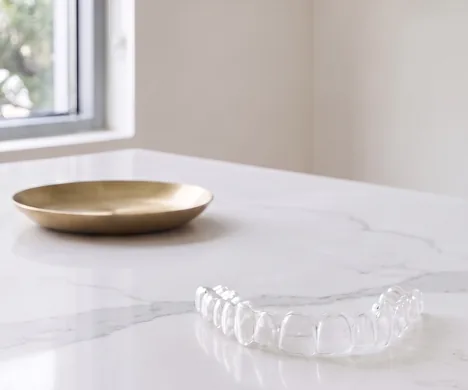
The research is cautious. A 2026 scoping review (Borzabadi-Farahani, Frontiers in Dental Medicine) states that evidence suggests clear aligner treatment is less predictable for several movements, the alignment of impacted teeth among them. In the AAO’s description of guiding an impacted tooth in, the oral surgeon may attach a small orthodontic bracket or chain to the exposed tooth, and the orthodontist applies pressure over time. Which appliance carries that pressure for one patient is decided at the consultation.
Sources
- American Association of Orthodontists, What is an Impacted Tooth?
- American Association of Orthodontists, Dentist vs. Orthodontist vs. Oral Surgeon: What’s the Difference?
- American Association of Orthodontists, Beneath the Surface: The Critical Role of In-Person Consultations and Orthodontic X-Rays
- American Association of Orthodontists, Early Orthodontic Care at Age 7: A Path to Cost-Effective Treatment
- American Academy of Pediatric Dentistry, Management of the Developing Dentition and Occlusion in Pediatric Dentistry
- Benson et al., Cochrane Database of Systematic Reviews, 2021 (PubMed record), Interventions for promoting the eruption of palatally displaced permanent canine teeth, without the need for surgical exposure, in children aged 9 to 14 years
- Ghaeminia et al., Cochrane Database of Systematic Reviews, 2020 (PubMed record), Cochrane review CD003879, on surgical removal versus retention of impacted wisdom teeth
- Borzabadi-Farahani, Frontiers in Dental Medicine, 2026 (PubMed Central), Clear aligner therapy: a scoping review of treatment prediction, clinical effectiveness, and limitations
Talk through an impacted tooth at a consultation
Consultations are always free of charge. You do not need a referral. Ask for a time with the request below, at whichever of the three offices suits you.
Domain, Downtown and Westlake: Monday to Thursday, 8:15 a.m. to 5:00 p.m.Updated .