


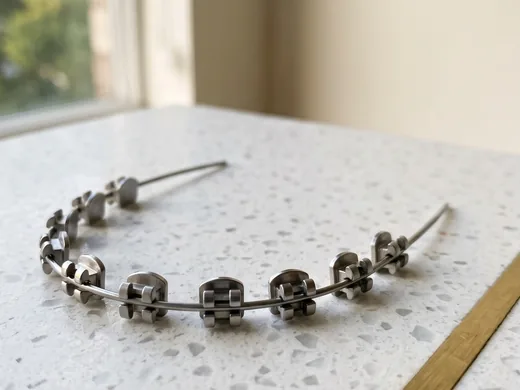


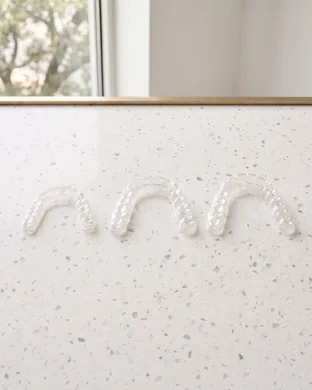
A second opinion on braces, aligners or early treatment: when to ask and what to bring
If you have a plan from elsewhere, we are happy to be a second opinion.
An orthodontic second opinion is reasonable whenever a plan leaves you unsure, such as one that removes teeth, calls for early treatment in a young child, or rules out aligners. The American Association of Orthodontists says “It’s not unusual to see more than one orthodontist and get more than one suggested plan.” Getting one starts with a consultation with another orthodontist; for copies of your records, ask the office that holds them.
A plan from elsewhere, and the practice’s lines on consultations
Consultations are always free of charge. You do not need a referral.
The American Association of Orthodontists’ guide to choosing an orthodontist says a consultation “can help you understand your diagnosis, compare treatment recommendations, and choose the orthodontist and office.”
How a second-opinion visit works at Kunik Orthodontics, including whether the practice looks at another office’s records beforehand and what to bring, is a question to ask when you call or text.
Four situations in which a second look is reasonable
Extractions or a referral to a surgeon
The British Orthodontic Society, writing for patients in the United Kingdom, says in its answer on treatment without extractions that claims treatment can be completed without extractions, especially before an assessment has been completed, “should be regarded with considerable caution,” and that a patient unsure about the advice they are receiving should discuss their concerns with their own dentist or seek a second opinion from a specialist.
On surgery, the American Association of Orthodontists says an oral surgeon corrects skeletal jaw discrepancies and that, in adults, “surgery is the only way to modify the size, shape, or position of an adult’s jaw bones.” A second orthodontist may reach the same conclusion as the first.
Early (Phase 1) treatment for a young child
The American Association of Orthodontists says “Phase 1 treatment is not necessary for every child. Many orthodontic problems can and should wait until later.” Two Cochrane reviews differ by problem: a 2018 review found, on evidence of low to moderate quality, that early treatment of prominent upper front teeth reduced new injuries to them more than treatment in adolescence and appeared to have no other advantages, and a 2021 review found high-certainty evidence that a quad-helix or an expansion plate helped correct posterior crossbites in children aged 7 to 11, compared with observation. Orthodontic care for children is a separate page.
Being told aligners will not work
The American Association of Orthodontists says clear aligners are not right for everyone and “may not work as predictably for severe malocclusions, significant tooth rotations, and large gaps,” where braces may offer more precision; a 2026 scoping review in Frontiers in Dental Medicine says evidence suggests aligners are less predictable for movements that include rotations, closing extraction spaces and aligning impacted teeth.
Those statements describe kinds of cases rather than one person’s bite, and a second orthodontist may agree with the first. Invisalign® treatment, Hybrid treatment, metal and ceramic braces, and braces and aligners for adults each have their own page.
Two plans that disagree
When two plans disagree on the appliance or on when to start, questions put to both orthodontists can help you weigh them; the American Association of Orthodontists says treatment planning involves professional judgment.
The AAO and the ADA on second opinions, questions and alternatives
When a dentist says they can provide orthodontic treatment, the American Association of Orthodontists’ FAQ says, “Consider seeking a second opinion with an AAO orthodontist”; the page on how a dentist and an orthodontist differ covers that case.
Among the questions the AAO’s guide to choosing an orthodontist suggests asking is “What treatment options do you recommend and why?”
The American Dental Association’s Code of Professional Conduct for its members says, in section 1.A, “The dentist should inform the patient of the proposed treatment, and any reasonable alternatives, in a manner that allows the patient to become involved in treatment decisions.”
The ADA’s glossary of dental terms notes that some benefit plans require second opinions for selected services; whether yours does is the plan’s to say.
What to bring, and copies of your records in Texas
For a first orthodontic appointment, the American Association of Orthodontists asks patients to send or bring dental and medical history records, insurance information, their general dentist’s and physician’s details, and their questions.
The Texas State Board of Dental Examiners’ rule, 22 TAC §108.8, says the term dental records “includes, but is not limited to” items such as radiographs, treatment plans, progress and completion notes, and consultations and recommended referrals.
In Texas, the State Board of Dental Examiners’ rule at 22 TAC §108.8(h), as amended effective May 28, 2026, says: “A dentist shall furnish copies of dental records to a patient who requests his or her dental records.” The same rule sets a time limit for the copies and allows a charge for copying, and other Texas and federal rules may also apply.
Federal privacy law has its own rule on access to one’s own health records, 45 CFR 164.524, which applies to what it calls covered entities.
For the time limit that applies, any charge and how to ask, contact the office that holds the records or the Texas State Board of Dental Examiners; a parent or guardian asks the same office for a child’s records.
How two honest orthodontic plans can differ
The American Association of Orthodontists’ FAQ, asked about three plans from three orthodontists, says there is not a single right way to perform orthodontic treatment and that “Different orthodontists use various bracket systems and appliances.”
- The appliance: a 2025 meta-analysis in the European Journal of Orthodontics found higher treatment quality with fixed appliances in extraction cases, said that differences among studies and short follow-up limited its conclusions, and concluded: “Both clear aligners and fixed appliances effectively achieve orthodontic treatment goals. Case complexity and patient compliance should guide appliance selection.”
- Extraction or not: the AAO says not every crowded smile requires an extraction and that the decision typically depends on factors such as the patient’s bite, jaw size, tooth position, facial structure and overall treatment goals.
- One phase or two: the AAO said in 2026 that some children later have a second phase of treatment, and the American Academy of Pediatric Dentistry’s guideline reads randomized trials as showing a Class II bite “can be corrected effectively with either a single or 2-phase regimen.”
- The order of the steps: a 2026 scoping review in Frontiers in Dental Medicine says clear aligners combined with fixed appliances, at the beginning or at the end of aligner treatment, may be appropriate for impacted teeth, rotations, closing extraction spaces or severe malocclusions.
A difference between two plans is not, by itself, proof that either one is wrong. The American Dental Association’s ethics code, in advisory opinion 4.C.1 for its members, says “A difference of opinion as to preferred treatment should not be communicated to the patient in a manner which would unjustly imply mistreatment.”
One more examination, one more plan, and the visit
A second opinion is one more examination and one more plan to weigh beside the first, not a ruling on the office that wrote the first plan, and the choice between plans stays with you.
The answer on what happens at a first orthodontic consultation covers a consultation’s steps, insurance and payment are covered separately, and directions to the Domain, Downtown and Westlake offices are on Find us.
Before and after you ask for a second opinion
Do I need new X-rays for a second opinion?
The American Dental Association says a dentist reviews your history and examines your mouth to determine whether you need X-rays, and that a new dentist may ask for copies of a previous dentist’s images instead of ordering new ones. The American Association of Orthodontists said in 2022 that “X-rays are the only way to see underneath the gums.” Whether Kunik Orthodontics can work from another office’s X-rays is a question to ask when you call.
Is it rude to ask for a second opinion?
The American Association of Orthodontists’ guide to choosing an orthodontist says you may choose to meet with more than one orthodontist before beginning treatment. The AAO’s 2026 article on what to expect during treatment says “It’s not unusual to see more than one orthodontist and get more than one suggested plan.”
What if the two plans disagree?
Ask each orthodontist to explain the plan, as the American Association of Orthodontists advises: “Treatment planning involves professional judgment, so ask each provider to explain their reasoning and choose the one you trust most.” A plan that differs is not, on that ground alone, a sign that either is wrong.
Sources
- American Association of Orthodontists, How to Choose an Orthodontist
- American Association of Orthodontists, What to Expect During Orthodontic Treatment (16 Sep 2026)
- American Association of Orthodontists, Orthodontic FAQs: Your Questions Answered (listing page 18, read November 6, 2026)
- American Association of Orthodontists, Orthodontic FAQs: Your Questions Answered (listing page 33, read November 15, 2026)
- American Association of Orthodontists, Dentist vs. Orthodontist vs. Oral Surgeon: What’s the Difference?
- American Association of Orthodontists, Orthodontic Surgery
- American Association of Orthodontists, Can You Get Braces With Baby Teeth? (21 Oct 2026)
- American Association of Orthodontists, Clear Aligners
- American Association of Orthodontists, Clear Aligner Therapy
- American Association of Orthodontists, What to Expect at Your First Orthodontic Appointment (17 Apr 2026)
- American Association of Orthodontists, Orthodontists Respond to Frequently Asked Questions from Adults Considering Treatment
- British Orthodontic Society, FAQs (patients, treatments)
- Cochrane Database of Systematic Reviews, 2018 (CD003452.pub4), Orthodontic treatment for prominent upper front teeth (Class II malocclusion) in children and adolescents
- Cochrane Database of Systematic Reviews, 2021 (CD000979.pub3), Orthodontic treatment for posterior crossbites
- American Academy of Pediatric Dentistry, Reference Manual of Pediatric Dentistry (latest revision 2024), Management of the Developing Dentition and Occlusion in Pediatric Dentistry
- Alhafi and colleagues, European Journal of Orthodontics, 2025, Quality and stability of orthodontic treatment outcomes with clear aligners versus fixed appliances: a systematic review and meta-analysis
- Borzabadi-Farahani, Frontiers in Dental Medicine, 2026, Clear aligner therapy: a scoping review of treatment prediction, clinical effectiveness, and limitations
- American Dental Association, Principles of Ethics and Code of Professional Conduct, with official advisory opinions revised to October 2025
- American Dental Association, CDT Glossary of Dental Terms
- American Dental Association (MouthHealthy), X-rays
- Texas State Board of Dental Examiners, Texas Register, April 3, 2026 (51 TexReg 2181), 22 TAC §108.8, Records of the Dentist, the amended text as proposed
- Texas State Board of Dental Examiners, Texas Register, May 22, 2026 (51 TexReg 3601), 22 TAC §108.8 adopted without changes, effective May 28, 2026
- Electronic Code of Federal Regulations (eCFR), Title 45, 45 CFR 164.524, Access of individuals to protected health information
Ask for a second opinion on your orthodontic plan
Choose A second opinion under What is most important to you in the consultation request on this page.
Monday to Thursday, 8:15 a.m. to 5:00 p.m. Closed 1:00 to 2:15 p.m. for lunch. Downtown is by appointment only, on Thursdays.Updated .