

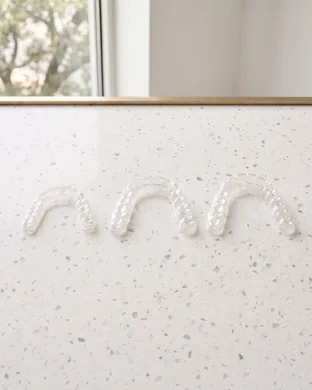
What counts as an orthodontic emergency, and what can wait for the next visit?
Braces, aligners and retainers break in different ways, and the American Association of Orthodontists sorts the problems the same way for all three: a short list goes to emergency care, and most of the rest go to the orthodontist.
The American Association of Orthodontists separates a true medical or dental emergency, which needs 911 or urgent care, from urgent orthodontic problems such as broken brackets or loose wires, which the orthodontist should hear about immediately. Its emergency signs include heavy bleeding, trouble breathing or swallowing, a suspected broken jaw and a knocked-out permanent tooth. Whether a broken bracket’s repair waits for the next visit is the orthodontist’s call.
Five signs that call for emergency care, in the AAO’s words
The American Association of Orthodontists (AAO) names five signs that go straight to emergency care. For each one, the AAO’s emergency page of February 16, 2026 tells readers to “Seek emergency care immediately (call 911 or go to an emergency room or urgent dental clinic)”:
- “Heavy or continuous bleeding from the mouth or face.”
- “Difficulty breathing or swallowing.”
- “A suspected broken or dislocated jaw”
- “A permanent tooth that is knocked out, pushed deep into the gums, or moved dramatically out of position.”
- “Sudden, severe pain with facial swelling, fever, or signs of infection.”
None of the five is about the appliance, so braces, an aligner or a retainer in the mouth does not change that instruction. Gums that swell have a lower threshold of their own for prompt attention in the AAO’s guidance, which the answer on swollen gums with braces walks through.
What can wait for the next visit, and who decides
Most problems with braces, aligners and retainers are not among the AAO’s five emergency signs. The AAO’s own summary is “Most orthodontic problems are uncomfortable but not dangerous.”
Not dangerous can still mean a call. The AAO says, “It’s important to let your orthodontist know immediately about any urgent orthodontic problems that occur, such as broken brackets or loose wires,” because such a problem “can potentially interfere with your treatment.”
What can wait is the repair, and the orthodontist decides that. The AAO says, “Your orthodontist may recommend that you come in immediately to correct the issue to minimize the chance your treatment will get behind schedule.” Otherwise, a home step holds the problem until the next appointment. Soreness after new braces or an adjustment gets home care in the AAO’s guidance: soft foods, orthodontic wax where something rubs, and nonprescription pain relievers as a medical provider or the package directs.
Home steps for a wire that pokes, a bracket that slides or a band that loosens
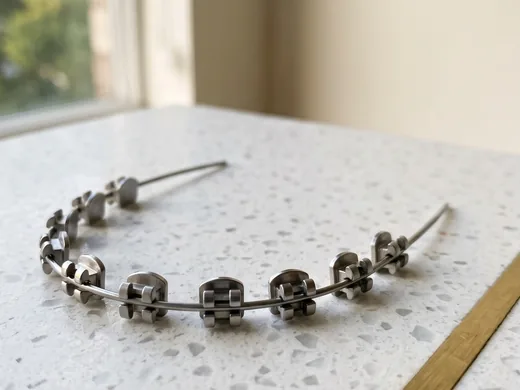
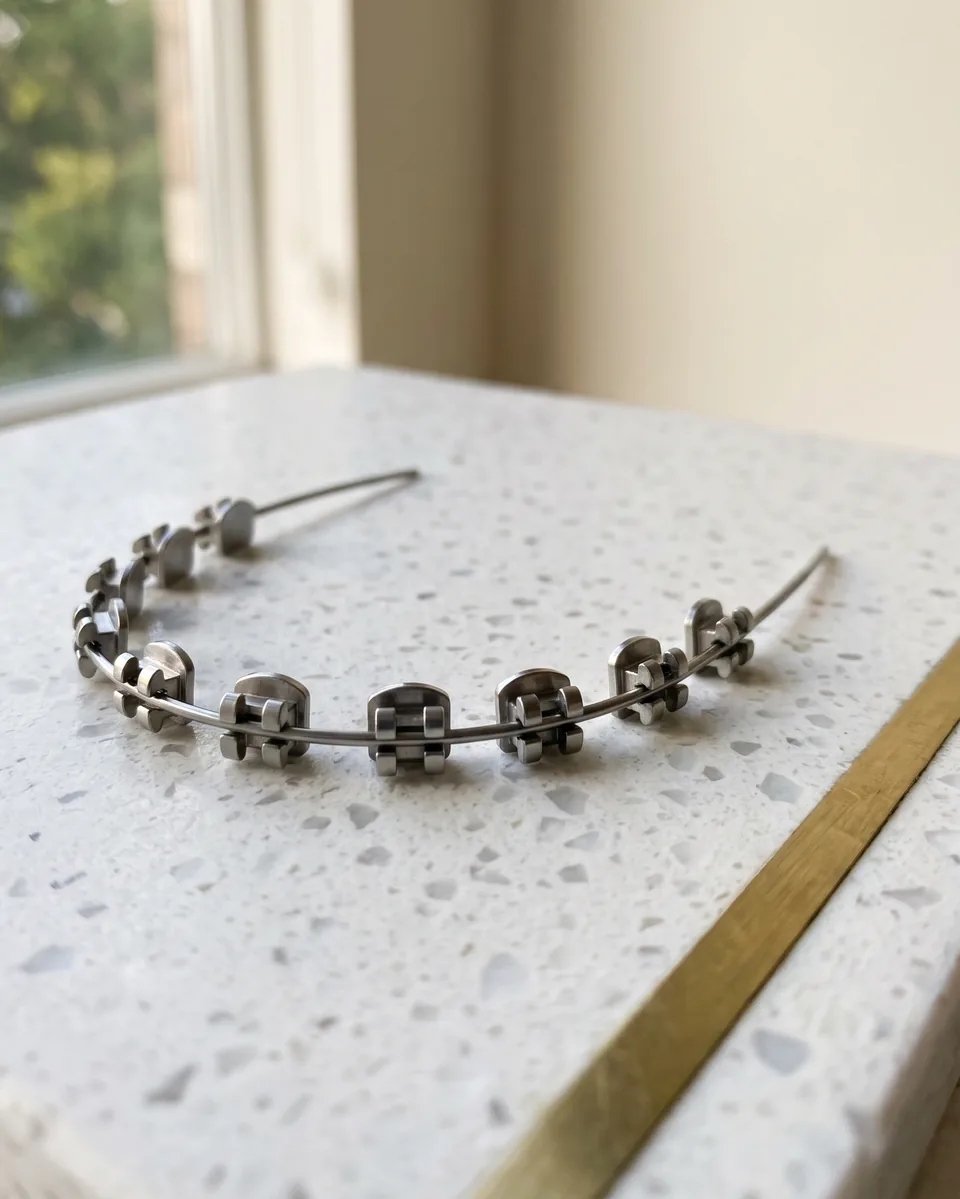
For braces problems short of the AAO’s five emergency signs, the AAO gives steps to take at home. They work on the parts of braces the braces page describes: the archwire, the metal bands on select back teeth, and each bracket, the small attachment bonded to a tooth that the glossary entry for bracket defines.
| Problem | The AAO’s home step | Tell the orthodontist |
|---|---|---|
| A wire pokes | Press the wire flat against the tooth using a clean pencil eraser or a cotton swab; where it will not sit flat comfortably, put orthodontic wax over the end; a small broken-off piece may be taken out with clean tweezers when that is safe | Immediately, as the AAO asks for loose wires |
| A bracket is loose but still on the wire | Ease it gently back toward the middle of the tooth, keep it there with a little orthodontic wax, and stay off hard, chewy or sticky food until the bracket is repaired | As soon as possible |
| A band or appliance loosens | Leave it alone rather than wiggling or pulling it; if it comes all the way off, put it in a small container and take it to the appointment | Immediately |
The AAO glossary says orthodontic wax goes on brackets or archwires so that they do not irritate the lips or cheeks, and the AAO’s 2023 living page suggests keeping orthodontic wax and over the counter pain relievers on hand. For soreness or irritation in the mouth, the AAO also suggests a warm salt water rinse.
A lost or cracked aligner: the AAO’s instruction
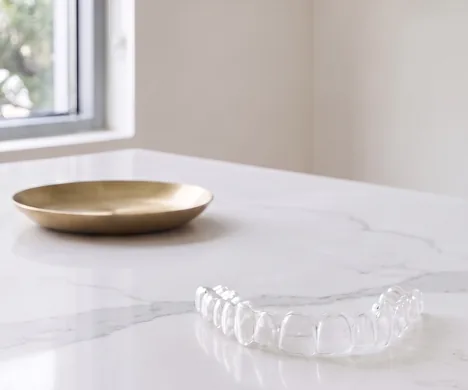
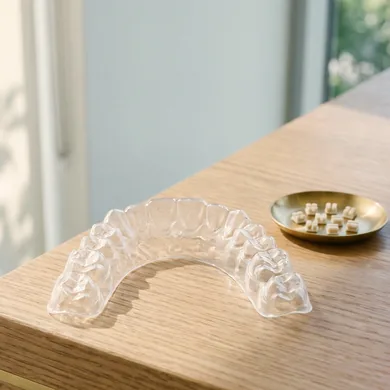
For a lost or damaged aligner, the AAO’s instruction is a call. Its article on clear aligner therapy, dated June 17, 2024, says, “If you should lose or damage an aligner, contact your orthodontist immediately for advice.”
For an aligner that is cracked, warped or no longer fits, the same AAO emergency page says not to keep wearing one that is sharp, painful or badly distorted, that the orthodontist may advise wearing the previous aligner for a time if it still fits comfortably, and to see the orthodontist as soon as possible for a replacement.
The reason is order: the AAO’s FAQ says aligners are worn in a particular sequence, so the next tray, and whether the loss adds time to treatment, are the orthodontist’s to judge.
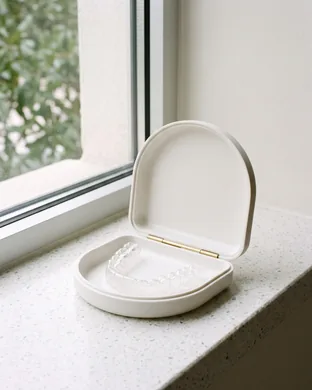
Prevention starts when the aligner comes out of the mouth. The same article says, “When you remove your aligners, make it a habit to slip them into their case,” and not to leave them in napkins, pockets or purses, or near pets. The full routine is on the page about clear aligner treatment.
A loose fixed-retainer wire, or a retainer that no longer fits
A fixed retainer is a thin wire bonded behind the teeth, and “permanent” is only its nickname: the AAO says fixed retainers can still break or become dislodged, and its instruction is direct: “If you notice that your fixed retainer is damaged, notify your orthodontist immediately, as the teeth can begin to shift.”
A removable retainer that has stopped fitting gets a call and one warning, from the AAO’s guidance of October 21, 2026: “Do not force an old retainer onto your teeth if it no longer fits normally.” The retainers page explains why a fit changes.
For a cracked clear retainer, the AAO’s 2025 cleaning guide says, “If you notice cracks or loose wires, stop wearing your retainer immediately,” and the AAO says a lost or damaged retainer should be replaced as soon as possible to prevent unwanted tooth movement.
A blow to the mouth with braces, aligners or a retainer in
Injury is where an appliance problem can become an emergency. The AAO says, “A small number, especially those involving injury to the teeth, mouth, or face, need urgent attention from a dentist, orthodontist, or even an emergency room.” For a suspected broken jaw, heavy bleeding or a knocked-out permanent tooth after a hit, its instruction is emergency care immediately.
Short of those signs, a bracket or wire knocked loose by the same hit is an urgent orthodontic problem to report to the orthodontist. For sport, the AAO’s protective step is a mouthguard: it says a properly fitted one helps protect the teeth and the orthodontic appliances during contact sports or activities with a risk of impact, and the answer on playing sports with braces or aligners takes it from there.
Reaching Kunik Orthodontics about a broken appliance
The AAO’s advice for reaching the office is to call, send a message through the office portal if there is one, or follow the after-hours instructions on the office voicemail, and to say what is wrong: “Explain what happened and what you are feeling.”
After hours, the practice’s own instruction is this: If you call our regular phone number after hours, you will hear the phone number of the person on call.
For any of the five emergency signs, the AAO’s instruction is emergency care first, not a message to the office.
For anything that can wait for office hours, call the office you visit. More everyday answers sit together on the questions page.
Follow-up questions on orthodontic emergencies
Is a broken bracket urgent if it feels fine?
Yes, in the AAO’s terms. The AAO lists broken brackets and loose wires among the urgent orthodontic problems to report to the orthodontist immediately, because they can interfere with treatment. How the bracket feels is not part of that test, and whether the repair waits for the next visit is the orthodontist’s decision.
Can a broken bracket make treatment take longer?
Research says it can. A 2023 systematic review with meta-analysis, published in the European Journal of Orthodontics, says bracket failure increases treatment time and can mean more chair time and possible new appointments, and a 2018 Cochrane review says bracket failure lengthens treatment time. How much time a broken bracket adds to your own plan is for the orthodontist to say.
Sources
- American Association of Orthodontists, What is an Orthodontic Emergency and How Do You Handle Them?
- American Association of Orthodontists, Swollen or Bleeding Gums With Braces: Causes and What to Do
- American Association of Orthodontists, Living with Braces: Food, Oral Hygiene, & Care Tips
- American Association of Orthodontists, Glossary of Orthodontic Terms
- American Association of Orthodontists, Clear Aligner Therapy
- American Association of Orthodontists, Orthodontic FAQs: Your Questions Answered (read November 6, 2026)
- American Association of Orthodontists, What Are Dental Retainers?
- American Association of Orthodontists, What to Expect After Your Braces Come Off
- American Association of Orthodontists, My Retainer Feels Tight or Doesn’t Fit. Should I Force It?
- American Association of Orthodontists, How to Clean Retainers: AAO’s Guide to Retainer Care
- American Association of Orthodontists, Why Do Dogs Eat Orthodontic Retainers?
- Dudás et al., European Journal of Orthodontics, 2023 (PubMed record), Clinical bracket failure rates between different bonding techniques: a systematic review and meta-analysis
- Mandall et al., Cochrane Database of Systematic Reviews, 2018 (PubMed record), Adhesives for fixed orthodontic brackets
Bring questions about broken brackets and lost aligners to a consultation
Consultations are always free of charge. Send a consultation request from this page to ask for one at any of the three offices: Domain, Downtown or Westlake.
Domain, Downtown and Westlake: Monday to Thursday, 8:15 a.m. to 5:00 p.m.Updated .