

Braces: how brackets and an archwire move teeth, and what metal or ceramic means for you
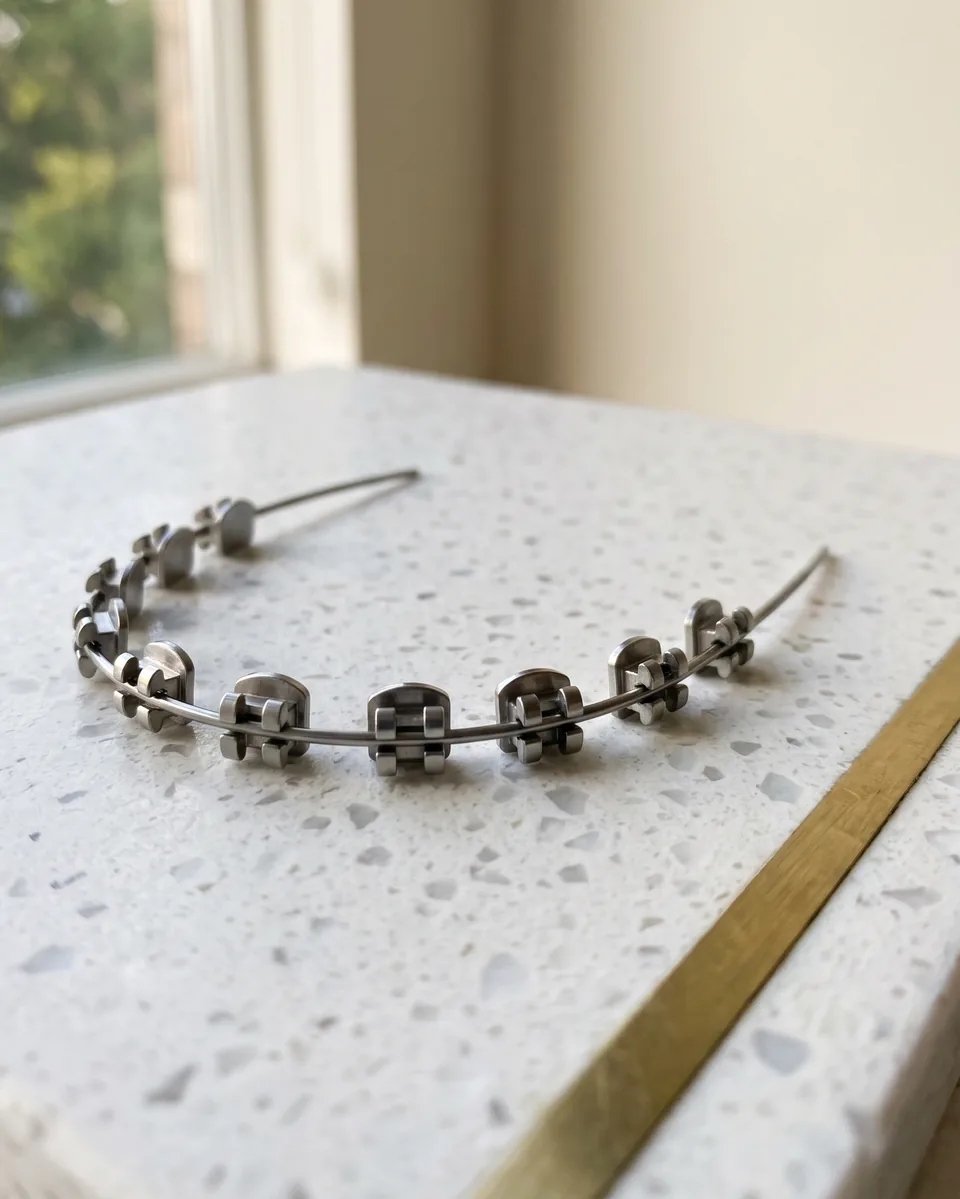
Braces are well suited to both major and minor orthodontic cases. They consist of clear or metal brackets attached to each tooth.
Braces move teeth with pressure: brackets bonded to the teeth hold an archwire, and the American Association of Orthodontists (AAO) says the body removes bone on the compressed side of a root and forms new bone on the other. Metal and ceramic braces work much the same way; the AAO calls appearance the main difference, says ceramic may be more brittle, and notes that temporary tenderness can follow placement or an adjustment.
The parts of braces: brackets, an archwire, ligatures, bands and elastics
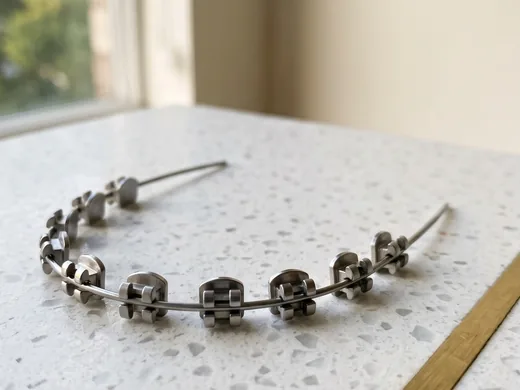
Braces are a fixed appliance built from a few small parts, each described by the American Association of Orthodontists (AAO). The practice names its two kinds Metal Braces and Ceramic Braces; in both, brackets on the teeth hold the wire that moves them.
- Brackets: the AAO glossary describes a bracket as a small attachment bonded to each tooth with a tooth colored adhesive, and adds, “The bracket has a slot that the orthodontic wire fits into.”
- The archwire: “Archwires fit into the slots in the brackets and are responsible for actually moving your teeth,” the AAO says; round archwires are often used in earlier stages to level and align teeth, rectangular ones in later stages to refine their movement.
- Ligatures, or ties: in the AAO’s words, “The archwire is held to each bracket with a ligature, which can be either a tiny rubber band or a twisted wire.”
- Bands: the AAO describes a metal band, with a bracket attached, wrapped around select molars for additional anchorage.
- Elastics: “Elastics are tiny rubber bands that apply extra force to a tooth or teeth in ways braces alone cannot,” the AAO says, and they are worn as the orthodontist prescribes.
The American Dental Association (ADA) adds, “The brackets may be metal or tooth colored.” Knowing the parts helps when one comes loose, because the AAO writes its home steps part by part.
How pressure from braces moves a tooth through bone
Braces move a tooth by pressing on it, and the tooth can move because the bone around its root responds. The AAO’s article on how braces work, dated February 18, 2026, explains: “When braces apply pressure to a tooth, it creates an area of compression on one side of the root and an area of tension on the other.”
The article goes on: “The body responds to this pressure by removing bone in the compression area and forming new bone in the tension area, allowing the tooth to move gradually into its new position.” Put plainly, bone gives way on the side the tooth is pushed toward, and new bone forms on the side it leaves.
That is why braces move teeth gradually, and why the wire is adjusted along the way: “As the teeth move and the resistance changes, orthodontic adjustments are required to maintain the correct pressure,” the article says, and at an adjustment the orthodontist will tighten or replace the archwire and adjust the placement of bands or elastics. For you, an adjustment visit is part of how braces work, not a repair.
Metal braces: stainless steel brackets and what the AAO says about them
Metal braces are stainless steel in the AAO’s description: “Traditional metal braces use stainless steel brackets and wires,” says its ceramic braces page, dated September 8, 2026, which calls them “strong, reliable, and commonly used to treat a wide range of orthodontic concerns, but they are more noticeable when you smile or speak.”
Friction is the other point the published studies record. In a 1990 laboratory study run in air and in artificial saliva, “Under all conditions, the stainless steel brackets had lower coefficients of friction than the ceramic brackets,” and its authors note that most clinicians regard friction as detrimental to tooth movement.
The AAO does not rank the two: “Neither option is automatically better for everyone. Metal braces and ceramic braces can both be effective orthodontic treatments,” its ceramic page says. Which kind suits your teeth and bite is a question for Dr. Kunik at the consultation.
Ceramic braces: brackets designed to blend in, and what studies found
Ceramic braces work much like metal braces, and the AAO names appearance as the main difference. The AAO says ceramic braces “use brackets and wires to guide teeth into better alignment gradually,” with clear or tooth colored brackets “that are designed to blend in with your teeth” in place of stainless steel.
Ceramic braces are still fixed braces, not clear aligners, the AAO notes: “Ceramic braces are fixed appliances, which means they stay attached to the teeth until treatment is complete.” Some patients may also have tooth colored wires or clear elastic ties, it adds, depending on their treatment plan and the orthodontist’s recommendation.
Clear ties can stain. In a 2016 clinical study that tested four widely used brands of elastic ties in 20 adult patients, “All four brands of esthetic ligatures showed significant staining,” and patients and orthodontists perceived the change in color alike. Which ties go on your brackets is a question for Dr. Kunik.
Ceramic may need more care than metal. The AAO says ceramic brackets “can also be effective, but they may require extra care because the material may be more brittle than metal.” A 1997 clinical evaluation of two ceramic bracket designs, with no metal comparison group, found the bond failure rate low but reported, “Bracket fracture was a significant clinical problem, both during active treatment and at the time of appliance removal.”
In a 1990 test in an artificial mouth, “Ceramic brackets caused significantly greater enamel abrasion than stainless steel brackets” on the opposing tooth. The AAO adds its own caution, “In some cases, ceramic braces may not be available as a treatment option to some patients,” so whether ceramic suits your teeth is Dr. Kunik’s call.
| Point | Metal braces | Ceramic braces | Source |
|---|---|---|---|
| Look | More noticeable when you smile or speak | Designed to blend in with your teeth | AAO, 2026 |
| Material | Strong and commonly used | May be more brittle and need extra care | AAO, 2026 |
| Friction | Lower in every condition tested | Higher than stainless steel | Laboratory study, 1990 |
| Wear on the opposing tooth | Less enamel abrasion | Significantly greater enamel abrasion | Laboratory study, 1990 |
Tenderness after braces go on or are adjusted: the AAO’s home steps
The AAO publishes home steps for tenderness after braces go on or are adjusted. Its gums page, dated October 13, 2026, says, “Some temporary tooth or mouth tenderness can happen after braces are placed or adjusted,” and its emergency page, dated February 16, 2026, lists these steps for it:
- Soft foods: “Choose soft foods like yogurt, smoothies, pasta, or scrambled eggs.”
- Wax: “Use orthodontic wax to cover brackets or areas that rub,” which the AAO glossary says keeps brackets and archwires from irritating the lips or cheeks.
- Pain relievers: consider nonprescription pain relievers “as directed by your medical provider or package instructions.”
- A rinse: the AAO’s 2026 emergency page suggests warm salt water, at half a teaspoon of salt in 8 ounces of warm water.
These are the AAO’s general steps; where Dr. Kunik gives you different directions, follow his.
Tenderness is different from signs that need prompt care. The AAO’s gums page says, “Prompt attention is especially important if you develop pus, severe or rapidly increasing swelling, significant pain, fever, or other signs of illness,” and “Difficulty breathing or swallowing may require urgent medical care.”
Brushing, flossing, fluoride and food with brackets on
Cleaning matters more with braces, and the reason is plaque: the National Institute of Dental and Craniofacial Research says, “Plaque buildup can cause tooth decay and gum disease.” The AAO’s general rule for brushing is “Your orthodontist will give specific instructions, but in general, you should brush for two minutes after every meal or snack, and before bed.”
The AAO’s gums page says to brush gently around the brackets and along the gumline, notes that a floss threader or orthodontic flosser may be needed, and warns, “Do not avoid an area simply because it bleeds.” Bleeding has a limit, though: persistent redness, swelling or bleeding “should not be considered a normal part of treatment,” the AAO says, and “If symptoms continue, worsen, or concern you, contact your orthodontist or dentist.”
Food rules protect the brackets. The AAO’s 2023 guide says hard, sticky, crunchy or chewy foods that cannot be modified to eat easily without getting stuck “should be avoided for the duration of treatment as they may damage braces/brackets,” among them hard pretzels, crusty bread, caramels, popcorn, hard candies and nuts. The same guide says, “Beverages like coffee, tea and red wine can stain teeth,” and to avoid regular and diet soft drinks with braces.
White spots on the enamel are the risk to clean against. The AAO says, “Braces do not directly cause white spots. White spots usually happen when plaque and acids remain on enamel for long enough to pull minerals out of the tooth surface,” and adds, “Orthodontic appliances can increase the risk by trapping plaque.” A 2025 meta-analysis found conventional fixed appliances associated with more white spot lesions than other appliances or no treatment.
Against that risk, the AAO’s white spots page says to “Use fluoride as recommended by your dentist or orthodontist” and to “make sure you’re using a toothpaste with fluoride in it to strengthen enamel,” and its 2023 guide says “a daily fluoride rinse can strengthen tooth enamel and help prevent white marks (decalcification).” Which fluoride products suit you is a question for Dr. Kunik or your dentist.
A loose bracket, a poking wire or a loose band: what to do before the visit
The American Association of Orthodontists says, “Most orthodontic problems are uncomfortable but not dangerous,” and that a small number, especially injuries to the teeth, mouth or face, need urgent attention. Its emergency page, dated February 16, 2026, says to seek emergency care immediately, by calling 911 or going to an emergency room or an urgent dental clinic, for the signs it lists:
- Bleeding from the mouth or face that is heavy or continuous.
- Trouble breathing or swallowing.
- A jaw that may be broken or dislocated.
- “A permanent tooth that is knocked out, pushed deep into the gums, or moved dramatically out of position.”
- “Sudden, severe pain with facial swelling, fever, or signs of infection.”
For the common problems, the AAO gives steps to take until the orthodontist sees you:
- A loose bracket still on the wire: “If the bracket is still attached to the wire, gently slide it back toward the center of the tooth,” hold it with a small piece of orthodontic wax, avoid hard, chewy or sticky foods until it is repaired, and tell your orthodontist as soon as possible.
- A wire that pokes: push it flat toward the tooth with a clean pencil eraser or cotton swab; if it will not lie flat, cover the end with orthodontic wax, and a small piece that breaks off may be removed with clean tweezers if that can be done safely.
- A loose band or appliance: do not wiggle or pull on it; if it comes off completely, keep it in a small container, bring it to your appointment and tell your orthodontist immediately.
The AAO says to let the orthodontist know immediately about broken brackets or loose wires, because they can potentially interfere with treatment.
If you call our regular phone number after hours, you will hear the phone number of the person on call.
Missing teeth, extractions and wisdom teeth: what the evidence supports
Missing teeth, crowding and wisdom teeth each raise a different question before braces, and the evidence is not equally firm on each. The AAO says missing teeth can lead to gaps as the neighboring teeth shift into the open space, that an orthodontist can create or hold space for a patient who may need an implant, and that “Dental implants cannot be moved by conventional orthodontic forces,” so raise any implant plan at the consultation before the implant is placed.
Crowding does not automatically mean an extraction: the AAO says the decision “typically depends on factors such as the patient’s bite, jaw size, tooth position, facial structure, and overall treatment goals,” and that in some cases, when an impacted, extra or crowded tooth keeps orthodontic treatment from working effectively, an orthodontist may refer the patient to an oral surgeon before braces or aligners go on. It lists removing wisdom teeth and other complex extractions, and dental implant placement, among the procedures oral surgeons commonly handle.
On wisdom teeth, the sources disagree, so read them side by side. The AAO’s page on impacted teeth says, “When a wisdom tooth is impacted and causing pain, infection, or damage risk, removal may be recommended.” For impacted wisdom teeth with no symptoms and no disease, a 2020 Cochrane review found insufficient evidence to say whether they should be removed or kept; it also noted that keeping them “may be associated with increased risk of periodontitis affecting adjacent second molars in the long term,” on very low certainty evidence, and that if they are kept, “clinical assessment at regular intervals to prevent undesirable outcomes is advisable.”
Reviews also disagree on whether lower wisdom teeth crowd the front teeth after braces: a 2023 systematic review found there seems to be no clear connection, a 2026 review of patients no longer wearing retention devices found routine removal for that purpose unsupported on very low certainty evidence, and a 2024 meta-analysis concluded that “Lower third molars may contribute to mandibular crowding and lower arch constriction.” Whether any tooth comes out is decided from your own diagnosis, by Dr. Kunik with your dentist.
Braces or clear aligners, and where Hybrid treatment fits
The AAO says braces can treat more kinds of bites than clear aligners can, and that the choice typically depends on how complex the bite problem is. Its braces page says braces “can treat a wide range of malocclusions (including very bad bites or crooked teeth)” but are much more visible and cannot be removed, while clear aligners can typically treat light to moderate alignment issues.
Preference counts too: the AAO says patients who want to remove the appliance for meals may prefer clear aligners, while patients who would rather not manage removable trays, or who may have difficulty wearing aligners consistently, may prefer fixed braces. A 2025 meta-analysis concluded that the bite’s complexity and the patient’s compliance should guide the choice of appliance, and found fixed appliances gave higher treatment quality in extraction cases; a 2022 overview of systematic reviews found clear aligners associated with better periodontal health and a root resorption risk that tended to be lower, but with greater relapse.
The ADA says “healthy teeth can be orthodontically treated at any age,” and the AAO cautions, “Some patients have a jaw misalignment that braces or clear aligners alone cannot fully correct.” The page on orthodontic care for adults covers what changes later in life.
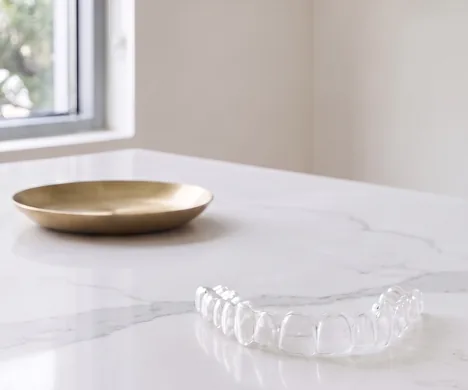
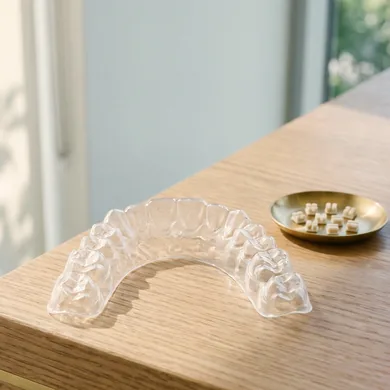
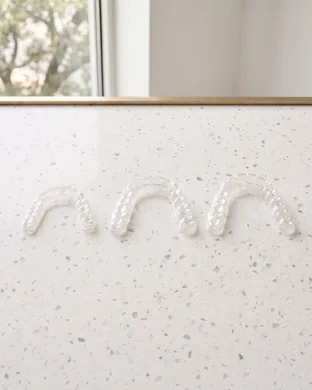
The practice offers braces, Invisalign® treatment with clear aligners, and Hybrid treatment, which moves between the two; its pages on how clear aligners work and on the Hybrid approach explain each.
Consultations are always free of charge. You do not need a referral. Dr. Kunik is here to listen to your smile goals, listen to your timeline, and listen to what is most important to you. Read about Dr. Kunik’s background and training, then start at The Domain, Downtown or Westlake office, whichever is on your way.
Questions about braces, answered
How long will I wear braces, and how often are the adjustment visits?
Dr. Kunik answers both for your own teeth at the consultation, and no general figure stands in for his answer. Keeping the brackets on is the part in your hands: a 2018 Cochrane review and a 2023 systematic review both say bracket failure lengthens treatment time, which is one reason to follow the AAO’s food lists and report a loose bracket promptly.
Do I have to wear the rubber bands my orthodontist prescribes?
Yes, as prescribed. The AAO says “Patients are responsible for placing and removing their elastics, and wearing them as your orthodontist prescribes,” and that wearing more than prescribed can harm the teeth and jaws or slow tooth movement. In a 2019 randomized trial, patients sent motivational and reminder text messages achieved a bite correction with elastics 3.7 times greater than the control group, and the authors concluded the messages had a positive influence on cooperation.
Can I play sports while wearing braces?
Yes. The AAO says sports can be played during orthodontic treatment, and to “talk to your orthodontist about the type of mouth guard to wear.” Its emergency page adds, “A properly fitted mouthguard helps protect both your teeth and your orthodontic appliances during contact sports or activities with a risk of impact.”
What happens after the braces come off?
A retainer comes next. We offer permanent retainers or clear removable retainers. How each kind works, and what the evidence says about keeping teeth in place, is on the retainers page; which kind suits your teeth is decided with Dr. Kunik.
Sources
- American Association of Orthodontists, How Do Braces Work?
- American Association of Orthodontists, How Do Braces Work? Navigating Orthodontic Treatment with Braces
- American Association of Orthodontists, Glossary of Orthodontic Terms
- American Association of Orthodontists, Archwires
- American Association of Orthodontists, Orthodontic Elastics
- American Association of Orthodontists, Living with Braces: Food, Oral Hygiene, & Care Tips
- American Association of Orthodontists, Ceramic Braces: A Less Noticeable Way to Straighten Your Smile
- American Association of Orthodontists, Swollen or Bleeding Gums with Braces
- American Association of Orthodontists, Do Braces Cause White Spots on Teeth?
- American Association of Orthodontists, What is an Orthodontic Emergency and How Do You Handle Them?
- American Association of Orthodontists, Teeth Spacing: Causes, Concerns, and Treatment Options
- American Association of Orthodontists, Dentist vs. Orthodontist vs. Oral Surgeon: What’s the Difference?
- American Association of Orthodontists, What is an Impacted Tooth?
- American Dental Association, MouthHealthy, Braces
- National Institute of Dental and Craniofacial Research, Oral Hygiene
- Pratten et al., American Journal of Orthodontics and Dentofacial Orthopedics, 1990 (PubMed record), Frictional resistance of ceramic and stainless steel orthodontic brackets
- Viazis et al., American Journal of Orthodontics and Dentofacial Orthopedics, 1990 (PubMed record), Enamel abrasion from ceramic orthodontic brackets under an artificial oral environment
- Artun, European Journal of Orthodontics, 1997 (PubMed record), A post-treatment evaluation of multibonded ceramic brackets in orthodontics
- Kawabata et al., Dental Press Journal of Orthodontics, 2016 (PubMed record), Color changes of esthetic orthodontic ligatures evaluated by orthodontists and patients: a clinical study
- Hussain et al., Orthodontics and Craniofacial Research, 2025 (PubMed record), Prevalence, Incidence and Risk Factors of White Spot Lesions Associated With Orthodontic Treatment: A Systematic Review and Meta-Analysis
- Mandall et al., Cochrane Database of Systematic Reviews, 2018 (PubMed record), Adhesives for fixed orthodontic brackets
- Dudás et al., European Journal of Orthodontics, 2023 (PubMed record), Clinical bracket failure rates between different bonding techniques: a systematic review and meta-analysis
- Ghaeminia et al., Cochrane Database of Systematic Reviews, 2020 (PubMed record), Cochrane review CD003879, on surgical removal versus retention of impacted wisdom teeth
- Lyros et al., Dental Journal (Basel), 2023 (PubMed record), The Effect of Third Molars on the Mandibular Anterior Crowding Relapse: A Systematic Review
- Amberg et al., Clinical Oral Investigations, 2026 (PubMed record), Wisdom teeth removal and anterior alignment stability after orthodontic treatment: a systematic review
- Palikaraki et al., The Angle Orthodontist, 2024 (PubMed record), Effect of mandibular third molars on crowding of mandibular teeth in patients with or without previous orthodontic treatment: a systematic review and meta-analysis
- Yassir et al., Clinical Oral Investigations, 2022 (PubMed record), Clinical effectiveness of clear aligner treatment compared to fixed appliance treatment: an overview of systematic reviews
- Alhafi et al., European Journal of Orthodontics, 2025 (PubMed record), Quality and stability of orthodontic treatment outcomes with clear aligners versus fixed appliances: a systematic review and meta-analysis
- Leone et al., The Angle Orthodontist, 2019 (PubMed record), The influence of text messages on the cooperation of Class II patients regarding the use of intermaxillary elastics
Metal or ceramic braces: ask Dr. Kunik at a consultation
Bring your questions about brackets, cleaning or a tooth in the way to the visit, and ask for one with a consultation request on this page.
Domain, Downtown and Westlake: Monday to Thursday, 8:15 a.m. to 5:00 p.m.Updated .